Table of Contents
- Why Is Freezer Leaking Water Onto the Floor?
- A Damaged or Misaligned Drain Pan
- A Leaking Ice Maker or Water Line
- Water Inside the Freezer Usually Points to Drainage
- Other Reasons a Freezer May Leak
- Safe Checks You Can Make Before Calling for Repair
- When a Freezer Leak Needs Professional Attention
A puddle under the freezer is easy to dismiss as a spilled drink or melting ice. But if you are asking, “why is freezer leaking?” the water may be coming from a drainage problem, a faulty ice maker connection, or a freezer that is not maintaining the right temperature. Acting early can protect your flooring, prevent food loss, and keep a minor repair from becoming a larger refrigerator problem.
Before moving the appliance or removing panels, unplug it if water is near electrical components. Then dry the area and look for the source. Is the water collecting inside the freezer, under the front of the refrigerator, or near the back wall? That detail gives you a useful starting point.
Why Is Freezer Leaking Water Onto the Floor?
In many homes, water on the floor is caused by a clogged or frozen defrost drain. Frost naturally builds up during normal freezer operation. During the defrost cycle, that frost melts and should travel through a small drain opening to a pan beneath the refrigerator, where it evaporates.
When the drain is blocked by ice, food debris, or residue, the melted water has nowhere to go. It can back up into the freezer, freeze into a sheet of ice, and eventually spill out through the door or onto the kitchen floor. You may notice water appearing near the front of the unit or ice collecting at the bottom of the freezer compartment.
A full defrost can sometimes clear a frozen drain, but it does not always address the reason the drain froze in the first place. A damaged drain tube, an issue with the defrost system, or poor door sealing can allow the problem to return. Repeated puddles are a good reason to have the appliance properly diagnosed.
A Damaged or Misaligned Drain Pan
The drain pan sits underneath the refrigerator and collects water from the defrost system. On most modern refrigerators, the heat from the compressor and condenser area evaporates that water without any attention from the homeowner.
If the pan is cracked, out of position, or overflowing because the appliance has another issue, water may drip onto the floor. Accessing it often requires carefully pulling the refrigerator away from the wall. Avoid tipping a heavy refrigerator by yourself, especially on tile or hardwood. The pan may be simple to replace, but the underlying cause of excess water should still be checked.
A Leaking Ice Maker or Water Line
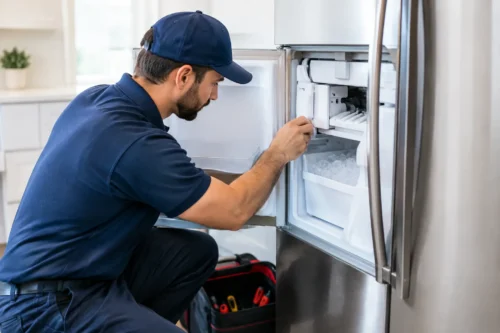
If your refrigerator has an ice maker or water dispenser, the leak may not be coming from the freezer compartment at all. A loose water-line connection, split plastic tubing, worn fill valve, or leaking ice maker can send water down the back of the appliance and onto the floor.
Look for moisture behind the refrigerator, dripping near the water supply connection, or ice cubes that are unusually small, hollow, or clumped together. Turn off the refrigerator’s water supply if you see an active leak. This helps prevent water damage while a technician identifies the failed part.
Water Inside the Freezer Usually Points to Drainage
Water pooling inside the freezer deserves attention even if none has reached the floor yet. If it freezes into a thick layer at the bottom, drawers may become difficult to open, packages can get stuck, and the freezer door may not close as it should.
The most common explanation is still a blocked defrost drain. However, warm, humid air entering through a door that does not seal properly can create extra frost and moisture. Southern Utah’s dry climate does not eliminate this possibility. Every time warm kitchen air enters the freezer, it brings moisture that can condense and freeze.
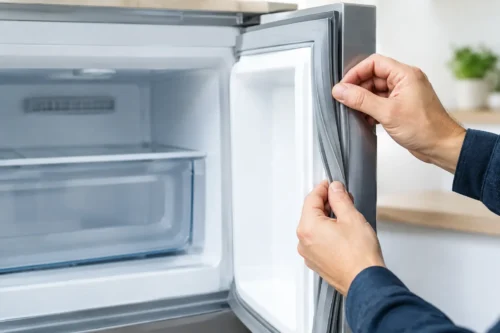
Check the door gasket for crumbs, torn areas, or sections that have pulled away from the door. Wipe the gasket with warm, mild soapy water and dry it thoroughly. Make sure food packages are not preventing the door from closing. If the gasket is split, loose, or no longer grips the cabinet, it may need replacement.
Other Reasons a Freezer May Leak
Not every freezer leak has the same cause. The location of the water and the freezer’s overall performance matter.
If the freezer is too warm, food may begin to thaw and release water. This can happen because of a failed fan, dirty condenser coils, a control issue, a defrost failure, or a door left slightly open. A freezer should generally be set around 0 degrees Fahrenheit. If you see soft ice cream, frost buildup, or thawing food along with water, move perishable items to another working freezer if possible.
A refrigerator that is not level can also contribute to drainage and door-closing problems. Most units are designed with a slight tilt toward the back, allowing doors to close properly and water to flow where it should. Do not make major adjustments without checking your owner’s manual, since leveling instructions vary by model.
In a garage, laundry room, or other hot area, high surrounding temperatures can put extra strain on a refrigerator and increase condensation. Some models are not designed for extreme temperatures. If the problem occurs only during very hot weather, placement and ventilation may be part of the diagnosis, although a healthy unit should not routinely leave water on the floor.
Safe Checks You Can Make Before Calling for Repair
A few observations can make a service visit faster and more precise. First, remove any standing water and note where it returns. Check whether the water is clear, whether it appears after the ice maker cycles, and whether there is ice on the freezer floor.
Next, inspect the door seal and confirm the door closes without force. Look behind the refrigerator for wet water connections, but do not pull on tubing or attempt to disconnect the line while it is pressurized. If the refrigerator is connected to a water supply and you suspect that line, shut off the valve before moving the unit.
You can also check the temperature with an appliance thermometer. A freezer that stays near 0 degrees Fahrenheit but develops a sheet of ice on the floor is more likely to have a drain issue. A freezer that is warm as well as wet may have a broader cooling or defrost problem.
Avoid using sharp tools to chip ice from the freezer floor or drain area. It is surprisingly easy to puncture a liner, damage a hidden refrigerant line, or break a plastic component. A hair dryer is also risky around water and plastic parts. For heavy ice buildup, a controlled defrost or professional service is the safer choice.
When a Freezer Leak Needs Professional Attention
Call for service promptly if water keeps coming back after you clean it up, if there is visible ice buildup at the bottom of the freezer, or if the refrigerator is not cooling correctly. You should also schedule repair when you find a cracked water line, a damaged drain pan, a torn door gasket, or water close to an outlet.
A professional diagnosis matters because several failures can produce similar symptoms. For example, a frozen drain may be the visible issue, while a malfunctioning defrost heater, sensor, or control is what caused it. Replacing a part based on a guess can cost more than identifying the complete problem first.
For homeowners in St. George, Ivins, Santa Clara, Washington, Hurricane, or nearby Mesquite, Master Tech Appliance Repair can inspect the drainage system, water connections, door seal, and cooling components to find the source of the leak. A clean, accurate repair helps protect the appliance you depend on for daily meals and food storage.
Keep towels near the area, move vulnerable food if temperatures rise, and shut off the water supply when a water-line leak is suspected. A freezer leak rarely improves on its own, but timely attention can keep a small puddle from disrupting the rest of your kitchen.