Table of Contents
- How to Reset a Tripped Breaker
- When a Breaker Trip Is More Than an Overload
- A Safe Way to Isolate the Appliance
- Appliances That Commonly Trip Breakers
- GFCI and AFCI Breakers Need a Different Look
- When to Call for Help
A refrigerator that suddenly goes quiet, a washer that stops mid-cycle, or an oven display that goes dark can make a normal day feel urgent fast. Before assuming the appliance has failed, you may need to reset a tripped breaker. Done correctly, this is a simple homeowner task. Done repeatedly without finding the cause, it can mask an electrical or appliance problem that deserves prompt attention.
A circuit breaker trips to protect your home. It shuts off power when it senses an overload, a short circuit, or another unsafe electrical condition. The goal is not to get the power back on at any cost. The goal is to restore power safely and pay attention to what caused the interruption.
How to Reset a Tripped Breaker
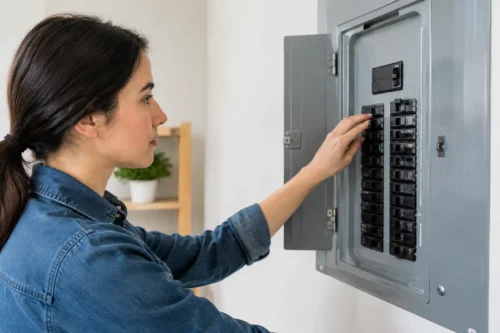
Start by locating your electrical panel, which is often in a garage, utility room, hallway, exterior wall, or basement. Open the panel door and look for a breaker switch sitting between the ON and OFF positions. Some breakers do not look obviously tripped, so compare the switch position with the breakers around it.
Before touching the breaker, turn off or unplug the appliances on that circuit if you can identify them. This reduces the load when power is restored and helps you narrow down the source of the problem. Keep the area around the panel dry, stand on a dry floor, and use one hand when possible rather than leaning against the panel.
To reset the breaker, move the handle firmly all the way to OFF first. Then move it firmly back to ON. A breaker will not reset properly if you only push it from the middle position toward ON.
Return to the affected area and test the outlet, light, or appliance. If everything works normally and the breaker stays on, the trip may have been a one-time overload. Still, make a mental note of what was running at the time. A microwave, toaster oven, air fryer, coffee maker, and other countertop appliances can draw more power than homeowners expect when used together on the same kitchen circuit.
When a Breaker Trip Is More Than an Overload
One trip after several high-draw appliances are running can be ordinary. A breaker that trips again right away is different. Do not keep resetting it in hopes that it will hold. Repeated resets can allow an underlying issue to continue, and the breaker is trying to tell you something useful.
A breaker may trip because of a worn appliance cord, damaged outlet, loose wiring, failing heating element, faulty motor, moisture near an electrical connection, or an internal appliance short. In Southern Utah, heavy summer air-conditioning use can also put more demand on a home’s electrical system. That does not mean every trip is caused by the AC, but it can make an already crowded circuit more likely to overload.
Pay close attention if the breaker trips when you start one particular appliance. For example, if the circuit trips every time the dishwasher enters a wash cycle, the disposal runs, the dryer heats up, or the refrigerator compressor starts, stop using that appliance until it can be evaluated. The timing is a valuable clue for a qualified appliance technician.
A Safe Way to Isolate the Appliance
If the breaker immediately trips again after you reset it, turn it back off. Unplug every device connected to the affected circuit, including chargers, lamps, small kitchen appliances, and the appliance you suspect. Then reset the breaker one more time.
If the breaker stays on with everything unplugged, plug devices back in one at a time. Wait briefly between each item. When the breaker trips after a specific appliance is connected or started, leave that appliance unplugged. This suggests the appliance may be contributing to the problem.
If the breaker trips with nothing plugged in, do not continue testing. The issue may be in the home wiring, an outlet, the breaker itself, or a hardwired appliance. Contact a licensed electrician for circuit and panel concerns. If the problem clearly occurs only when a specific appliance operates, an appliance repair professional can diagnose the unit and determine whether repair is appropriate.
Hardwired appliances require extra caution. Many garbage disposals, dishwashers, wall ovens, cooktops, and some microwaves are not simply plugged into a visible outlet. Do not remove access panels, disconnect wiring, or attempt to work inside an appliance unless you are qualified to do so. Turning off the correct breaker is necessary, but it does not make electrical repairs a good DIY project.
Appliances That Commonly Trip Breakers
Heating appliances are frequent offenders because heating elements draw significant current. Dryers, ovens, ranges, dishwashers, microwaves, and toaster ovens can trip a breaker if an element begins to fail or if the circuit is overloaded. A dryer that runs but trips the breaker as soon as heat is selected is especially worth checking before putting back into regular use.
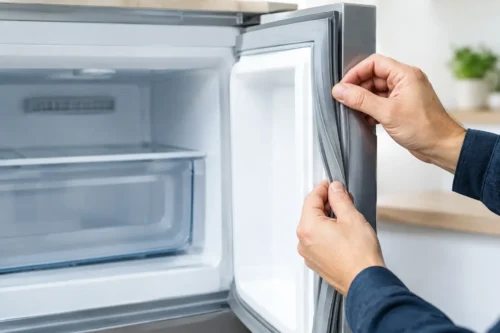
Refrigerators and freezers may trip a breaker when the compressor attempts to start, particularly if a component such as the start relay, compressor, or defrost system is failing. Since food safety is at stake, keep the doors closed as much as possible while arranging service. A closed refrigerator can usually hold a safe temperature for several hours, while a full freezer stays cold longer than a partially filled one.
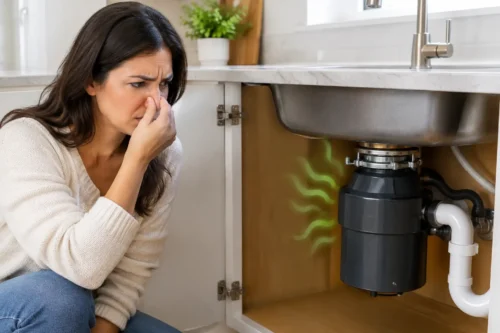
Washers, disposals, ice makers, and dishwashers can create issues when water reaches an electrical connection or a motor begins to fail. If you see water under the appliance, smell something burning, notice a buzzing sound, or find a warm outlet or plug, turn off power and stop using the appliance. Those signs call for professional attention, not another reset.
GFCI and AFCI Breakers Need a Different Look
Not every power interruption is a standard breaker trip. Kitchens, garages, laundry rooms, bathrooms, and exterior outlets often have GFCI protection. A GFCI outlet may have TEST and RESET buttons on its face, and a tripped GFCI can shut off power to other outlets downstream. If a kitchen outlet has no power but the panel breaker is on, check nearby GFCI outlets and press RESET once.
Some newer homes also use AFCI breakers, which are designed to detect certain arc faults. These breakers can be more sensitive to damaged cords, loose connections, and electrical arcing. If an AFCI breaker continues to trip, avoid replacing it with a different type of breaker or bypassing the protection. An electrician should determine why it is tripping.
When to Call for Help
A single overload is usually manageable. Call an electrician promptly if you have a breaker that will not reset, a panel that feels hot, burning odors, discoloration around outlets, flickering lights, buzzing from the panel, or evidence of water near electrical components. If you have smoke or sparks, move away from the area and call emergency services.
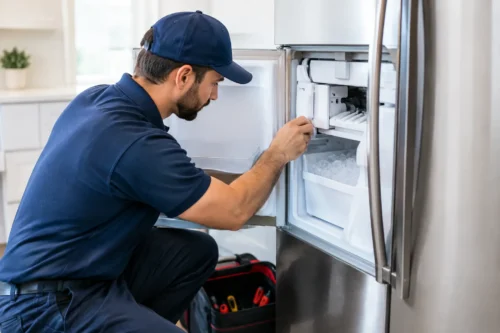
Call an appliance repair technician when the circuit remains stable until one appliance is plugged in or starts a specific function. Describe exactly what happened: which breaker tripped, what appliance was running, whether it tripped immediately or after a few minutes, and whether you noticed unusual sounds, odors, heat, or water. Those details can shorten the diagnosis and help protect your home from further disruption.
For homeowners in St. George and surrounding Southern Utah communities, Master Tech Appliance Repair can help identify appliance-related electrical symptoms without guesswork. A careful diagnosis can separate a failing appliance component from a circuit issue that should be handled by an electrician.
The safest reset is the one followed by a clear answer. If your breaker stays on, use the circuit wisely. If it trips again, let the pattern guide your next call instead of forcing the power back on.