Table of Contents
- How to troubleshoot refrigerator leaks by location
- Check the defrost drain first
- Inspect the drain pan underneath
- Look at the water supply line
- Test around the inlet valve
- Why refrigerator doors and seals matter
- Check the refrigerator level
- How to troubleshoot refrigerator leaks without making it worse
- When to call for refrigerator leak repair
A puddle under the refrigerator usually shows up at the worst time – right before groceries go in, when guests are coming over, or after you have already cleaned the kitchen. The good news is that learning how to troubleshoot refrigerator leaks starts with a few common problem areas, and some of them are simple enough to check yourself.
Before you do anything else, dry the floor and confirm the water is actually coming from the refrigerator. In some homes, a nearby dishwasher, sink line, or even melted ice from a dropped cup can make it look like the fridge is the problem. Once you are sure the leak is tied to the appliance, the goal is to answer two questions: where is the water showing up, and when does it appear?
How to troubleshoot refrigerator leaks by location
Where the water collects tells you a lot. Water under the front of the refrigerator often points to a clogged defrost drain, an overflowing drain pan, or excess condensation. Water behind the unit may be tied to the water supply line, inlet valve, or a loose connection for the ice maker or dispenser. Water inside the fresh food section usually means a blocked drain or an airflow issue that leads to frost buildup and melting.
If the leak happens only after using the water dispenser or after the ice maker cycles, focus first on the water system. If it shows up slowly over a day or two, condensation or a drain issue is more likely. This is why refrigerator leaks can be frustrating – the same puddle can come from very different causes.
Check the defrost drain first
A clogged defrost drain is one of the most common reasons a refrigerator leaks. During normal operation, frost melts during the defrost cycle and the water should travel through a drain tube into a pan underneath the appliance. When that drain gets blocked by debris or ice, the water has nowhere to go. It may back up into the fridge, freeze, then melt onto the floor.
Start by looking for water under the crisper drawers or along the bottom of the refrigerator compartment. That is a strong clue the defrost drain is restricted. In many models, the drain opening sits behind the back panel inside the fridge or freezer, depending on the design.
If you can safely access it, flush the drain with warm water using a turkey baster or similar tool. A small amount of hot water can melt an ice blockage, but do not force anything sharp into the drain tube. That can damage the line and turn a minor maintenance issue into a repair.
Inspect the drain pan underneath
Most refrigerators have a drain pan near the bottom that collects water from the defrost cycle, and that water usually evaporates on its own. If the pan is cracked, out of position, or overflowing, you may see water under the unit.
Pull the refrigerator out carefully and remove the lower access panel if needed. Check whether the pan is seated properly and whether it has visible damage. A little water in the pan is normal. A pan that is split, heavily warped, or repeatedly overfilling suggests another issue upstream, often a blocked drain or an abnormal amount of condensation.
Look at the water supply line
If your refrigerator has an ice maker or water dispenser, the supply line is a prime suspect. A loose fitting, cracked plastic line, or worn connection can cause a slow leak that pools behind the appliance and travels across the floor.
Check the line from the wall connection to the back of the refrigerator. Look for drips, mineral buildup, or signs that the tubing has been kinked. In older installations, plastic lines are more prone to cracking than braided steel options. If you see active dripping at a fitting, tightening it slightly may help, but avoid overtightening. That can crack threads or fittings and make the leak worse.
Test around the inlet valve
The water inlet valve controls the flow of water to the ice maker and dispenser. When it starts to fail, it may seep slowly even when the appliance is not actively filling. This can create an inconsistent leak that is easy to miss until the floor gets wet.
The valve is usually mounted near the back bottom of the refrigerator where the supply line connects. Signs of trouble include moisture around the valve body, corrosion, or intermittent leaking after dispensing water. This is usually not a part most homeowners should replace without confidence in shutting off water, disconnecting power, and matching the correct component.
Why refrigerator doors and seals matter
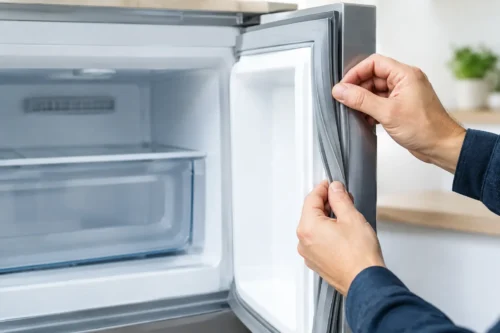
Not every refrigerator leak comes from a water line. Sometimes it is a condensation problem caused by warm air entering the cabinet. If the door gasket is torn, dirty, or not sealing well, humid air gets inside. That extra moisture can turn into frost, and when it melts, you end up with water where it should not be.
Run your hand along the door gasket and look for cracks, gaps, or debris. A dirty seal can often be cleaned with mild soap and warm water. Also check whether the refrigerator is closing fully. Overpacked shelves, tilted bins, or items sticking out just slightly can keep the door open enough to create moisture problems without being obvious.
This matters even more in hot, dry areas like Southern Utah, where appliances can work harder in garages, sun-exposed kitchens, or homes with frequent door traffic. A refrigerator that is not sealing properly may leak and also struggle to maintain safe food temperatures.
Check the refrigerator level
A refrigerator should sit level, and in many cases slightly tilted back so the doors close properly on their own. If the appliance is leaning too far forward or rocking on an uneven floor, water may not drain as designed. Instead, it can collect in the wrong area and spill onto the floor.
Place a level on a shelf inside the refrigerator and check side to side and front to back. Adjust the front leveling legs if needed. This is a small detail, but it can make a real difference, especially after a recent move, flooring project, or deep cleaning when the fridge has been pushed out and back.
How to troubleshoot refrigerator leaks without making it worse
There is a point where DIY stops being helpful. If you find a frozen drain and can clear it safely, that is reasonable. Cleaning a door gasket or checking the level is also straightforward. But if the leak involves electrical components, hidden internal panels, a damaged valve, or recurring water after you have already tried the basics, it is smarter to stop and have the unit diagnosed.
Refrigerators combine water, electricity, insulation, and sealed cooling components in a tight space. Guesswork can lead to damaged flooring, mold, food spoilage, or a more expensive repair later. Homeowners often call after replacing a part they were not sure about, only to find the real problem was somewhere else.
A recurring leak can also be a symptom rather than the root issue. For example, a drain may keep freezing because of an airflow problem, a defrost issue, or a failing fan. Replacing the pan or mopping up water will not solve that. The same is true when an inlet valve leaks because water pressure is too high or a line connection has been stressed over time.
When to call for refrigerator leak repair
Call for service if the leak returns, if water is coming from behind the refrigerator, if the floor damage is spreading, or if the refrigerator is also running warm, making unusual noises, or building frost. Those combined symptoms usually mean the problem goes beyond a simple cleanup.
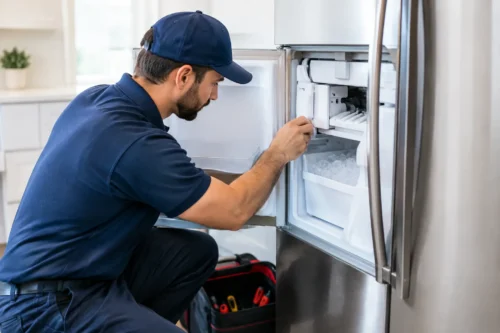
A professional diagnosis can save time because it narrows the issue quickly instead of treating every puddle like the same problem. That matters when your refrigerator is full, your kitchen routine is already off schedule, and you need a reliable answer rather than trial and error. At Master Tech Appliance Repair, this is the kind of problem that gets handled every day – finding the source, fixing it correctly, and helping homeowners get back to normal without the stress of wondering if the floor will be wet again tomorrow.
If your refrigerator is leaking, the best next step is not panic or replacement shopping. It is a careful check of the common causes, followed by honest repair help when the problem is deeper than it looks.