Table of Contents
- What causes a dryer to stop heating?
- Dryer not heating repair often starts with airflow
- Safe checks homeowners can make first
- Parts that commonly fail in dryer not heating repair
- Why professional diagnosis saves money
- Repair or replace?
- How to prevent the same problem from happening again
A dryer that runs but leaves clothes cold and damp can throw off the whole week. When you need dryer not heating repair, the real issue is usually not the drum or the timer – it is a failed heating component, poor airflow, or a power problem that keeps the dryer from doing its job.
For most homeowners, the frustration starts the same way. You run a normal cycle, wait an hour, and open the door to find heavy towels still wet. Then you try another cycle, maybe on high heat, and get the same result. At that point, it is tempting to assume the dryer is worn out. In many cases, though, the appliance can be repaired and returned to reliable service without replacing the whole unit.
What causes a dryer to stop heating?
A dryer needs a few basic things working together to produce heat. It needs the right power supply, it needs good airflow, and it needs internal parts like the heating element, thermostat, thermal fuse, igniter, or gas valve components to do their part. If any one of those pieces fails, the dryer may still tumble and sound normal while producing little or no heat.
Electric dryers are a common source of confusion because they can partially work on the wrong power supply. The drum may turn and the control panel may light up, but if one leg of the 240-volt supply is missing, the heating system will not operate correctly. That is why a dryer that seems to run fine can still leave every load damp.
Gas dryers create a different set of problems. They rely on an igniter, flame sensor, and gas valve coils to light and maintain heat. If one of those parts weakens or fails, the dryer may heat briefly, fail to ignite, or stop heating partway through a cycle. To the homeowner, it often looks random. To a trained technician, the pattern tells a story.
Airflow matters just as much as the heat source. If lint builds up in the vent, the dryer can overheat internally and trigger a safety device like a thermal fuse or high-limit thermostat. In that case, the machine is often protecting itself. Replacing the failed part without fixing the blocked vent usually leads to the same breakdown again.
Dryer not heating repair often starts with airflow
Before anyone opens the cabinet or starts replacing parts, airflow needs attention. A restricted vent is one of the most common reasons dryers stop heating properly, take too long to dry, or repeatedly fail internal components.
A simple first check is the exhaust outside the home. If the flap barely opens when the dryer runs, or the air feels weak, there may be lint packed in the duct. You may also notice the dryer getting unusually hot on the outside, the laundry room feeling humid, or clothes needing two or three cycles to dry.
This is where the trade-off matters. Some vent issues are straightforward, especially with short, accessible duct runs. Others are hidden in walls, crushed behind the dryer, or packed with years of buildup. If the vent system is long, difficult to reach, or already damaged, a quick DIY cleaning may not solve the real restriction.
Safe checks homeowners can make first
There are a few things worth checking before scheduling service, as long as you stay within basic safety limits. Start with the lint filter and make sure it is completely clean. Then look behind the dryer, if it is easy to access, and see whether the vent hose is kinked, crushed, or disconnected.
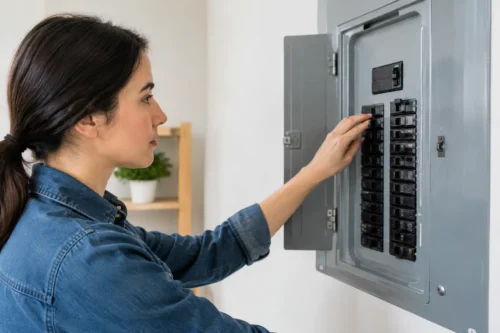
If you have an electric dryer, check the breaker panel. A tripped double breaker can leave the dryer running without heat. Resetting the breaker once may solve it if the trip was isolated. If it trips again, that points to an electrical issue that should not be ignored.
You can also confirm the heat setting and cycle selection. It sounds obvious, but accidental low-heat or air-fluff settings do happen, especially in busy households where multiple people use the appliance.
Beyond that, caution matters. Dryers contain live electrical connections, sharp metal edges, gas components on some models, and stored lint near heating parts. Opening the machine without proper testing tools usually leads to guesswork. Guesswork is expensive when the wrong part gets replaced.
Parts that commonly fail in dryer not heating repair
When basic checks do not solve the problem, diagnosis turns to the internal heating system. On electric dryers, the heating element is one of the most common failures. Elements can crack, short out, or burn through over time. A dryer may go from heating normally one week to producing no heat at all the next.
Thermal fuses are another frequent culprit. These safety devices are designed to blow when the dryer overheats, often because of poor ventilation. If the fuse opens, the dryer may lose heat or stop running entirely depending on the model. The important point is that the fuse usually fails for a reason. If that root cause is missed, the replacement part may not last.
Cycling thermostats and high-limit thermostats also affect temperature control. When they fail, the dryer may not heat properly, may overheat, or may shut the heat source down too soon. These parts are not expensive compared with major appliances, but they do need proper testing. Replacing them based only on suspicion can turn a simple repair into a string of unnecessary parts.
On gas dryers, igniters often draw attention because they visibly glow before ignition. But a glowing igniter does not always mean the rest of the gas system is working. Weak gas valve coils can prevent the flame from staying lit even when the igniter seems fine. That is one reason professional diagnosis saves time. The symptom is no heat, but the failed part is not always the obvious one.
Why professional diagnosis saves money
A dryer is one of those appliances that invites part swapping. Online advice may point to the heating element, then the thermal fuse, then the thermostat, then the control board. Homeowners can easily spend money on several parts and still have the same damp load at the end of the day.
A proper service call usually starts with testing, not replacing. Voltage is confirmed. Airflow is evaluated. Components are checked for continuity, resistance, and operation under real conditions. That process narrows the issue quickly and reduces the chance of repairing only half the problem.
It also helps protect the appliance long term. If a dryer overheated because of a restricted vent, simply restoring heat without correcting the airflow can shorten the life of the new parts. Good repair work is not just about making the dryer warm again. It is about making sure it dries efficiently and safely.
For homeowners in St. George and surrounding communities, that matters even more during busy weeks when laundry cannot wait. A dependable repair is worth more than a temporary fix that fails after two loads.
Repair or replace?
This depends on the dryer’s age, condition, brand, and repair history. If the unit is otherwise in good shape and the issue is a heating element, thermostat, fuse, or igniter-related component, repair is often the smart move. Those are common service items, and many dryers still have years of useful life left after a proper repair.
Replacement becomes a more serious conversation when the dryer has multiple failing systems, severe wear, chronic control problems, or a neglected vent setup that has caused repeated overheating. Even then, it is not always automatic. Some older machines are mechanically simpler and more durable than newer budget models.
That is where honest guidance matters. A trustworthy technician should be able to tell you whether the repair makes financial sense or whether your money is better put toward replacement.
How to prevent the same problem from happening again
The best prevention is regular vent maintenance and paying attention to early warning signs. If drying times start getting longer, if the dryer feels too hot, or if clothes come out hotter than usual but still damp, something is already changing.
Clean the lint screen every load. Check outside airflow periodically. Avoid packing the dryer beyond its capacity, since overloaded drums reduce air movement and force longer drying times. If the vent run is long or the dryer has had heating issues before, professional inspection can be a worthwhile preventive step.
Dryers rarely fail without giving hints first. The key is not waiting until a minor airflow issue turns into a burned-out component.
When your dryer runs but does not heat, the goal is not just getting one load dry. It is getting your routine back without wasting money on the wrong fix, and that starts with an accurate diagnosis you can trust.