Table of Contents
- Why an ice maker not making ice happens
- What you can check before calling for service
- When the problem is not the ice maker itself
- Freezer temperature problems
- Water inlet valve issues
- Frozen fill tube
- Faulty ice maker assembly or controls
- Signs it is time to bring in a technician
- How to prevent future ice maker problems
- Ice maker not making ice after you tried the basics
You usually notice it at the worst time – guests are coming over, the weather is hot, or someone in the house wants a cold drink and the bin is suddenly empty. If your ice maker not making ice has turned into a daily frustration, the good news is that the problem is often traceable. The harder part is figuring out whether it is something simple you can check in a few minutes or a repair issue that needs an experienced technician.
An ice maker depends on a few basic things working together at the same time: proper freezer temperature, steady water supply, good airflow, and functioning electrical components. When one part slips out of range, ice production slows down or stops altogether. That is why the symptom can look simple while the cause is not.
Why an ice maker not making ice happens
Most homeowners assume the ice maker itself has failed, but that is not always the first place to look. In many cases, the refrigerator is technically still running, the lights are on, and food feels cold enough, yet the freezer is not quite cold enough to trigger normal ice production. Ice makers generally need the freezer to stay around 0 to 5 degrees Fahrenheit for reliable results. If the temperature creeps up, the unit may harvest slowly or not at all.
A water supply issue is another common reason. If the water line is kinked, the filter is clogged, or the inlet valve is weak, the ice maker may not get enough water to fill the mold. Sometimes it will make tiny cubes. Sometimes it makes none. Other times you may hear the unit cycle but never see fresh ice drop into the bin.
There is also the simple possibility of a blocked or jammed mechanism. A shutoff arm can get stuck. A clump of frozen cubes can prevent movement. On some newer refrigerators, a sensor or control board problem can interrupt the process even when everything else appears normal.
What you can check before calling for service
It makes sense to start with the basics, especially if the issue just started. Begin by checking the freezer temperature setting. If the freezer is packed too tightly or the door has been opened often, the temperature may be warmer than the display suggests. A thermometer can help confirm what is actually happening inside.
Next, look at the ice maker switch or shutoff arm. It sounds obvious, but these get bumped more often than people expect, especially during cleaning or when rearranging frozen food. If the unit is turned off, you may have your answer in seconds.
Then check the water filter. A filter that is overdue for replacement can restrict flow enough to affect ice production. Not every refrigerator responds the same way to a clogged filter. Some keep dispensing water slowly while the ice maker struggles. Others stop one or both functions entirely.
Take a look behind the refrigerator if you can do so safely. A pinched water line can cut off supply to the ice maker. If the line looks bent or crushed, straightening it may restore normal flow. Just be careful not to damage the line or pull the refrigerator in a way that scratches flooring.
If you see a solid block of frozen cubes stuck in the mold or bin, remove the jam and clean out loose fragments. Sometimes an ice maker simply cannot complete the harvest cycle because old ice has fused together. If the problem returns quickly after clearing it, that usually points to a deeper issue such as overfilling, temperature fluctuation, or a failing component.
When the problem is not the ice maker itself
This is where experience matters. Homeowners often focus on the visible part that makes the cubes, but the actual cause may be somewhere else in the refrigerator system.
Freezer temperature problems
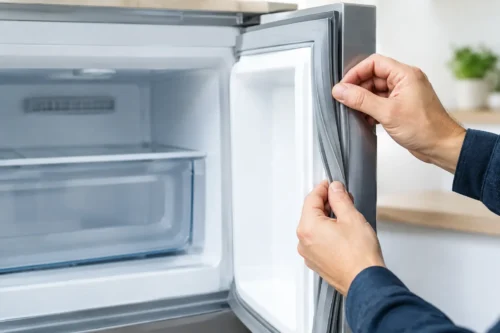
A freezer can feel cold and still be too warm for proper ice production. Dirty condenser coils, a weak evaporator fan, a door gasket leak, or frost buildup around the evaporator can all affect temperature stability. In Southern Utah, where kitchens and garages can run hot for much of the year, ambient heat can make an already struggling refrigerator work even harder.
If your ice cream is soft, frozen food has a slight thaw-and-refreeze texture, or frost is forming where it should not, the ice issue may be part of a larger cooling problem. In that case, replacing the ice maker alone would not solve much.
Water inlet valve issues
The inlet valve opens to let water into the ice maker at the right time. If it becomes weak, clogged, or electrically inconsistent, the mold may not fill properly. This can lead to small cubes, hollow cubes, or no cubes at all. A valve problem is easy to miss because the refrigerator may still dispense water at the door, just not with enough pressure or consistency for the ice cycle.
Frozen fill tube
The fill tube carries water into the ice maker mold. If that tube freezes, water cannot get through. Sometimes this is caused by a seeping valve that lets small amounts of water drip and freeze between cycles. Other times it points to airflow or temperature problems in the freezer compartment. Clearing the ice blockage without addressing the underlying cause often leads to the same problem again.
Faulty ice maker assembly or controls
As ice makers age, internal gears, motors, thermostats, and sensors can wear out. On older units, the module may simply stop cycling. On newer models, control boards and electronic sensors add convenience but also create more possible failure points. The repair approach depends heavily on the brand and model. In some cases, replacing a single part makes sense. In others, replacing the full assembly is more reliable.
Signs it is time to bring in a technician
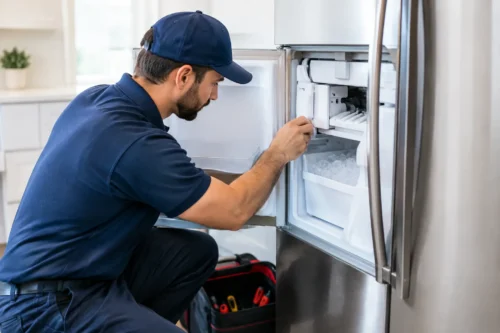
There is a difference between a homeowner check and a repair diagnosis. If you have confirmed the unit is switched on, the freezer is cold, the filter is not the issue, and the line is not visibly kinked, the next step usually requires testing components. That may involve electrical readings, valve testing, sensor checks, or disassembly inside the freezer.
It is also smart to call for help if you notice water leaking, sheets of ice forming, repeated freezing in the fill tube, loud clicking during ice cycles, or signs the refrigerator is not cooling properly overall. Those are not just ice maker inconveniences. They can point to a problem that affects food preservation and energy use across the whole appliance.
A good repair should solve the cause, not just restart the symptom for a week. That is especially important with built-in units, French door refrigerators, and higher-end models where guessing can get expensive quickly.
How to prevent future ice maker problems
A little routine attention goes a long way. Replacing the water filter on schedule helps maintain proper flow and water quality. Keeping freezer vents clear supports stable temperature. Avoid overpacking the freezer, especially near the ice maker area, where airflow matters more than many people realize.
It also helps to pay attention to early warning signs. Slower ice production, smaller cubes, clumping ice, and odd-tasting ice often show up before a full failure. Catching the issue early can prevent bigger refrigerator problems later.
If your refrigerator is in a garage or warmer area of the home, seasonal temperature swings can affect performance too. Some models handle heat better than others. What works fine in winter may struggle in the summer, and the ice maker is often the first place you notice it.
Ice maker not making ice after you tried the basics
If you have already reset the unit, checked the filter, confirmed the freezer temperature, and cleared any obvious jam, repeated trial and error usually does not save time. It tends to create more inconvenience, especially when the real issue is a valve, sensor, fan, or sealed cooling problem elsewhere in the refrigerator.
That is where owner-led appliance service makes a real difference. At Master Tech Appliance Repair, the goal is not to sell a guess or push a replacement you may not need. It is to find the actual cause, explain it clearly, and get your refrigerator working the way it should so your routine gets back to normal.
When an ice maker stops doing its job, the problem is rarely just about ice. It is about the kitchen working the way your household depends on it to work every day.