Table of Contents
- Why is my fridge warm but the freezer is cold?
- Start with the simple things first
- Poor airflow is often the real issue
- Dirty condenser coils can make a fridge warm
- When frost buildup points to a deeper problem
- A failing compressor or start device
- Don’t ignore the condenser fan
- What you can check safely before calling
- When it’s time to have it diagnosed
You open the refrigerator for milk, leftovers, or tomorrow’s lunch ingredients, and the air inside feels wrong right away. If you’re asking, “why is my fridge warm,” the issue may be simple, or it may be the first sign of a part that is starting to fail. Either way, time matters because a warm refrigerator can spoil food fast and turn a normal day into an expensive mess.
Some causes are easy for a homeowner to spot. Others need proper diagnosis to avoid replacing the wrong part. The key is knowing what you can check safely and what usually points to a repair problem.
Why is my fridge warm but the freezer is cold?
This is one of the most common refrigerator complaints, and it usually tells you something useful. In many refrigerators, the freezer section creates the cold air, and a fan moves that air into the fresh food section. So if the freezer is still cold but the fridge is warm, the problem is often not that the unit has stopped cooling completely. It is that cold air is not getting where it needs to go.
A blocked vent, a failed evaporator fan motor, heavy frost buildup, or a stuck damper can all cause this. Homeowners sometimes assume the whole refrigerator is dying when the real issue is airflow. That is good news in one sense, but it still needs attention quickly because the refrigerator side is where most daily-use food sits.
If both the fridge and freezer are warming up, the problem may be more serious. That can point to dirty condenser coils, a failed condenser fan, a bad start device, low refrigerant, or compressor trouble.
Start with the simple things first
Before assuming the worst, check the basics. Refrigerator problems are not always caused by major component failure.
Make sure the temperature settings were not changed by accident. It happens more than people think, especially in busy households where kids are reaching for snacks or someone is loading groceries in a hurry. The refrigerator section should usually be around 37 to 40 degrees Fahrenheit.
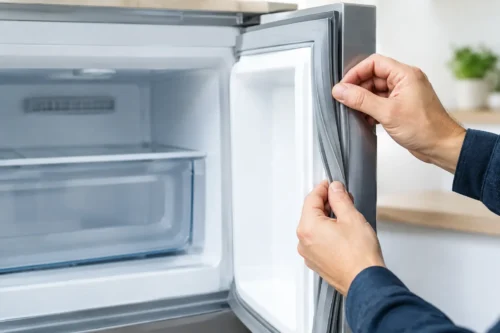
Next, look at the door seal. If the gasket is torn, loose, or packed with grime, warm kitchen air can slip inside all day long. That forces the refrigerator to work harder and can leave temperatures uneven. You may notice condensation, longer run times, or food near the door getting warmer first.
It also helps to check whether the fridge is overpacked. A full refrigerator is not always a problem, but if items are pushed tightly against interior vents, they can block airflow. On the other hand, a nearly empty fridge may not hold temperature as well as one with a normal amount of food inside. Balance matters.
Poor airflow is often the real issue
When a refrigerator feels warm, airflow is one of the first things an experienced technician considers. Cold air has to circulate properly from one area to another. If that process is interrupted, the temperature can climb even while some parts of the machine still seem to be running normally.
Listen for the evaporator fan inside the freezer section. If that fan is not running, cold air may stay trapped in the freezer instead of moving into the refrigerator compartment. You might hear unusual noises before the fan quits completely, such as squealing, clicking, or a rubbing sound from ice interference.
Air vents can also freeze over. When frost builds up around the evaporator cover or vent channels, the refrigerator section gradually loses cooling. In that case, the root problem may be in the defrost system rather than the fan itself. A bad defrost heater, thermostat, or control board can allow ice to build up until airflow is choked off.
That is where diagnosis matters. Defrost-related problems can look similar to fan problems from the outside, but the repair path is different.
Dirty condenser coils can make a fridge warm
Condenser coils release heat from the refrigerator system. When those coils get coated with dust, pet hair, and kitchen debris, the unit cannot get rid of heat efficiently. The result is poor cooling, long run times, and higher strain on the compressor.
This is one of the most overlooked maintenance issues in homes. If your refrigerator has accessible coils underneath or behind the unit, cleaning them may help restore performance. Always unplug the refrigerator first and use care around sharp edges and delicate components.
If the coils are badly clogged, the refrigerator may seem to cool a little, but not enough. Ice cream may soften. Milk may not stay as cold as it should. Produce may spoil earlier than expected. These smaller warning signs often show up before the refrigerator becomes obviously warm.
When frost buildup points to a deeper problem
If you see heavy frost on the back freezer panel or around interior vents, that usually means something in the automatic defrost system is not doing its job. Refrigerators are designed to cycle through defrost periods to prevent ice buildup on the evaporator coil. When that process fails, frost accumulates and airflow drops.
Some homeowners unplug the refrigerator, let it thaw, and find that it works again for a few days. That temporary recovery can be misleading. It often confirms a defrost issue, but it does not solve it. The same frost returns because the failed part is still there.
This is a good example of why the answer to “why is my fridge warm” is not always obvious from a quick restart. A refrigerator that cools again after thawing may still need a heater, sensor, fuse, or control-related repair.
A failing compressor or start device
If your fridge is warm and you hear clicking from the back, the compressor may be trying to start and failing. Sometimes the issue is the start relay or start device, which can prevent the compressor from running properly. Sometimes the compressor itself is the problem.
This is where repair decisions become more case by case. A start device is usually a more straightforward fix. A failed compressor is a bigger repair and may depend on the age, condition, and brand of the refrigerator. For homeowners, the important thing is not to guess. Replacing parts based on internet symptoms alone can get expensive quickly.
If the refrigerator is completely warm, the freezer is also softening, and the unit is not making its normal running sounds, compressor-side issues move higher on the list.
Don’t ignore the condenser fan
Many refrigerators also rely on a condenser fan motor near the compressor area. That fan helps move heat away from the system. If it stops working, the refrigerator may struggle to cool, especially during hot weather or when the kitchen is already warm.
You might notice the cabinet feels hotter than usual on the outside, or the refrigerator seems to run nonstop without getting cold enough. In Southern Utah, where ambient temperatures can be hard on appliances, heat-related performance issues can show up faster than homeowners expect.
A failed fan motor, debris caught in the blade, or wiring trouble can all create similar symptoms. Again, the details matter.
What you can check safely before calling
There are a few homeowner-safe steps worth taking. Confirm the control settings are correct, make sure the door is sealing well, check for blocked interior vents, and inspect accessible condenser coils for heavy buildup. Listen for whether fans seem to be running. Pay attention to whether the freezer is still cold or whether both sections are warming.
What you should not do is start disassembling panels, forcing ice loose with sharp tools, or replacing electrical parts without testing. Refrigerators combine electrical components, moving parts, and sealed system pressures. A wrong move can damage the unit or create a safety issue.
The most useful thing you can do before service is observe the symptoms clearly. Is the freezer cold? Is there frost on the back panel? Are there clicking noises? Did the problem start suddenly or gradually? That information helps speed up diagnosis.
When it’s time to have it diagnosed
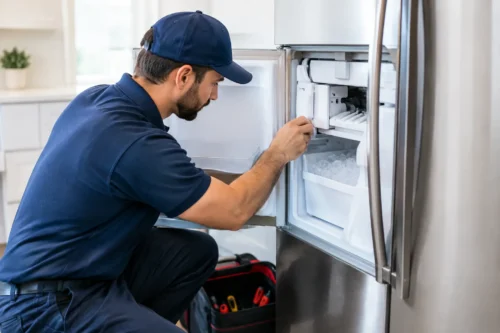
If food temperatures are rising, the freezer is no longer holding, frost keeps returning, or the refrigerator is running constantly without cooling properly, it is time for professional service. The longer a cooling issue continues, the greater the chance of food loss and added wear on expensive components.
An accurate diagnosis matters because several different failures can produce the same symptom. A warm fridge might be caused by airflow, defrost failure, dirty coils, a fan motor, a thermostat issue, a control problem, or a sealed system fault. Good repair work is not about swapping parts until something works. It is about identifying the actual cause and fixing it correctly.
That is especially important for homeowners who want a dependable repair instead of a short-term patch. In homes where family schedules, groceries, and daily routines depend on reliable appliances, a refrigerator problem is never just a minor inconvenience.
If you are asking why is my fridge warm, trust what the appliance is telling you. A refrigerator rarely gets warm for no reason, and early attention usually gives you the best chance to protect your food and avoid a larger repair. A careful diagnosis today can save a lot of frustration tomorrow.