Table of Contents
- Why a Diagnosis Comes Before a Decision
- When Appliance Repair Usually Makes Sense
- Signs You Should Call for Appliance Repair
- What Homeowners Can Check First
- The Value of a Repair You Can Trust
- Appliance Repair for Southern Utah Homes
- Repair or Replace: Ask These Questions
A refrigerator that stops cooling can turn a full grocery trip into a race against the clock. A washer that will not drain can leave a family staring at piles of wet clothes. When a major household machine fails, appliance repair is not just about fixing a part. It is about restoring the routines that keep a home comfortable, clean, and running on schedule.
For many homeowners, the first question is whether to repair the appliance or replace it. The right answer depends on the machine’s age, condition, repair history, and the cause of the failure. Guessing can be expensive. A professional diagnosis gives you a clear picture of what is wrong, what the repair involves, and whether putting money into the appliance makes practical sense.
Why a Diagnosis Comes Before a Decision
Modern appliances can show similar symptoms for very different reasons. A refrigerator that feels warm may have a failed fan motor, dirty condenser coils, a faulty control board, or a sealed-system problem. A dishwasher that leaves dishes dirty might have a clogged spray arm, a worn circulation pump, or simply an issue with water temperature or detergent use.
That is why replacing an appliance based on one symptom is often premature. An experienced technician tests the system, identifies the failed component, and checks for related issues that could affect the repair. This helps prevent the frustrating cycle of replacing a part without solving the actual problem.
A good service visit should leave you with straightforward information. You should know what failed, why it matters, what the recommended repair costs, and what to expect after the work is completed. Honest advice is especially valuable when replacement may truly be the better investment.
When Appliance Repair Usually Makes Sense
Repair is often a smart choice when the appliance has been dependable, the problem is isolated, and a quality replacement would cost significantly more than the repair. Many common failures are repairable: broken door latches, worn belts, failed heating elements, damaged water valves, clogged drain pumps, and malfunctioning ice maker components.
The age of the appliance matters, but it is not the only factor. A well-maintained appliance that is several years old may still have plenty of useful life left. On the other hand, a newer model with repeated electronic failures or an expensive sealed-system issue may deserve a more careful cost comparison.
Consider how the appliance serves your household, too. Repairing a familiar range may be more practical than shopping for a new model, arranging delivery, and adapting cabinetry or electrical connections. For a built-in microwave, wine cooler, or specialty appliance, replacement can be more complicated than it first appears.
Signs You Should Call for Appliance Repair
Some problems are easy to put off, but delaying service can turn a manageable repair into a larger one. A dryer that takes two or three cycles to dry clothes could have an airflow issue, a failing heating component, or a vent restriction. Continuing to run it wastes energy and may create a safety concern.
Call for help when you notice changes in performance, unusual sounds, leaks, burning smells, error codes, or inconsistent temperatures. Refrigerators and freezers deserve especially quick attention. Food can spoil before a complete breakdown becomes obvious, and a small water leak can damage flooring, cabinets, or nearby walls.
A few warning signs should never be ignored:
- A refrigerator or freezer is not holding a safe, consistent temperature.
- A washer is leaking, will not spin, or leaves standing water in the drum.
- A dryer has a burning smell, runs excessively hot, or takes much longer to dry clothes.
- An oven will not heat correctly, a burner will not shut off, or a gas appliance has an unusual odor.
- A dishwasher leaks, fails to drain, or leaves water on the floor after a cycle.
If an appliance has an electrical burning smell, visible smoke, a suspected gas leak, or active water leaking near electrical connections, stop using it. Shut off power or water when it is safe to do so and arrange professional service promptly.
What Homeowners Can Check First
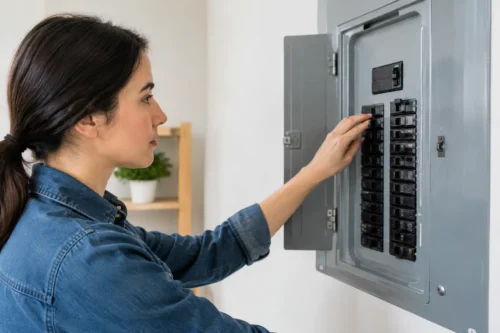
There are a few simple checks worth making before scheduling a visit. Make sure the appliance has power, check that a circuit breaker has not tripped, and confirm the water supply valve is open for appliances that need water. For a dishwasher or washer, look for a kinked drain hose. For a refrigerator, verify that vents inside the compartments are not blocked by food containers.
These checks can save time, but they have limits. Do not disassemble panels, bypass safety switches, or attempt electrical repairs without the proper training and tools. Appliances contain sharp edges, high-voltage components, gas connections, and pressurized systems. Online videos may make a repair look simple while leaving out model-specific procedures and safety precautions.
Cleaning and maintenance are different from diagnosis. Keeping refrigerator coils reasonably clean, clearing dryer lint after every load, and using the right dishwasher detergent can improve performance. But when an appliance repeatedly trips a breaker, leaks, makes grinding noises, or stops doing its job, professional testing is the safer path.
The Value of a Repair You Can Trust
The best appliance repair experience is not rushed or vague. It starts with a technician who listens to what happened, asks about the appliance’s behavior, and evaluates the machine rather than assuming the most obvious cause. That attention matters because household appliances are interconnected systems, not just a collection of replaceable parts.
Factory training and years of hands-on experience also make a difference when working across brands and appliance types. Refrigerators, freezers, washers, dryers, ovens, stoves, dishwashers, microwaves, garbage disposals, ice makers, BBQ grills, and wine coolers each have their own common failure points. Accurate diagnosis helps avoid unnecessary parts and repeat service calls.
For homeowners, trust also means having someone respectful inside the home. You should expect clear communication, careful work around your kitchen or laundry area, and recommendations based on the condition of your appliance rather than pressure to spend more than necessary. Owner-led service adds personal accountability to that promise.
Appliance Repair for Southern Utah Homes
Southern Utah homes place real demands on their appliances. Busy family schedules mean washers and dryers rarely get much downtime. Hot weather makes dependable refrigeration essential, especially when a refrigerator or freezer is full after a grocery run. Entertaining, holiday meals, and everyday cooking all depend on ovens, ranges, dishwashers, and ice makers working as they should.
Local service matters when a breakdown disrupts the household. Master Tech Appliance Repair serves homeowners in St. George and nearby communities with practical diagnostics and repairs focused on getting essential appliances back to reliable operation. The goal is not to make a temporary guess. It is to identify the issue, explain the options clearly, and complete work that supports the life of the appliance.
Repair or Replace: Ask These Questions
Before making a final decision, think beyond the immediate inconvenience. Has the appliance needed several repairs recently? Is the repair cost reasonable compared with the cost of a comparable new model? Are replacement parts available? Has performance been declining in other ways, such as higher energy use, inconsistent temperatures, or frequent error codes?
It also helps to consider installation. A new appliance may require changes to cabinetry, ventilation, plumbing, gas lines, or electrical service. If the current appliance fits the space well and has only one repairable issue, fixing it may offer better value and less disruption.
There is no universal rule that every older appliance should be replaced or every newer one should be repaired. The practical choice comes from an accurate diagnosis, transparent pricing, and an honest assessment of the machine’s expected future performance.
When your appliances are working, daily life moves quietly in the background. When one fails, a timely call can protect your food, your schedule, and your home from a small problem becoming a much bigger interruption.