Table of Contents
- Refrigerator Maintenance for Homeowners Starts With Temperature
- Keep Air Moving Inside and Around the Unit
- Clean Condenser Coils Carefully
- Check Door Gaskets Before Cold Air Escapes
- Replace Water Filters on Schedule
- Manage Frost, Spills, and Food Storage
- Make Sure the Refrigerator Is Level
- Know Which Noises and Changes Need Attention
- Build a Simple Maintenance Routine
A refrigerator rarely fails at a convenient time. It is usually noticed when milk is warm, ice cream is soft, or groceries from a busy week are suddenly at risk. Regular refrigerator maintenance for homeowners is one of the simplest ways to protect food, avoid unnecessary energy costs, and catch small problems before they interrupt your household routine.
Most maintenance takes only a few minutes at a time. The key is knowing what you can safely handle, what warning signs deserve attention, and when a professional diagnosis can save you from replacing food or the appliance itself.
Refrigerator Maintenance for Homeowners Starts With Temperature
Your refrigerator can look like it is running normally while holding food at an unsafe temperature. For most homes, the fresh-food compartment should stay at or below 40 degrees Fahrenheit, with 37 degrees being a good target. The freezer should remain at 0 degrees Fahrenheit.
Do not rely on the control dial alone. A simple appliance thermometer gives you a clearer reading, especially if you have noticed food spoiling early, drinks not getting cold enough, or frozen items developing excess frost. Check temperatures after the doors have stayed closed for several hours.
If the refrigerator is too warm, start with the easy causes. Confirm that the doors are fully closing, the vents inside are not blocked by food containers, and the temperature setting has not been bumped. If those checks do not solve the issue, the cause may involve the condenser fan, evaporator fan, thermostat, defrost system, or another component that needs proper testing.
Keep Air Moving Inside and Around the Unit
Cold air needs room to circulate. Packing the refrigerator too tightly can block interior vents and create warm spots, even when the appliance itself is working. Leave a little space around containers and avoid pushing large items directly against air vents in the refrigerator or freezer.
The same principle applies behind and beneath the unit. Refrigerators release heat through their condenser system, and they need adequate clearance to do that job efficiently. Check your owner’s manual for the manufacturer’s recommended spacing, particularly if the refrigerator is tucked into cabinetry.
In St. George and across Southern Utah, dusty conditions and hot weather can make proper airflow even more important. A refrigerator located in a warm garage, near a sunny window, or beside an oven may run longer than normal. That added workload can increase wear and raise utility costs. If possible, keep the appliance away from direct heat and make sure it is not surrounded by stored boxes or household clutter.
Clean Condenser Coils Carefully
Condenser coils help the refrigerator release heat. When they collect dust, pet hair, and lint, the system has to work harder to keep food cold. Over time, that can contribute to longer run times, poor cooling, and unnecessary strain on important components.
Many modern refrigerators have coils behind a lower front grille or at the back of the appliance. Others have a more enclosed design, so access varies by model. Before cleaning, unplug the refrigerator or switch off power at the breaker if you can do so safely. Use a coil brush and a vacuum with a brush attachment to remove loose buildup without bending or damaging delicate parts.
For many households, cleaning the coils once or twice a year is enough. Homes with shedding pets, frequent dust, or a refrigerator in a garage may need it more often. If the refrigerator is still hot to the touch, running constantly, or struggling to cool after the coils are cleaned, do not assume dirt was the only problem.
Check Door Gaskets Before Cold Air Escapes
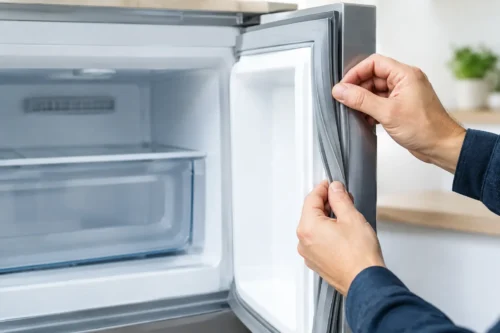
The flexible rubber seals around the doors are called gaskets. They keep warm kitchen air out and cold air in. A cracked, loose, dirty, or flattened gasket can cause the refrigerator to run longer and can lead to condensation, frost, and uneven temperatures.
Inspect the seals every few months. Wipe them with warm water, mild soap, and a soft cloth, paying attention to crumbs and sticky residue in the folds. Avoid harsh cleaners that can dry or damage the rubber.
You can also try a simple paper test. Close the door on a piece of paper and gently pull it out. Some resistance is normal. If the paper slides freely in several places, the gasket may not be sealing well. Sometimes a careful cleaning and adjustment helps, but worn gaskets usually need replacement.
Replace Water Filters on Schedule
If your refrigerator has a water dispenser or ice maker, the water filter deserves regular attention. Most filters should be replaced about every six months, although the correct schedule depends on the manufacturer, water quality, and how much water your household uses.
An overdue filter can affect water taste, reduce dispenser flow, and contribute to small or hollow ice cubes. It is also easy to overlook because the refrigerator may continue producing water and ice for a while. Use the filter indicator as a reminder, but keep track of the replacement date as well.
After installing a new filter, flush the amount of water recommended in the owner’s manual. This clears trapped air and loose carbon particles from the new filter. If water flow remains weak after a filter change, the issue may be a supply line, inlet valve, housing, or frozen reservoir rather than the filter itself.
Manage Frost, Spills, and Food Storage
A little frost can develop when a freezer door is left open, but heavy frost is not a normal cleaning issue. Thick frost on freezer walls, around the ice maker, or over food packages may point to a door-seal problem or an issue with the automatic defrost system. Chipping at ice with a knife or sharp tool can puncture a liner or refrigerant line, creating a far more expensive repair.
Clean spills promptly, especially in door bins and beneath crisper drawers. This prevents odors and keeps drains from becoming clogged. If you notice water pooling under drawers or on the floor near the refrigerator, check for obvious spills first. Persistent water can indicate a blocked defrost drain, damaged water line, or leaking ice maker connection.
Good food storage also helps cooling performance. Cover foods with strong odors, avoid storing hot leftovers until they have cooled slightly, and do not overload shelves. Hot food forces the refrigerator to work harder, while overfilled shelves restrict airflow.
Make Sure the Refrigerator Is Level
A refrigerator that is not properly leveled can develop annoying and sometimes costly issues. Doors may swing open instead of closing on their own, the gasket may not seal evenly, and some ice makers may not operate as intended.
Most refrigerators have adjustable front leveling legs. The unit should generally sit level from side to side and tilt slightly toward the back so the doors close naturally. The exact recommendation varies by manufacturer, so check the owner’s manual before making significant adjustments.
If the refrigerator rocks, has a door that will not stay shut, or suddenly begins making new vibration noises, leveling is worth checking. A persistent rattle can also come from a loose drain pan, an item resting against the back wall, or a unit pushed too close to cabinetry.
Know Which Noises and Changes Need Attention
Refrigerators make normal sounds: a low compressor hum, a fan sound, occasional clicking, water entering the ice maker, and brief cracking noises during defrost cycles. The concern is not every sound. It is a sound that is new, loud, repetitive, or paired with poor cooling.
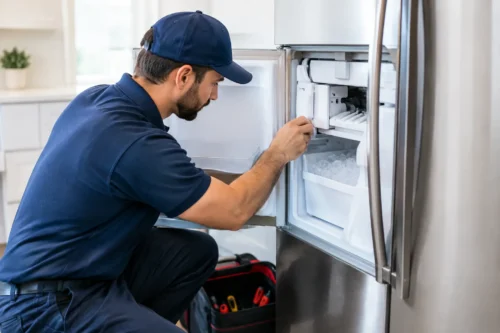
Call for service if you notice a persistent buzzing, grinding, squealing, repeated clicking without cooling, burning odors, or frequent cycling. Other warning signs include a freezer that will not freeze, water beneath the refrigerator, excessive frost, warm interior temperatures, or a refrigerator that runs almost continuously.
Homeowners can often prevent a service call by cleaning coils, changing a filter, and keeping vents clear. But electrical components, sealed-system problems, refrigerant concerns, and defrost failures require accurate diagnosis. Guessing at parts can waste money and leave your food storage problem unresolved.
Build a Simple Maintenance Routine
A practical routine is easier to follow than a long checklist. Each month, take a quick look at the temperature, door seals, and interior vents. Every six months, replace the water filter if your model uses one and clean up hidden spills. Once or twice a year, clean the condenser area and check that the refrigerator is level and has adequate breathing room.
If your refrigerator begins showing warning signs, address them early rather than waiting for a full breakdown. A dependable refrigerator protects more than groceries – it keeps meals, family schedules, and everyday home life moving. When a problem goes beyond basic upkeep, Master Tech Appliance Repair can help Southern Utah homeowners get clear answers and reliable repairs without replacement guesswork.