Table of Contents
- When KitchenAid Repair Is the Better Choice
- Common KitchenAid Problems and What They Can Mean
- Refrigerator and ice maker concerns
- Dishwasher problems
- Oven and range issues
- Safe Checks to Make Before You Call
- What a Professional KitchenAid Repair Visit Should Provide
- Help Your KitchenAid Appliance Last Longer
A KitchenAid appliance rarely breaks at a convenient time. The refrigerator starts warming after a grocery trip, the dishwasher leaves dishes cloudy before guests arrive, or the oven will not heat when dinner is already planned. Prompt KitchenAid repair can protect more than the appliance itself – it can prevent food loss, water damage, disrupted meals, and the frustration of guessing what to do next.
KitchenAid makes dependable kitchen appliances, but even well-built equipment eventually needs attention. The right response depends on the symptom, the appliance’s age, and whether a simple maintenance issue is involved or a failed part needs professional diagnosis. Knowing the difference helps homeowners make a sensible decision without replacing an appliance too soon.
When KitchenAid Repair Is the Better Choice
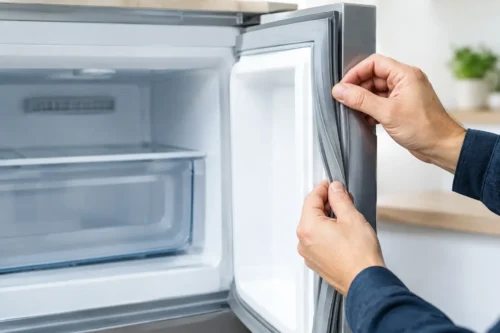
Replacement is not automatically the answer when a major appliance acts up. Many KitchenAid refrigerators, dishwashers, ovens, ranges, and ice makers can continue serving a household for years after a targeted repair. A worn door gasket, failed heating element, faulty water valve, damaged rack component, or malfunctioning control part may create a major inconvenience, but it does not always mean the entire appliance has reached the end of its useful life.
Repair often makes good financial sense when the appliance has been reliable, the cabinet and major components are in good condition, and the problem can be traced to a serviceable part. This is especially true for built-in models or appliances that match the rest of a kitchen. Replacing one appliance can involve delivery delays, installation changes, finish-matching concerns, and the cost of removing the old unit.
There are times when replacement deserves consideration. A refrigerator with a sealed-system failure, an appliance with repeated expensive repairs, or a unit showing widespread corrosion or structural damage may not be the best candidate for continued investment. An honest technician should explain that trade-off clearly. The goal is not to push a repair at any cost. It is to give you enough information to choose the option that best serves your home and budget.
Common KitchenAid Problems and What They Can Mean
A symptom can point to several possible causes, which is why a proper diagnosis matters. For example, a refrigerator that is not cooling may have blocked airflow, dirty condenser coils, a fan problem, a defrost issue, a control failure, or something more involved. Replacing parts based on an online guess can become expensive quickly.
Refrigerator and ice maker concerns
Warm food, frost buildup, water under the refrigerator, and slow or missing ice are common reasons homeowners call for service. Before assuming the worst, check that the doors are closing fully, food is not blocking interior vents, and the temperature controls were not accidentally changed. If the refrigerator is warm, move perishable food to another cold location as soon as possible.
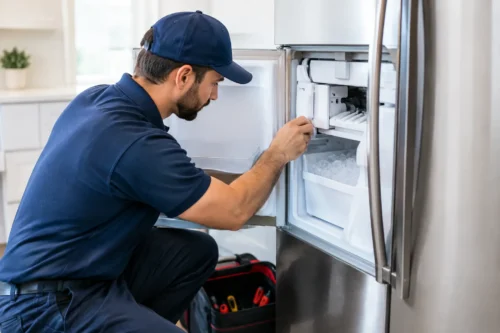
Ice maker trouble is sometimes related to a simple water supply issue, but it can also involve a frozen fill tube, inlet valve, sensor, ice maker assembly, filter restriction, or freezer temperature problem. Southern Utah’s mineral-heavy water can also contribute to buildup over time, particularly where water filters or supply components are involved. A technician can determine whether the ice maker is the source of the problem or simply reacting to another refrigerator issue.
Dishwasher problems
A KitchenAid dishwasher that will not drain, leaks onto the floor, smells unpleasant, or leaves food on dishes can make the kitchen harder to manage fast. Start with the basics: clean the filter according to the owner manual, make sure the spray arms can turn freely, and use fresh detergent designed for automatic dishwashers. Do not use excessive soap or hand dishwashing liquid, which can create an overflow situation.
If the dishwasher still leaves standing water, fails to fill, makes unusual grinding noises, or trips the breaker, it is time to stop using it and schedule service. Drain pump failures, circulation motor issues, door latch problems, heating faults, and electronic control concerns require testing. Continuing to run a leaking dishwasher can damage flooring, cabinets, and subflooring long before the source of the leak becomes obvious.
Oven and range issues
An oven that takes too long to preheat, bakes unevenly, displays an error code, or will not heat at all can turn a normal weeknight into takeout night. On electric models, a burned-out bake or broil element may be visible, but the cause is not always obvious. Temperature sensors, relays, wiring, controls, and power supply issues can create similar symptoms.
Gas ranges deserve additional caution. If you smell gas, hear an unusual hissing sound near a gas connection, or suspect a leak, do not try to diagnose the appliance yourself. Avoid flames and electrical switches in the area, leave the home if necessary, and contact the appropriate gas provider or emergency service. For non-emergency burner or ignition problems, professional testing helps ensure the repair is completed safely.
Safe Checks to Make Before You Call
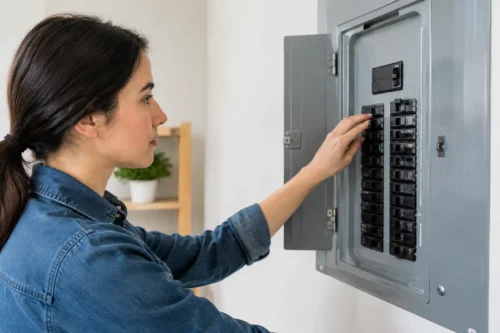
A few homeowner checks can save time and may identify a simple issue. Confirm the appliance has power, inspect the breaker if it is safe to do so, and look for a tripped GFCI outlet in nearby kitchen, garage, or utility areas. Check that water supply valves are open for appliances that use water, and make sure a refrigerator or dishwasher door is closing and latching properly.
For refrigerators, vacuuming accessible dust from the condenser area can improve airflow, provided the appliance is unplugged first and the owner manual permits the cleaning approach. For dishwashers, cleaning a removable filter can improve wash and drain performance. Write down any error code, note when the problem started, and pay attention to whether the issue is constant or intermittent. Those details help speed up diagnosis.
Avoid taking apart electrical panels, bypassing door switches, forcing stuck components, or attempting gas-related repairs. Appliance wiring, sharp metal edges, hot surfaces, and water connections create real risks. A quick repair attempt can also turn a smaller problem into a damaged control board, broken fitting, or avoidable leak.
What a Professional KitchenAid Repair Visit Should Provide
A dependable service visit begins with listening. The technician should ask what the appliance is doing, when the issue occurs, and whether there were warning signs such as noises, leaks, poor performance, or error messages. From there, diagnosis should involve more than swapping a likely part. Proper testing can separate a failed component from a wiring, airflow, installation, or control issue.
Once the problem is identified, you should receive a clear explanation of the repair, expected parts needs, and practical options. If a part must be ordered, the technician should explain the next step rather than leaving you uncertain about your appliance and schedule. Clean, respectful work inside the home matters too. Kitchen repairs affect the spaces families use every day, and service should minimize disruption whenever possible.
For homeowners in St. George and surrounding Southern Utah communities, Master Tech Appliance Repair brings owner-led experience and more than 20 years in the appliance industry to these decisions. That experience matters when a symptom has multiple possible causes and you need an honest answer, not replacement guesswork.
Help Your KitchenAid Appliance Last Longer
Maintenance will not prevent every failure, but it reduces strain on many kitchen appliances. Keep refrigerator door seals clean, avoid blocking interior air vents, and replace water filters on schedule. Clean dishwasher filters regularly and run the dishwasher with the correct detergent and rinse aid for local water conditions. Wipe spills from oven interiors before they bake onto surfaces, and avoid slamming oven or dishwasher doors, which can wear hinges and latches over time.
Pay attention to small changes. A new refrigerator noise, a dishwasher that suddenly needs a second cycle, or an oven that cooks unevenly may be an early warning rather than a temporary annoyance. Addressing the issue before a complete failure can be less stressful and may prevent a larger interruption to your household routine.
When your KitchenAid appliance stops doing the job your family depends on, a careful diagnosis is the most useful first step. It replaces uncertainty with a clear path forward and gives you a fair chance to keep a valuable appliance working where it belongs – in your kitchen, supporting daily life.