Table of Contents
- When appliance repair usually makes sense
- When appliance repair may not be worth it
- A simple way to think about cost
- Is appliance repair worth it for older appliances?
- The hidden costs of replacement
- The hidden value of a good repair
- How to decide without guessing
- So, is appliance repair worth it?
Your refrigerator stops cooling the night before a big grocery run, or your dryer quits with a full week of laundry waiting. In moments like that, the question becomes very practical, very fast: is appliance repair worth it, or are you about to throw good money after bad?
The honest answer is that it depends on the appliance, the problem, the age of the unit, and the cost of replacement. But for many homeowners, repair is often the better first move – especially when the issue is diagnosed correctly and fixed by an experienced technician. A quality repair can restore convenience, protect your food, keep your routine on track, and cost far less than replacing the whole machine.
When appliance repair usually makes sense
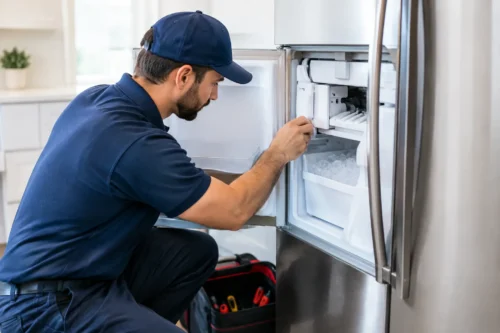
If the appliance is still within a reasonable service life and the repair addresses a specific failed part, repair is often worth it. Many common problems sound worse than they are. A washer that will not drain may need a pump. A dishwasher that will not start might have a bad latch or control issue. An oven that will not heat evenly could be dealing with a failing element or sensor.
In these cases, the core appliance may still be in solid condition. Replacing one worn or failed component is very different from dealing with a machine that is breaking down in multiple areas at once.
Repair also makes sense when the appliance is a higher-end model. Better-built refrigerators, ovens, and washers are often worth repairing because their replacement cost is much higher, and their overall construction may justify the investment. The same goes for built-in units, specialty appliances, and models that would be expensive or disruptive to swap out.
Another factor is speed. A repair can often get your household back to normal faster than shopping, waiting for delivery, arranging installation, and adjusting cabinetry or utility connections. For families, retirees, and busy homeowners, that time matters.
When appliance repair may not be worth it
There are times when replacement is the smarter financial choice. If the appliance is near the end of its expected lifespan and the repair is major, you have to look at the bigger picture.
A refrigerator with a sealed system problem, an older washer with transmission issues, or a dryer with multiple failing components may not be the best place to invest more money. If one expensive repair is followed by another a few months later, the savings of keeping the old unit disappear quickly.
Repair may also be harder to justify when replacement cost is relatively low. Some basic dishwashers, microwaves, and laundry units can be replaced for a price that is not far off from a major repair. In that case, homeowners need to weigh not just the current bill, but the likelihood of future problems.
That is where honest diagnosis matters. You do not just need someone who can replace a part. You need someone who can tell you whether the appliance is likely to keep serving you well after the repair.
A simple way to think about cost
One common rule of thumb is to compare the repair cost to the replacement cost. If the repair is less than about half the cost of a new appliance, it often makes sense to fix it, especially if the unit still has useful years left.
That rule is helpful, but it is not perfect. A cheaper new appliance is not always the better value. You also have to consider delivery, installation, haul-away fees, possible modification costs, and the simple reality that some newer budget models do not last as long as older, better-built machines.
The real question is not just, “Can I replace this?” It is, “What gives me the best value over the next few years?”
Is appliance repair worth it for older appliances?
Older appliances are where the decision gets more nuanced. Age matters, but age alone should not decide it.
Some older machines are worth repairing because they were built well and have only one clear issue. Others are living on borrowed time. An experienced technician will look at overall condition, not just the failed part. Are bearings noisy? Is rust spreading? Are control boards becoming unreliable? Has the machine needed repeat service already?
For example, a 12-year-old dryer with a failed heating element might still be worth fixing if the rest of the unit is in good shape. A 12-year-old refrigerator with cooling issues, worn seals, and compressor concerns is a different story.
This is why homeowners should be careful about making decisions based only on age charts they find online. Two appliances of the same age can be in very different condition depending on brand, maintenance, usage, and environment.
The hidden costs of replacement
Replacement sounds clean and simple until you start adding up what comes with it.
A new refrigerator can mean days of waiting, losing refrigerated food, and making space for delivery. A new wall oven or built-in microwave may involve fit issues. A new dishwasher may need installation adjustments. A washer and dryer replacement can affect venting, hookups, and even flooring.
Then there is the learning curve. New controls, new features, new dimensions, and in some cases lower durability than the unit you are replacing.
For homeowners in Southern Utah, quick and reliable repair can be especially valuable when a breakdown disrupts food storage, laundry, or kitchen cleanup in the middle of a busy week. Convenience has real value, even if it does not show up on the invoice.
The hidden value of a good repair
A good repair is not just about getting the machine to turn back on. It is about restoring confidence in something your household relies on every day.
When your freezer holds temperature again, you stop worrying about losing hundreds of dollars in food. When your washer is running properly, your family routine gets back on schedule. When your oven heats correctly, meals become normal again instead of a workaround.
That is why repair is often worth it when the service is done right the first time. Proper diagnosis matters. Using the right part matters. Knowing what else to inspect while the appliance is open matters.
An appliance is not helpful because it exists in your house. It is helpful because it works reliably when you need it.
How to decide without guessing
If you are trying to decide whether to repair or replace, start with a few practical questions.
How old is the appliance, and how has it performed overall? Is this the first issue, or one of several? Is the repair targeted and reasonable, or is it major and uncertain? What would replacement really cost after delivery and installation? And most important, did a qualified technician give you a clear explanation of the problem and your options?
Homeowners get into trouble when they make rushed decisions based on frustration alone. A noisy dishwasher or warm refrigerator can make anyone want a fast answer, but the best decision usually comes after a solid diagnosis.
A trustworthy technician should not pressure you either way. You should get an honest recommendation based on condition, cost, and what makes sense for your home.
So, is appliance repair worth it?
Most of the time, yes – when the appliance still has useful life left and the repair solves a specific problem at a reasonable cost.
Not always, though. If the unit is worn out, the repair is extensive, or future failures seem likely, replacement may be the better call. The key is knowing the difference before you spend money.
That is where experience matters. Companies like Master Tech Appliance Repair build trust by helping homeowners make smart decisions, not just selling repairs. Sometimes the right answer is to fix it. Sometimes the right answer is to replace it. Either way, you deserve a diagnosis that is honest, clear, and based on what will serve your household best.
If your appliance is acting up, the goal is not to keep it alive at any cost. The goal is to protect your time, your budget, and the routines that keep your home running smoothly.