Table of Contents
- Why an oven not heating properly happens
- Common signs your oven is not heating the way it should
- What you can safely check at home
- When the problem is not a DIY repair
- The most likely parts behind oven heating problems
- Why accurate diagnosis saves money
- What to expect from a service call
Dinner taking twice as long to cook is usually the first sign something is off. If your oven not heating properly has turned a simple meal into a guessing game, the problem may be anything from a bad igniter to a faulty heating element or temperature sensor. Some causes are minor. Others point to a part that is failing and needs a proper diagnosis before the issue gets worse.
For most homeowners, the hard part is figuring out whether the oven is actually not heating, heating unevenly, or reaching the wrong temperature. Those can feel like the same problem when you are standing in the kitchen with undercooked food, but they often come from different components. A careful look at the symptoms can save time, money, and frustration.
Why an oven not heating properly happens
An oven depends on a few key systems working together. It has to receive the right power or gas supply, create heat, measure temperature accurately, and cycle that heat on and off at the right time. When one part of that chain breaks down, performance changes quickly.
On an electric oven, a damaged bake element is one of the most common issues. If the lower element is blistered, cracked, or no longer glowing properly, the oven may struggle to preheat or cook very slowly. In some cases, the broil element still works, which can make the oven seem partly functional even though baking results are poor.
On a gas oven, a weak or failed igniter is a frequent cause. You may hear the oven click or notice a gas smell for a moment, but the burner does not light correctly or takes far too long to ignite. A worn igniter can still glow and yet be too weak to open the gas valve consistently. That is why visual inspection alone does not always tell the full story.
Temperature sensors and control boards also play a role. If the sensor is out of range, the oven may think it is hotter or cooler than it really is. If the control board is failing, heating cycles can become inconsistent. That often shows up as food that burns on one day and stays undercooked the next.
Common signs your oven is not heating the way it should
Sometimes the problem is obvious. The oven stays cold no matter what setting you choose. Other times, the signs are more subtle and show up in your meals before they show up in the appliance itself.
You might notice preheating takes much longer than it used to. Cookies may brown on top while staying raw in the center. Casseroles may need an extra 20 or 30 minutes. Bread may bake unevenly. If you use an oven thermometer and the reading is far off from the set temperature, that is another strong clue.
A gas oven with a delayed ignition may make a whooshing sound when it finally lights. An electric oven with a failed element may show visible damage or simply never reach a stable baking temperature. If the display works but the oven cavity does not heat, the issue is often deeper than a simple setting error.
What you can safely check at home
Before assuming the worst, there are a few basic things worth checking. Start with the controls. Make sure the oven is not in a delayed start mode and that the temperature was set correctly. It sounds simple, but electronic controls can be confusing, especially after a power outage.
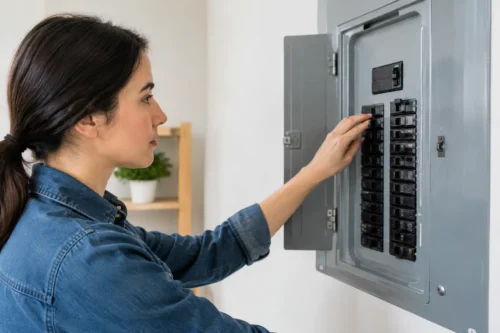
If you have an electric oven, check the circuit breaker. Some ovens run on 240 volts and can appear to have power even when one side of the breaker has tripped. The clock and light may still work while the heating function does not. Resetting the breaker once may restore function, but if it trips again, stop there and have it inspected.
Take a look inside the oven cavity. On electric models, inspect the bake and broil elements for visible breaks, blistering, or burn spots. On gas models, observe whether the igniter glows and whether the burner lights promptly. If ignition is slow or inconsistent, that points toward a likely igniter issue.
You can also test temperature accuracy with an oven-safe thermometer. Let the oven preheat fully, then compare the thermometer reading to the set temperature. A small difference is normal. A large difference, especially if it swings widely, suggests a sensor, element, igniter, or control problem.
When the problem is not a DIY repair
An oven is not like a loose cabinet hinge or a squeaky door. It involves live voltage, gas components, high heat, and parts that need to be tested correctly. That matters because replacing the wrong part is common when people try to fix an oven based on symptoms alone.
For example, a gas oven that will not heat may seem like a gas valve problem when the actual issue is a weak igniter. An electric oven with poor baking results may look like a bad control board when the bake element is only heating intermittently. The symptoms overlap, and proper diagnosis usually requires meters, manufacturer specs, and experience with how these failures show up in real homes.
There is also a safety side to consider. Gas smell, sparking, breaker trips, and scorched wiring are all signs to stop using the appliance and have it checked. Continuing to run the oven in that condition can damage other components or create a more serious hazard.
The most likely parts behind oven heating problems
Heating elements are high on the list for electric ovens. They wear out over time, especially after years of regular use. If one element fails completely, the oven may still warm slightly but never perform normally.
Igniters are the usual suspect on many gas models. This is one of those parts that can fail gradually. Homeowners often say, “It still lights, but it takes forever.” That slow decline often becomes a no-heat call sooner rather than later.
Temperature sensors are another common cause. When a sensor drifts out of range, the oven may overshoot or undershoot the target temperature. Electronic control boards are less common than igniter or element failures, but they do fail, and they can create erratic symptoms that seem hard to pin down.
Wiring issues, damaged terminals, and failed relays can also be involved. That is especially true in older appliances or in units that have seen heavy use. In those cases, replacing a single visible part may not solve the full problem if heat damage has affected surrounding connections.
Why accurate diagnosis saves money
When an oven not heating properly interrupts family meals, it is tempting to jump straight to replacement. Sometimes replacement makes sense, especially if the appliance is older and has multiple major issues. But often, the repair is much more manageable than people expect.
The key is finding the actual failed component rather than guessing. Replacing an igniter, sensor, or heating element is very different from replacing an entire appliance. A professional diagnosis helps you understand what failed, what the repair involves, and whether the oven is worth fixing based on its age, condition, and overall reliability.
That kind of honest assessment matters. Homeowners do not just want a working oven. They want confidence that the repair will hold up and that they are not putting money into the wrong solution.
What to expect from a service call
A good oven repair visit should feel straightforward, not confusing. The technician should listen to what the oven is doing, test the components tied to that symptom, and explain the issue in plain language. If the oven is heating inconsistently, they should verify whether the problem is temperature regulation, failed heat generation, or both.
From there, the next step is clear. You should know whether the part is repairable, whether replacement is recommended, and what makes the most sense for your household. For busy families, retirees, and property owners in Southern Utah, that clarity matters just as much as the repair itself.
Master Tech Appliance Repair works with the kind of issues homeowners see every day – ovens that stop heating before a holiday meal, ranges that cannot keep up with weeknight dinners, and appliances that fail at the worst possible time. Fast, accurate diagnosis helps get the kitchen back to normal without unnecessary delays.
If your oven is taking too long, cooking unevenly, or not heating at all, trust what it is telling you. Appliances usually show warning signs before they fail completely, and catching the problem early often leads to a simpler repair and a lot less disruption at home.