Table of Contents
- Start by Looking at Where the Frost Is
- Check the Door Seal Before Assuming a Major Failure
- How to Diagnose Freezer Frost From Temperature Changes
- Listen for Clues From the Defrost System
- Do Not Overlook the Drain and Ice Maker
- When a Manual Defrost Makes Sense
- Know When to Call for Freezer Repair
A light coating of frost can be normal after the freezer door has been open for a while. Thick, recurring frost is different. It takes up storage space, makes drawers difficult to open, and can eventually leave food softer than it should be. Knowing how to diagnose freezer frost helps you separate a simple door issue from a repair that should not wait.
For Southern Utah homeowners, this problem can become especially frustrating when a freezer is working overtime during warm weather. Before assuming the appliance is failing, look at where the frost is forming, how quickly it returns, and whether the freezer is still holding a safe temperature. Those details point directly toward the likely cause.
Start by Looking at Where the Frost Is
The location and appearance of frost tell a better story than the amount alone. Frost around the door opening, along food packages, or on the ceiling often points to warm, humid air entering the freezer. Frost concentrated on the back interior panel is more likely connected to the automatic defrost system or an airflow problem.
Open the freezer and look for these patterns:
- Frost lining the door frame or coating the front edges of shelves usually indicates an air leak at the door.
- Snow-like frost on food, ice cream containers, and freezer walls often comes from frequent door openings or a door left slightly ajar.
- A solid sheet of ice or heavy frost on the back wall can mean the evaporator coils behind that panel are icing over.
- Frost near the ice maker or around a water line may be tied to a poorly seated ice bin, a door issue, or moisture entering near that area.
Do not chip at thick ice with a knife, screwdriver, or sharp tool. One puncture to an interior liner or refrigerant line can turn a manageable repair into a much larger problem. If a buildup needs to be removed, use a full manual defrost approach rather than force.
Check the Door Seal Before Assuming a Major Failure
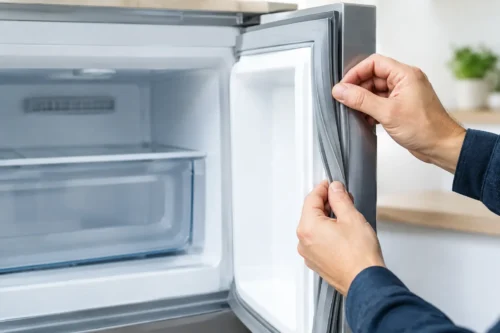
A worn, dirty, or misaligned door gasket is one of the most common reasons frost forms. The gasket is the flexible rubber seal around the freezer door. Its job is simple: keep warm room air out. If it cannot make full contact with the cabinet, humid air enters each hour of the day and freezes into frost.
Start with a visual inspection. Look for tears, flattened sections, hardened rubber, food debris, or a gasket that has pulled away at a corner. Wipe it with warm water and mild soap, then dry it completely. Sticky spills and crumbs can prevent a good seal even when the gasket itself is still in good condition.
Next, try the paper test. Close the freezer door on a sheet of paper or a dollar bill, then gently pull it out. You should feel resistance. Test several spots around the door, particularly corners and the center of each side. If the paper slides out easily in one area, the seal may not be closing properly there.
Also check whether food packages, oversized containers, or an overfilled freezer are holding the door open. A bag of frozen vegetables caught in a drawer can create just enough of a gap to produce a surprising amount of frost overnight. On some refrigerators, a freezer drawer that does not glide fully shut can cause the same problem.
How to Diagnose Freezer Frost From Temperature Changes
Frost is not always just a nuisance. It can be a sign that the freezer is struggling to maintain temperature. A properly operating freezer should generally stay at 0 degrees Fahrenheit. Use an appliance thermometer placed between packages for several hours rather than relying only on the display panel.
If the temperature is above 0 degrees and frost is building, pay attention to food condition. Ice cream that becomes soft, frozen foods with melt-and-refreeze ice crystals, or packages that feel less solid may indicate a cooling or airflow concern. Move high-value or perishable frozen food to another freezer if temperatures are rising.
A freezer can also be too cold in one area and too warm in another. If food near the back is heavily frosted while food near the door feels softer, blocked air passages or iced-over evaporator coils may be preventing cold air from circulating properly. Avoid packing food tightly against the back wall or in front of interior vents. Freezers need space for air to move.
Keep in mind that a freezer stuffed beyond capacity can create airflow issues, while a nearly empty freezer may have wider temperature swings when the door opens. The goal is a reasonably full freezer with clear vents and doors that close freely.
Listen for Clues From the Defrost System
Most modern frost-free freezers periodically melt frost from the evaporator coils through an automatic defrost cycle. This system typically includes a defrost heater, a thermostat or sensor, a control board or timer, and a drain path for the meltwater. When one part fails, ice can build behind the rear panel even though the freezer continues to run.
One common sign is a freezer that seems cold at first but gradually becomes warmer over several days or weeks. The fan may sound louder, or it may run constantly because it cannot move air through coils buried in ice. You may see a heavy white frost pattern on the rear panel rather than a light, even coating throughout the compartment.
A full manual defrost can temporarily restore cooling, but it does not prove the problem is fixed. If the frost returns shortly afterward, the automatic defrost system likely needs diagnosis. A technician can test the heater, sensor, fan motor, and control components safely and determine which part is actually at fault. Replacing parts by guesswork can be costly, especially on newer refrigerators with electronic controls.
Do Not Overlook the Drain and Ice Maker
When the defrost system runs, meltwater should travel through a drain to a pan below the refrigerator. If that drain is blocked by ice or debris, water can refreeze inside the freezer. You may notice a sheet of ice on the floor, ice beneath the lower basket, or water leaking when the door is opened.
A blocked drain may respond to a careful manual defrost and cleaning, but recurring ice on the freezer floor deserves attention. The drain tube, drain heater, or defrost components may need service. Simply breaking up the visible ice does not always clear the blockage farther down the line.
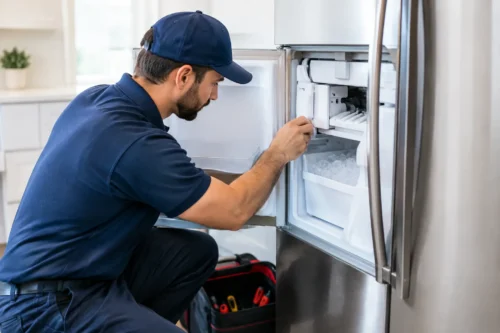
If the frost is mainly around the ice maker, first make sure the ice bin is installed correctly and the door closes completely. Ice makers can introduce moisture each time the freezer is opened, but major frost buildup is still not normal. In some cases, an ice maker fill problem or a door-seal issue is contributing to the moisture.
When a Manual Defrost Makes Sense
A manual defrost is useful when the freezer is heavily iced over and airflow has clearly been reduced. It can protect food and give you a clean starting point for observing whether the frost returns. Plan ahead, because the freezer must be emptied and unplugged long enough for all hidden ice to melt.
Transfer food to a cooler with ice or another freezer. Unplug the appliance, leave the doors open, and place towels around the base to manage water. Let ice melt naturally. You can place bowls of warm water inside to speed the process, but do not use a heat gun, hair dryer near standing water, or open flame.
Once the interior is dry, plug the unit back in and allow it to return to temperature before restocking it. Then watch closely over the next few days. If frost returns quickly despite a clean gasket, closed door, and proper loading, schedule a professional diagnosis. That pattern often means the underlying issue is not something a homeowner can see from the inside.
Know When to Call for Freezer Repair
A service call is the practical choice when frost returns after a manual defrost, the back wall repeatedly ices over, temperatures are inconsistent, or the freezer runs nearly all the time. It is also wise to call when you see damaged door seals, persistent water or ice on the freezer floor, unusual fan noises, or food beginning to thaw.
The trade-off is straightforward: a gasket cleanup or a door adjustment may be an easy fix, while a failed defrost heater or control board requires testing and the correct replacement part. Acting early can help prevent food loss and reduce the strain placed on the compressor.
A freezer should preserve the food your household depends on without demanding constant attention. If the frost keeps coming back, Master Tech Appliance Repair can identify the cause and help restore dependable freezer performance before a small issue disrupts your kitchen routine.