Table of Contents
- When Resetting an Ice Maker Makes Sense
- Check These Basics Before You Reset the Ice Maker
- How to Reset Ice Maker Controls Safely
- For an Ice Maker With a Reset Button
- For an Ice Maker With a Wire Shutoff Arm
- For a Refrigerator With a Control Panel
- When a Power Reset Is Appropriate
- What to Watch for After the Reset
- Problems a Reset Will Not Fix
- A Few Habits That Help Ice Makers Last
A full ice bin is easy to take for granted until the dispenser runs dry before a family dinner, weekend gathering, or hot Southern Utah afternoon. Knowing how to reset ice maker controls can sometimes restore production quickly, but the reset button is not a cure-all. If the ice maker has no water, is frozen over, or has a failed part, resetting it may only temporarily hide the real problem.
Before pressing anything, give the refrigerator a few minutes of attention. A safe, informed reset can save you time. It can also help you recognize when a repair is the better answer than repeated troubleshooting.
When Resetting an Ice Maker Makes Sense
An ice maker reset is most useful after a power outage, a refrigerator has been unplugged, the ice bin has been removed for cleaning, or the ice maker has stopped mid-cycle. Many modern refrigerator ice makers use a small electronic control that can lose its place after an interruption. Resetting tells it to begin a fresh harvest cycle.
It is less likely to help when the freezer is warm, the water dispenser is not working, the ice maker is visibly frosted over, or there is a water leak. Those symptoms point to a temperature, water-supply, or mechanical issue that needs to be corrected first.
Also keep expectations realistic. Even after a successful reset, most ice makers need several hours before they make a new batch. A completely empty bin may take 24 hours or more to fill, depending on the refrigerator model, freezer temperature, and household use.
Check These Basics Before You Reset the Ice Maker
Start with the freezer temperature. Ice makers generally perform best when the freezer is at 0°F or slightly below. If the compartment is warmer than about 5°F, water may not freeze properly and the ice maker may pause production. Avoid judging the temperature by feel alone – a refrigerator thermometer gives a more reliable answer.
Next, make sure the ice maker is turned on. Some models use a wire shutoff arm, while others have a switch or touch-screen setting. A wire arm in the raised position tells the unit that the bin is full. Lower it gently if it has been bumped upward.
Check that the ice bin is fully seated and that no large clumps are blocking the mechanism. Discard old, fused-together ice rather than chipping at it with a knife or sharp tool. The plastic mold, shutoff arm, and internal gears can be damaged surprisingly easily.
Finally, test the water dispenser if your refrigerator has one. Weak or absent water flow often means the ice maker is not receiving water either. A recently replaced water filter can also cause trouble if it is not fully installed or if air remains in the water line.
How to Reset Ice Maker Controls Safely
The exact process depends on the refrigerator brand and the style of ice maker. Look for the model number inside the refrigerator compartment or along the door frame before searching for model-specific instructions. Do not force a cover, button, or lever that does not move easily.
For an Ice Maker With a Reset Button
Many newer units have a small button labeled Reset, Test, or sometimes simply a small recessed switch. It may be on the side or bottom of the ice maker assembly, often behind the ice bin.
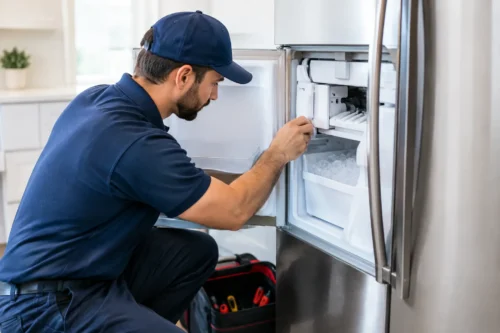
Remove the ice bin if necessary, then press and hold the reset button for about 5 to 10 seconds. You may hear a chime, a click, or the sound of the ice maker motor beginning to move. Replace the bin securely and close the freezer door.
Wait for the cycle to complete. The tray may rotate to eject old ice before it refills with water. If the unit does not add water within a cycle, do not keep pressing reset. Repeated resets can make diagnosis more confusing and will not solve a blocked water line or failed inlet valve.
For an Ice Maker With a Wire Shutoff Arm
Older and more traditional ice makers often use a metal wire arm. To reset this style, lower the arm into the down position, then raise and lower it once more. Make sure it can move freely and is not caught on a pile of ice.
If the arm keeps returning to the raised position or does not stay down, the ice maker head or shutoff mechanism may be damaged. This is a repair issue, not a problem to solve by bending the arm.
For a Refrigerator With a Control Panel
Some French-door and side-by-side refrigerators allow you to turn the ice maker off and on from the display panel. Turn the ice maker off, wait about 30 seconds, and turn it back on. If the panel has a dedicated reset or test setting, follow the appliance manual for that function.
Avoid turning off the entire refrigerator unless the manufacturer specifically recommends it. Powering down the appliance can affect food storage temperatures and may not reset the component you are trying to address.
When a Power Reset Is Appropriate
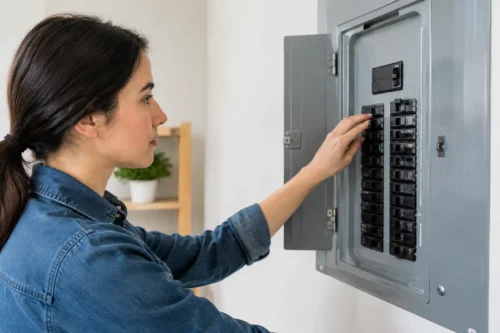
If there is no reset button and the appliance has recently experienced a power interruption, a brief power reset can help. Unplug the refrigerator or turn off its dedicated circuit breaker for about 5 minutes, then restore power.
Keep the doors closed while the power is off to protect refrigerated and frozen food. Once power returns, verify that the ice maker is switched on and allow time for the freezer to return to normal temperature. This method should be occasional, not a routine fix for an ice maker that repeatedly stops.
What to Watch for After the Reset
A successful reset does not always mean immediate ice. First, listen for a faint motor movement as the ice maker begins its cycle. Next, watch for water entering the mold. Depending on the design, that may happen right away or after the unit completes a harvest position check.
Within a few hours, look for a fresh batch of ice. Small, hollow, cloudy, or misshapen cubes can indicate low water pressure, a partially clogged filter, or a fill problem. A normal ice maker should produce consistent cubes and gradually replenish the bin without overflowing.
If the ice maker fills with water but never freezes, focus on freezer temperature and airflow. Overpacked freezers, blocked vents, dirty condenser components, or a cooling-system problem can prevent the ice maker compartment from getting cold enough.
Problems a Reset Will Not Fix
Resetting is a sensible first step, but it cannot repair worn or failed components. Call for professional diagnosis if you notice any of these signs:
- The ice maker has reset several times but still produces no ice.
- Water leaks from the ice maker, dispenser area, or under the refrigerator.
- The freezer temperature is too warm or varies widely.
- The ice maker is heavily frosted over or frozen solid.
- You hear repeated clicking, grinding, or buzzing without an ice cycle.
- The water dispenser has weak flow or does not dispense water.
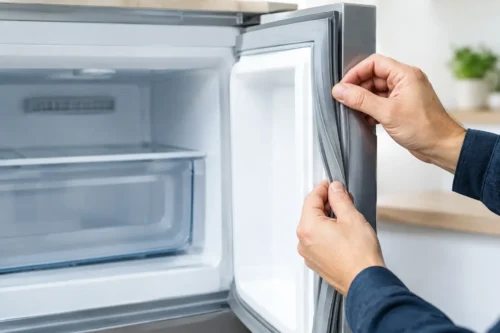
These symptoms can come from a failed water inlet valve, damaged fill tube, faulty ice maker motor, control-board issue, frozen line, door seal problem, or refrigerator cooling concern. Replacing parts by guesswork can become expensive, especially when the real issue is elsewhere in the appliance.
A Few Habits That Help Ice Makers Last
Keep the freezer at a stable temperature and avoid leaving the door open longer than necessary. Replace refrigerator water filters on the schedule recommended for your model, particularly if ice quality or dispenser flow changes. If you are away from home for an extended time, follow the manufacturer’s guidance for shutting off the ice maker or water supply.
It also helps to empty old ice periodically. Ice absorbs freezer odors over time and can clump together, creating avoidable jams. Clean the bin with mild soap and warm water, then dry it completely before reinstalling it.
For homeowners in St. George, Ivins, Santa Clara, Washington, Hurricane, and Mesquite, a refrigerator that stops making ice can quickly become more than a small inconvenience. If a careful reset does not bring back normal ice production, Master Tech Appliance Repair can identify the cause and help protect the refrigerator your household relies on every day.
A reset should give your ice maker a fresh start, not become part of your weekly routine. When the problem keeps returning, a proper diagnosis is the most reliable way to get dependable ice back in the bin.