Table of Contents
- Start With the Pattern of the Ice Buildup
- Check the Door Seal Before Assuming the Worst
- Watch Everyday Door Habits
- Look for a Frozen or Clogged Defrost Drain
- Recognize Signs of a Defrost System Problem
- Make Sure Air Can Move Through the Appliance
- When Ice Around the Ice Maker Needs Attention
- What You Can Safely Do and When to Call
A sheet of ice beneath the freezer drawer, frost coating the back wall, or a refrigerator door that suddenly will not close can turn a normal week into a food-storage problem. This guide to diagnosing ice buildup helps you separate a simple maintenance issue from a refrigerator or freezer problem that needs professional attention.
Ice is not always a sign that an appliance is failing. A light, even layer of frost can happen after the door has been open for a while or during a period of high humidity. Thick, recurring, or localized ice is different. It usually points to moisture entering the appliance, water draining in the wrong place, or a defrost system that is not doing its job.
Start With the Pattern of the Ice Buildup
Before unplugging the appliance or scraping at ice, look at where it is forming. The location often provides the best clue.
Ice along the door frame, on food packages, or around the front of the freezer usually means warm, humid household air is getting inside. Moisture in that air freezes when it reaches the cold interior surfaces. Frost concentrated on the back interior wall often points toward a defrost problem. A thick ice slab on the freezer floor or under a bottom freezer drawer may indicate a clogged or frozen defrost drain.
If the ice is only around the ice maker, the cause may be separate from the refrigerator cooling system. A leaking fill tube, an ice maker that overfills, or a cracked ice mold can create ice where it does not belong. Take note of whether the problem returns quickly after you remove the ice. That detail matters during diagnosis.
Check the Door Seal Before Assuming the Worst
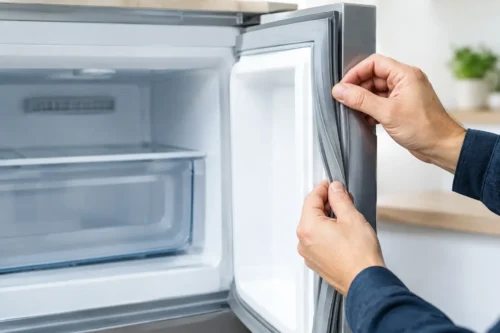
A worn or dirty door gasket is one of the most common causes of frost and ice buildup. The gasket is the flexible seal around the refrigerator or freezer door. It needs to sit evenly against the cabinet all the way around.
Start by checking for food crumbs, sticky residue, torn sections, or areas that look flattened. Wipe the gasket and the mating surface of the cabinet with warm water and mild soap, then dry both surfaces. Close the door and inspect for obvious gaps.
A simple paper test can help. Close the door on a strip of paper and gently pull it out. You should feel some resistance around the full perimeter of the door. If the paper slides out freely in one location, the seal may not be making proper contact there. A loose hinge, overloaded door bin, warped gasket, or misaligned door can cause the same problem.
Do not ignore a door that needs to be lifted slightly to close. Even a small alignment issue lets humid air into the freezer day after day, creating frost and making the compressor work harder to maintain temperature.
Watch Everyday Door Habits
Sometimes the gasket is fine, but the door is simply being held open. A box of frozen food, a protruding drawer, or an overfilled shelf can keep it from closing completely. This is especially common when groceries are packed in quickly after a shopping trip.
Frequent door opening also adds moisture, particularly during warm Southern Utah weather. That does not usually create a major ice problem by itself, but it can worsen a weak seal or existing defrost issue. Keep food organized enough that the door can close without pushing items inward, and allow hot leftovers to cool before placing them in the refrigerator.
Look for a Frozen or Clogged Defrost Drain
Many modern refrigerators periodically melt frost from the evaporator coils. The resulting water flows through a drain opening and tube to a pan near the bottom of the appliance, where it evaporates. If that path clogs or freezes, the water can refreeze inside the freezer.
A recurring sheet of ice under the freezer drawer is a strong sign. You may also notice water leaking onto the kitchen floor when the door is opened, or frozen packages stuck to the bottom of the compartment.
If you can safely access the drain opening, remove loose food and visible ice first. With the appliance unplugged, use warm water to gently thaw the area. Avoid sharp tools, knives, or excessive force. Refrigerator liners, hidden wiring, and refrigerant lines can be damaged more easily than many homeowners realize.
A drain that repeatedly freezes may have a deeper cause, such as a failed drain heater, an airflow issue, or debris farther down the drain tube. Clearing the surface ice may buy time, but it will not always solve the underlying problem.
Recognize Signs of a Defrost System Problem
Frost on the back wall inside the freezer is often more than a cosmetic nuisance. Behind that wall are evaporator coils that remove heat from the appliance. When the automatic defrost system fails, frost can build up across those coils until air can no longer move properly.
At first, the freezer may still seem cold while the fresh-food section becomes warmer than normal. You might hear the fan running longer, notice weak airflow from interior vents, or find that milk and produce are not staying cold even though the display appears normal. Eventually, food in both sections can be affected.
The defrost system includes several parts, such as a heater, thermostat or sensor, control board, and fan system. Identifying which component failed requires electrical testing and model-specific knowledge. Manually thawing the refrigerator can temporarily restore cooling, but recurring frost after a full thaw is a clear reason to schedule service.
Make Sure Air Can Move Through the Appliance
Cold air needs a clear path through vents and around stored food. A tightly packed freezer can block those vents, creating uneven temperatures and encouraging frost in certain areas. On the other hand, an almost empty freezer can also experience more temperature swings when the door is opened.
Leave a little space around interior air vents, especially at the back of the freezer. Check that drawers slide fully into place and that bags or boxes are not pressed against vent openings. If you hear an unusual clicking, grinding, or squealing sound from the freezer, do not assume it is just ice. A fan blade may be striking frost, or the fan motor may be wearing out.
Temperature settings matter too. For most households, a freezer set near 0 degrees Fahrenheit and a refrigerator near 37 degrees Fahrenheit provide safe food storage without unnecessary strain. Turning controls colder to compensate for a cooling issue can sometimes create more frost while failing to fix the actual cause.
When Ice Around the Ice Maker Needs Attention
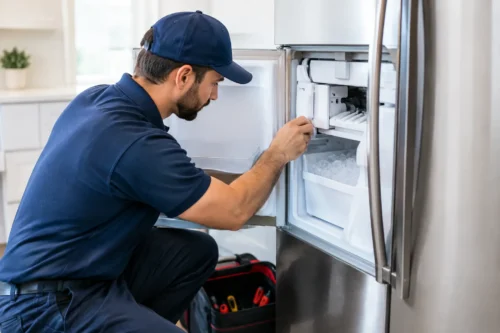
Ice makers have their own set of trouble spots. Ice in the fill cup or on the back wall near the water line can mean the fill tube is freezing. Large clumps in the ice bin may result from warm air entering through a poor freezer seal, while cubes fused together can also happen when the bin sits undisturbed for a long time.
An ice maker that produces oversized cubes, leaks water, or leaves a solid frozen mass in the bin may have a faulty water valve, fill adjustment issue, or failing ice maker assembly. Shut off the ice maker if water is actively leaking. This can help prevent damage to flooring and cabinetry while you arrange a repair.
What You Can Safely Do and When to Call
For light frost caused by a door left ajar, cleaning the gasket, reorganizing food, and fully closing the door may solve the problem. For a small amount of ice near an accessible drain, a careful thaw can be reasonable. Always move perishable food to a cooler if temperatures are rising, and never chip at ice with a sharp object.
Call for appliance service when ice returns soon after thawing, cooling is uneven, the freezer floor repeatedly freezes, water leaks from the appliance, or frost covers the back wall. Those symptoms often involve components that should be tested rather than guessed at. A correct diagnosis can prevent spoiled groceries, wasted energy, and a premature replacement decision.
For homeowners in St. George, Ivins, Santa Clara, Washington, Hurricane, or Mesquite, Master Tech Appliance Repair can identify the cause of recurring refrigerator or freezer ice and recommend a repair based on what the appliance actually needs. A little frost may be manageable, but recurring ice is your appliance asking for attention before a small inconvenience becomes a kitchen emergency.