Table of Contents
- The Signs Your Oven Needs Professional Attention
- Safe Checks Before Scheduling Oven Repair in Ivins Utah
- What May Be Causing the Problem
- Repair or Replace: Making a Sensible Decision
- Why Prompt Service Protects Your Routine
A weeknight dinner should not turn into a guessing game about whether the oven will heat, stay on, or burn one side of the pan. When homeowners need oven repair in Ivins, Utah, the problem often becomes urgent quickly. A cold oven means missed meals, a faulty door can waste energy, and uneven heat can ruin food that was meant for family, guests, or a busy workday.
Some oven issues have simple causes. Others involve high-voltage electrical components, gas connections, or safety systems that should be checked by an experienced technician. Knowing the difference can help you protect your home, avoid wasted groceries, and make a practical repair decision.
The Signs Your Oven Needs Professional Attention
An oven does not have to stop working completely to need service. In fact, changes in performance are often the first indication that a heating component, sensor, control, or door seal is failing.
Uneven baking is one of the most common complaints. Cookies may brown heavily on one side, casseroles may stay cold in the center, or foods may take much longer than the recipe suggests. This can happen when a bake or broil element is weak, a convection fan is not circulating air correctly, or the temperature sensor is sending inaccurate readings to the control board.
An oven that will not reach the selected temperature is another clear concern. If you set it to 350 degrees but it hovers far below that point, the appliance may be cycling improperly or failing to energize one of its heating components. A separate oven thermometer can confirm that the temperature is off, but it cannot identify the underlying cause.
Pay attention to an oven that takes longer and longer to preheat. Modern ovens vary in normal preheat time based on size, features, and selected temperature, so a few extra minutes are not always a problem. But a noticeable change from the appliance’s usual behavior deserves a closer look, particularly if baking results have changed too.
Other reasons to schedule service include an oven that will not turn on, a display showing an error code, a door that will not close securely, or a self-cleaning cycle that has left the controls unresponsive. Sparking, burning smells, repeated breaker trips, or a gas odor are not wait-and-see problems.
Safe Checks Before Scheduling Oven Repair in Ivins Utah
A few basic observations can give a technician useful information and may rule out a minor issue. Start by checking that the clock is set and that the oven is not in a delayed-start, control-lock, or Sabbath mode. These settings can make a working oven appear unresponsive.
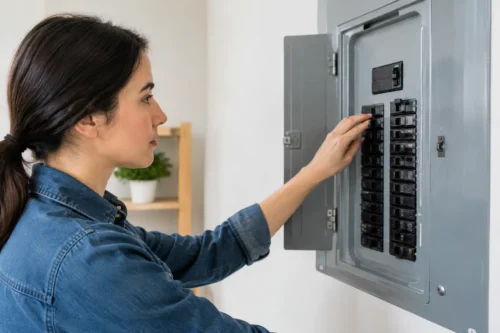
If your oven is electric, check the home’s breaker panel. An electric range can sometimes lose power to part of the appliance without appearing completely dead. Reset a tripped breaker once. If it trips again, leave it off and arrange for service rather than continuing to reset it.
Look at the oven door gasket for obvious tears, gaps, or areas that have pulled away. A damaged gasket allows heat to escape, which can lead to long cook times and hot kitchen surfaces. Also remove any oversized foil, cookware, or debris that may be blocking vents or preventing the door from closing.
For gas ovens, never attempt to diagnose a gas smell yourself. Turn the oven off, avoid flames and electrical switches, leave the area if the odor is strong, and follow your gas utility’s emergency guidance. A gas appliance should be inspected by a qualified professional when there is any concern about ignition, flame quality, or a possible leak.
Avoid taking apart panels, testing live wiring, or trying to bypass a faulty door switch or thermostat. Those shortcuts can turn a repairable appliance problem into a larger safety issue. They can also damage sensitive electronic controls, which are often among the more expensive parts of a modern oven.
What May Be Causing the Problem
The part that appears broken is not always the part at fault. An oven that will not heat, for example, may have a visibly damaged heating element. It may also have a failed relay, wiring issue, temperature sensor problem, blown thermal fuse, or electronic control failure.
In an electric oven, bake and broil elements do much of the heating work. A damaged element may show blistering, cracks, or burned spots, but not every failure is visible. The element can lose continuity internally and stop heating even when it looks normal from the front.
Gas ovens rely on a different set of components. A weak igniter may glow but fail to draw enough current to open the gas valve. The result can be an oven that takes too long to ignite, does not heat at all, or heats inconsistently. Because gas ignition involves combustion and fuel flow, accurate diagnosis matters.
Temperature concerns frequently point to a sensor, thermostat, or control issue. Ovens naturally cycle above and below the selected temperature as they maintain heat, so a single thermometer reading does not tell the whole story. A technician evaluates the temperature pattern over time and checks whether the appliance is responding correctly.
A door that will not lock or unlock after self-cleaning can be especially frustrating. High-heat cleaning cycles put stress on door-lock assemblies, fuses, and electronic controls. Sometimes the repair is straightforward; sometimes an older appliance has several heat-related issues at once. The best choice depends on the condition of the oven, the availability of parts, and the expected life remaining after repair.
Repair or Replace: Making a Sensible Decision
Replacement is not automatically the answer when an oven fails. Many problems involve a single serviceable component, and repairing it can restore years of dependable use. This is especially true when the oven is otherwise in good condition, matches the kitchen, and has been reliable until now.
On the other hand, replacement may make more sense if the appliance has multiple expensive failures, severe corrosion, recurring control-board problems, or parts that are no longer available. Homeowners should also consider the cost of adapting cabinetry, electrical service, or gas connections when comparing a repair with a new unit. The price on a new oven is not always the full cost of replacement.
An honest diagnosis should give you enough information to decide without pressure. Ask what failed, why it likely failed, whether related parts show wear, and what the repair is expected to address. A clear explanation is particularly valuable with older appliances, where the decision is less about finding a perfect answer and more about choosing the best value for your household.
Why Prompt Service Protects Your Routine
Waiting can make an oven problem more disruptive. A failing element may eventually stop heating altogether. A loose door gasket can waste energy every time you cook. An ignition issue can leave you without a dependable way to prepare meals when you need it most.
For homeowners in Ivins, timely service also means less scrambling around work schedules, family dinners, holidays, and visits from friends. A trained technician can test the appliance safely, identify the actual cause, and explain the repair in plain language. Master Tech Appliance Repair brings owner-led, factory-trained experience to the work, with the goal of providing a repair that supports dependable day-to-day use rather than a temporary guess.
Before the appointment, write down the model number, the symptoms you have noticed, any error codes, and whether the issue affects baking, broiling, convection, or all functions. This small amount of detail can make the visit more efficient and help ensure the right parts are considered.
A dependable oven is easy to take for granted until it is not there. If yours is heating unevenly, failing to preheat, showing an error, or creating a safety concern, address it before the next meal depends on it. A careful professional evaluation can help bring your kitchen back to the reliable rhythm your home deserves.