Table of Contents
- Start With Safety and the Basics
- Refrigerator and Freezer Problems Need a Fast Response
- Ice Maker Issues Are Often Connected to Cooling or Water Flow
- Dishwasher Trouble Is More Than an Inconvenience
- Cooking Appliances Require Extra Caution
- Washer and Dryer Service Can Prevent Water and Fire Damage
- When Repair Makes More Sense Than Replacement
- What to Expect From a Professional Service Visit
- Keep Small Problems From Becoming Major Interruptions
A refrigerator that stops cooling in July, a washer that quits with school uniforms inside, or an oven that will not heat before family dinner can turn a normal day upside down. This Saint George appliance service guide helps homeowners recognize the difference between a simple issue worth checking and a problem that calls for professional repair.
The goal is not to turn every homeowner into an appliance technician. It is to help you act quickly, avoid preventable damage, and make a confident decision when one of the machines your household depends on is not doing its job.
Start With Safety and the Basics
Before troubleshooting, pay attention to warning signs that should not wait. Disconnect power and stop using an appliance if you smell burning plastic or gas, see smoke or sparks, find standing water near electrical connections, or notice a breaker repeatedly tripping. A gas smell near a range, oven, or grill deserves immediate attention. Leave the area if the odor is strong and follow your gas provider’s emergency guidance.
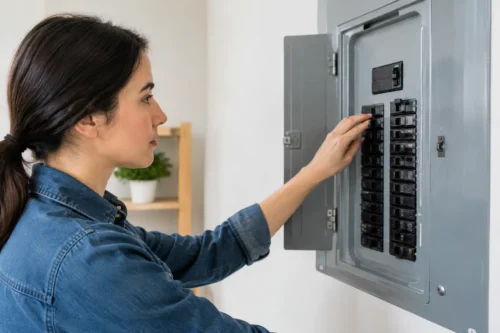
For less urgent problems, begin with the basics. Confirm the appliance has power, check that the relevant breaker has not tripped, and make sure controls were not accidentally changed. A refrigerator set too warm, a dishwasher with a delayed-start setting, or a dryer set to air-only can look like a major failure when it is not.
Resetting a tripped GFCI outlet can also restore power to a garbage disposal, microwave, or dishwasher. Still, a reset is not a repair. If it trips again, something is wrong and continued use can create a larger electrical problem.
Refrigerator and Freezer Problems Need a Fast Response
Food preservation is usually the most time-sensitive appliance concern. If a refrigerator is warm but the freezer still seems cold, avoid assuming the appliance is fine. Airflow, defrost, fan, sensor, or control issues can prevent the refrigerator compartment from maintaining a safe temperature.
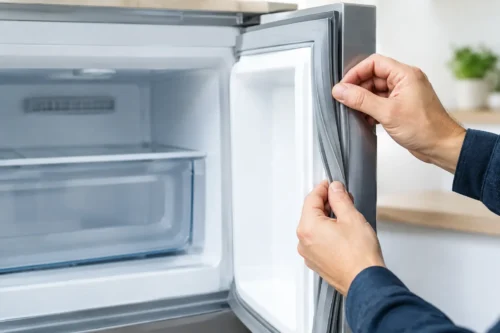
Keep refrigerator doors closed as much as possible while you assess the problem. Check whether the interior lights work, whether vents are blocked by food containers, and whether the condenser area is packed with dust or pet hair. Cleaning accessible condenser coils can improve performance on some models, but never force parts or remove panels that expose wiring.
If both sections are warming, move perishable food to a working refrigerator or cooler with ice as soon as practical. Ice cream that has softened, milk that is no longer cold, or a freezer full of melting food is a service call worth making promptly. The longer a cooling issue continues, the more food you risk losing and the harder the compressor may have to work.
Ice Maker Issues Are Often Connected to Cooling or Water Flow
An ice maker that stops producing ice may have a simple cause, such as a shutoff arm left up or a water supply valve that was turned off. It can also point to a clogged filter, frozen fill tube, weak water pressure, failed inlet valve, or a refrigerator temperature problem.
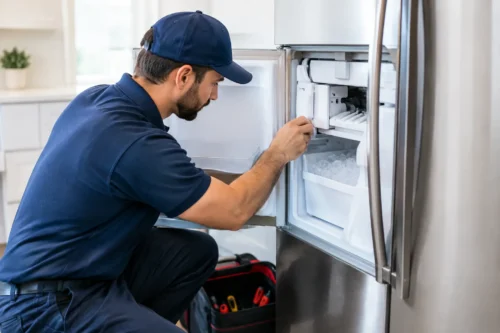
Replacing a filter on schedule is good maintenance, but do not assume every ice maker issue is a filter issue. If the dispenser leaks, the ice is unusually small, or water pools beneath the refrigerator, a technician can identify the actual source before it damages flooring or cabinets.
Dishwasher Trouble Is More Than an Inconvenience
A dishwasher that leaves dirty dishes can disrupt the kitchen quickly, but leaks and drainage failures deserve more urgency. If water is coming from the door, pause the cycle and protect nearby flooring. Check whether a large pan or utensil is interfering with the spray arm or door seal, but do not keep restarting a leaking machine in hopes it will clear itself.
For poor cleaning, clean the filter if your model has one, use the correct detergent, and make sure spray arms can move freely. Hard-water buildup is common in many homes and can affect wash performance over time. That said, persistent residue, grinding sounds, no heat, or water left in the bottom of the tub may involve a pump, heating component, drain system, or control issue.
A disposal can affect dishwasher drainage as well, especially after a new disposal installation. If a dishwasher has never drained properly after the disposal was replaced, the installer may have left the dishwasher drain knockout plug in place. This is a straightforward fix for a qualified professional, but forcing connections or disassembling plumbing without experience can create a leak under the sink.
Cooking Appliances Require Extra Caution
An electric oven that will not heat evenly, a range burner that stays too hot, or a microwave that sparks should be taken seriously. Cooking appliances involve high heat, high voltage, and, in gas models, fuel connections. They are not the place for trial-and-error repairs.
You can verify that oven racks are positioned correctly, the clock is set if your model requires it, and the control is not in a delayed or timed mode. For gas ranges, check whether burner caps are seated correctly after cleaning. A misaligned cap can cause uneven flames or poor ignition.
Call for service if a gas burner will not ignite after basic cleaning, flames are yellow and irregular, the oven temperature is consistently inaccurate, or an electric burner cycles unpredictably. A microwave with a damaged door, arcing, burning odor, or intermittent power should be unplugged and inspected. Internal microwave components can retain dangerous electrical charge even after the unit is disconnected.
Washer and Dryer Service Can Prevent Water and Fire Damage
Laundry breakdowns are frustrating because they tend to happen when the household has the least time to spare. A washer that will not drain may leave a tub full of water. A dryer that runs but does not heat can leave loads damp for hours. Both problems have causes that range from minor to complex.
With a washer, make sure the water supply valves are open and the drain hose is not pinched. Do not overload the drum, since an unbalanced load can stop a cycle or cause loud banging. If water is leaking, turn off the supply valves when possible and avoid running another load until the source is identified. Door seals, hoses, pumps, dispensers, and internal tub components can all leak for different reasons.
For dryers, clean the lint screen before every load and inspect the vent path regularly. Longer dry times, a hot laundry room, or a burning smell can indicate restricted airflow. Lint buildup is a fire risk, not just a performance issue. If the dryer has no heat, repeatedly shuts off, or makes a scraping or thumping sound, professional diagnosis can prevent unnecessary wear to the motor, rollers, or heating system.
When Repair Makes More Sense Than Replacement
Homeowners often ask whether they should repair an appliance or replace it. The honest answer depends on the appliance’s age, condition, repair cost, availability of parts, and the value of avoiding another sudden breakdown.
A newer appliance with a single failed component is often a sensible repair candidate. A quality refrigerator, wall oven, or washer may have years of useful life left after the right repair. On the other hand, an older unit with repeated failures, corrosion, major sealed-system trouble, or expensive discontinued parts may not be the best investment.
A professional diagnosis gives you facts instead of guesswork. You should know what failed, what the repair involves, and whether there are signs of additional wear before deciding. Replacing an appliance too quickly can cost more than necessary, while delaying a clearly failing appliance can lead to food loss, leaks, or disruption to daily routines.
What to Expect From a Professional Service Visit
A good service visit starts with listening to what the appliance has been doing. Before the technician arrives, write down error codes, unusual noises, leaks, temperature changes, and when the issue first appeared. If the problem happens only during a certain part of a cycle, mention that detail. It can shorten the diagnostic process.
Clear access around the appliance when possible, and keep pets secured for everyone’s safety. A trained technician should inspect the appliance, test the relevant systems, explain the likely cause in plain language, and discuss practical next steps. You should not feel pressured into a repair you do not understand.
For homeowners in St. George and surrounding Southern Utah communities, Master Tech Appliance Repair provides owner-led service backed by more than 20 years of appliance industry experience. That level of experience matters when a symptom could have several causes and the right repair protects both your appliance and your routine.
Keep Small Problems From Becoming Major Interruptions
Most appliances give warning signs before they fail completely. A refrigerator that runs constantly, a dishwasher that drains slowly, an oven that takes longer to preheat, or a dryer that needs two cycles is asking for attention. Addressing those changes early can be easier on your schedule and budget than waiting for a full breakdown.
Use appliances as intended, keep filters and accessible lint screens clean, avoid overloading washers and dishwashers, and schedule service when performance changes do not resolve with basic checks. The best repair decision is usually the one made before a small inconvenience becomes spoiled food, a flooded floor, or a week of laundry piling up.