Table of Contents
- Why Does a Washer Smell Bad?
- Too Much Detergent or Fabric Softener
- Moisture Trapped in the Door Seal or Dispenser
- Dirty Laundry Sitting Too Long
- A Clogged Filter, Pump, or Drain Hose
- How to Get Rid of Washer Odor
- When the Smell Is Coming From the Drain
- Signs the Washer May Need Repair
A washing machine should make clothes smell clean, not leave towels with a sour, musty, or sewage-like odor. If you are asking, “why does washer smell bad?” the answer is usually not that the machine is dirty in the usual sense. The odor often comes from moisture, detergent buildup, bacteria, mold, or a drainage issue hiding in parts of the washer you cannot easily see.
The good news is that many washer odors can be corrected with better cleaning and laundry habits. But when the smell keeps coming back, gets stronger, or is paired with draining problems, a repair may be the more reliable answer.
Why Does a Washer Smell Bad?
A washer creates the conditions that odor-causing buildup likes best: warmth, moisture, residue, and limited airflow. Each load leaves behind small amounts of body oil, lint, soap, fabric softener, minerals, and soil. When water remains in the drum, detergent drawer, door seal, or drain system, bacteria and mildew can grow on that film.
That growth is often called biofilm. It may not be visible, yet it can produce a stale or sour smell that transfers to laundry, especially absorbent items such as bath towels, workout clothes, and bedding.
Front-load washers are especially known for this issue because their airtight door seal is designed to prevent leaks. That seal can also trap moisture after a load. Top-load washers can smell, too, particularly when residue builds up beneath the agitator or wash plate, inside the dispenser, or in the outer tub.
Too Much Detergent or Fabric Softener
More detergent does not mean cleaner laundry. In fact, using too much detergent, particularly in a high-efficiency washer, can leave a sticky layer inside the machine. Fabric softener can add to that coating. Dirt and bacteria cling to the residue, and the smell gradually returns even when the washer appears clean.
Use only the amount recommended for your washer type and the load size. If you have soft water, you may need less detergent than the bottle suggests. High-efficiency machines require HE detergent, and regular detergent can create excess suds and buildup.
Moisture Trapped in the Door Seal or Dispenser
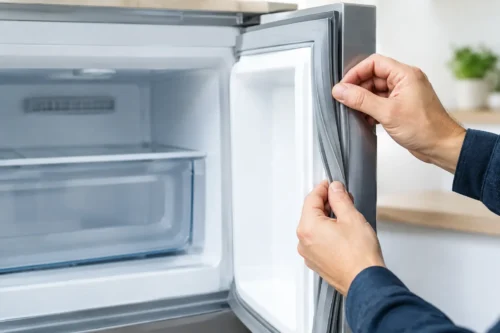
The rubber gasket around a front-load washer door is one of the most common hiding places for odor. Water, hair, lint, and residue settle in the folds of the seal, where they stay damp between loads. The detergent dispenser can develop the same problem when liquid detergent or softener is left to dry inside it.
A quick wipe after laundry day can make a meaningful difference. Pull back the gasket gently and check for debris, discoloration, or standing water. Remove the dispenser drawer when your model allows it, then rinse and dry it thoroughly.
Dirty Laundry Sitting Too Long
Leaving wet clothing in the washer for hours, especially overnight, gives mildew a chance to develop in both the load and the drum. A single forgotten load does not always create a lasting machine odor, but repeated delays can.
Move washed clothing to the dryer as soon as practical. If a load has been sitting long enough to smell, rewash it rather than drying the odor into the fabric.
A Clogged Filter, Pump, or Drain Hose
Not every bad washer smell is caused by ordinary buildup. Some odors point to water that is not draining completely. A partially clogged pump filter, kinked drain hose, blocked household drain, or failing drain pump can leave dirty water sitting where it should not.
This type of problem may create a stronger sour smell, and it can sometimes smell like stagnant water or sewage. You may also notice slow draining, water left in the drum, gurgling near the drain, or an error code. Those are signs to stop treating the issue as a simple cleaning task and have the washer checked.
How to Get Rid of Washer Odor
Start with a thorough cleaning before changing your routine. Many newer washers have a Tub Clean, Clean Washer, or similar cycle. Run that cycle with a washer-cleaning tablet or the cleaning product specified in your owner’s manual. Do not add clothing.
If your washer does not have a cleaning cycle, run the hottest, longest cycle available while empty. Use only a cleaner approved for washing machines. Avoid mixing cleaning products, including bleach and vinegar. Combining products can create harmful fumes, and using the wrong cleaner can damage rubber parts or internal components.
After the cycle finishes, wipe the inside of the drum, door glass, gasket, lid area, and detergent dispenser with a clean cloth. Check the folds of the gasket carefully. If you find lint, coins, hairpins, or visible grime, remove it before it works its way farther into the washer.
For a front-load washer, leave the door slightly open after each load so the drum and seal can dry. Leave the detergent drawer cracked open as well. For a top-load model, leave the lid open until the interior is dry. This small habit is often the best long-term defense against mildew.
You should also reconsider what goes into each load. Avoid overstuffing the washer, since crowded clothes may not rinse fully and can trap detergent residue. Measure detergent rather than pouring by habit, and use fabric softener sparingly. If towels regularly smell sour after washing, reduce detergent, skip softener for a few loads, and use a hot-water cycle when the care labels allow it.
When the Smell Is Coming From the Drain
A sewer-like smell needs a closer look. Sometimes the washer itself is clean, but odor is entering through the standpipe or drain connection. The drain hose should be installed at the correct height and should not be sealed airtight into the drain pipe. An improper setup can allow sewer gases to move toward the washer area.
A dried-out drain trap can also cause sewer odors, although this is more often related to a nearby floor drain or utility sink than the washer. Because drain and plumbing concerns can overlap, the right solution depends on where the odor is strongest and whether the washer is draining normally.
If the smell becomes noticeable only while the washer drains, if dirty water backs up, or if there is a visible leak, do not keep running load after load. Continuing to use the machine can turn a manageable drain issue into water damage or a larger plumbing problem.
Signs the Washer May Need Repair
Routine cleaning is worthwhile, but it cannot correct every odor source. A professional diagnosis is a good next step when you have cleaned the washer and changed detergent habits, yet the smell returns within a few loads.
Pay attention if the washer leaves water behind, drains slowly, makes unusual grinding or humming sounds during drain cycles, leaks from the door area, or displays recurring error codes. A damaged door gasket, restricted drain hose, worn pump, blocked filter, or internal buildup may need more than an empty cleaning cycle.
For homeowners in St. George and throughout Southern Utah, fast attention can help prevent an unpleasant washer odor from becoming a laundry-room disruption. Master Tech Appliance Repair can diagnose the cause, explain what is happening in plain language, and recommend a repair based on the condition of your machine rather than replacement guesswork.
A fresh-smelling washer usually comes down to two things: keeping moisture and residue from building up, and addressing drainage trouble before dirty water has time to sit. A few minutes of care after laundry can protect your clothes, your machine, and one less part of your household routine.