Table of Contents
- Why Does a Garbage Disposal Smell After Cleaning?
- Food and grease buildup
- A partial clog in the drain line
- A dry or dirty sink trap
- How to Clean a Smelly Garbage Disposal Safely
- When the Smell Means More Than a Cleaning Job
- Preventing Garbage Disposal Odors From Coming Back
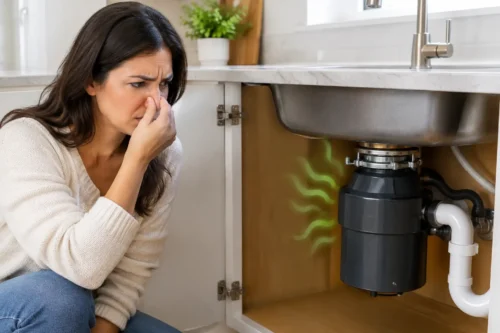
That sour, rotten smell at the kitchen sink can make an otherwise clean home feel unpleasant fast. If you are wondering, “why does garbage disposal smell,” the answer is usually not that the unit itself has gone bad. More often, food residue, grease, and bacteria are trapped somewhere in or around the disposal and need to be cleaned out properly.
A garbage disposal handles small scraps well, but it is not designed to make food disappear without a trace. Material can stick beneath the rubber splash guard, cling to the grinding chamber, or collect in the drain pipe beyond the unit. The good news is that many odor problems can be handled with careful cleaning. Persistent smells, poor draining, or unusual noises can point to a repair issue that deserves professional attention.
Why Does a Garbage Disposal Smell After Cleaning?
A quick rinse with dish soap may freshen the sink briefly, but it often misses the places where odor-causing residue lives. The most common source is the underside of the black rubber splash guard, also called the baffle. Its flexible flaps trap tiny particles of food and grease, and those particles break down over time.
The inside wall of the disposal can also hold residue. The grinding components pulverize food, but they do not always wash every bit of it down the drain. Starchy foods, vegetable peels, coffee grounds, and greasy leftovers are especially likely to leave a film behind.
Sometimes the disposal is innocent. The smell may be coming from a dirty sink drain, a dishwasher drain hose, or a dry P-trap in a nearby, rarely used sink. If an odor continues after the disposal has been thoroughly cleaned, it is worth looking beyond the appliance rather than repeatedly pouring cleaners down the drain.
Food and grease buildup
Grease is a frequent culprit. It may go down the drain as a warm liquid, then cool and stick to the disposal or pipe. Food particles catch on that greasy layer, bacteria multiply, and the result is a stale or rotten odor. Oils, fats, butter, gravy, and pan drippings are better collected in a container and thrown away after they solidify.
Fibrous foods can create a different problem. Celery strings, onion skins, corn husks, banana peels, and similar materials may wrap around the grinding area instead of passing through. Even when the disposal still runs, trapped material can smell as it decomposes.
A partial clog in the drain line
If water drains slowly along with the odor, there may be a buildup farther down the line. A disposal can grind food into smaller pieces, but it cannot solve a restricted drain pipe. Material caught in the disposal outlet, the curved drain pipe below the sink, or the branch drain can hold standing water and produce a sewer-like smell.
Avoid assuming that stronger chemical drain cleaner is the answer. Harsh products can be tough on older plumbing, dangerous to handle, and may make a repair more hazardous if the drain needs to be opened later. A technician can determine whether the problem is inside the disposal, in the trap, or farther down the drain.
A dry or dirty sink trap
The P-trap is the curved section of pipe under the sink. It holds water that blocks sewer gases from entering the kitchen. If that water seal dries out, or if the trap is heavily coated with debris, the odor can resemble a disposal problem.
This is more likely in a guest kitchen, rental property, or home that has been vacant for a period of time. Running water for a minute can restore a dry trap. If the smell remains or water is leaking under the sink, the plumbing should be inspected.
How to Clean a Smelly Garbage Disposal Safely
Start with safety. Turn the disposal off and unplug it if you can access the plug under the sink. If it is hardwired, switch off the circuit breaker. Never put your hand into the disposal, even if you believe it is disconnected. Use tongs or pliers to remove visible objects.
For routine odor removal, use this simple process:
- Lift the rubber splash guard carefully and scrub both sides with a small brush, warm water, and dish soap. This step makes a bigger difference than most homeowners expect.
- Run cold water, turn on the disposal, and add a few ice cubes. Ice helps loosen light buildup from the grinding chamber without damaging the unit.
- Add a small amount of baking soda, followed by white vinegar. Let the fizzing action sit for several minutes, then rinse thoroughly with cold water while the disposal runs.
- Finish by running cold water for another 20 to 30 seconds after the grinding sound has stopped. That extra water helps carry loosened debris through the drain line.
Citrus peels can leave a pleasant temporary scent, but they are not a complete cleaning method. Use a small amount if desired, not a large handful. Thick peels and excessive pulp can add to the buildup in some disposals.
Do not use bleach, caustic drain openers, or boiling water as a routine disposal treatment. Bleach can damage components and does not remove greasy residue effectively. Boiling water may melt or loosen grease temporarily, only for it to solidify farther down the plumbing. Cold water is the better choice whenever the disposal is operating because it keeps grease more solid and easier for the system to move along.
When the Smell Means More Than a Cleaning Job
Odor alone is usually manageable, but certain symptoms suggest that the disposal or drain system needs service. A humming disposal that does not spin may have a jam. A unit that leaks from the bottom often has an internal seal failure and is typically nearing replacement. Repeated tripped breakers, grinding noises without proper drainage, or water backing up into the sink should not be ignored.
Pay attention if the odor returns within a day or two of a careful cleaning. That can mean food is trapped below the grinding chamber, the discharge pipe is restricted, or there is a plumbing issue allowing sewer gas into the kitchen. The right repair depends on the source. Replacing a disposal will not solve an odor caused by a dry P-trap or clogged drain, while cleaning the sink will not fix a damaged disposal seal.
For homeowners in St. George and surrounding Southern Utah communities, hard water can also contribute to mineral buildup around fixtures and drains over time. It may not be the direct cause of a rotten smell, but it can make residue harder to remove and expose drainage issues sooner.
Preventing Garbage Disposal Odors From Coming Back
The best prevention is to treat the disposal as a helper, not a catch-all for kitchen waste. Scrape plates into the trash or compost first, then use the disposal for small leftovers that remain. Run cold water before starting the unit, keep it running during use, and continue for a short time afterward.
Keep grease, oils, coffee grounds, pasta, rice, bones, fruit pits, and fibrous peels out of the disposal. Pasta and rice expand with water, coffee grounds can collect in pipes, and stringy produce can tangle around internal parts. These habits protect the disposal and reduce the chance of a costly drain backup.
A quick weekly cleaning of the splash guard and a monthly baking soda and vinegar rinse are usually enough for a well-functioning unit. If your disposal has begun smelling despite good habits, Master Tech Appliance Repair can help identify whether you are dealing with trapped debris, a failing unit, or a drainage problem that needs a more permanent fix.
A fresh-smelling kitchen starts with a disposal that drains freely and is used within its limits. When cleaning no longer changes the smell, addressing the real cause early can spare your household from a sink backup at the worst possible time.