Table of Contents
- What Is Wrong With My Appliance? Start With the Symptoms
- Check the Simple Things Safely
- Sounds, Smells, and Leaks That Should Not Wait
- Common Appliance Problems and What They Can Mean
- Refrigerator or freezer not cooling
- Dishwasher leaving water or dirty dishes
- Washer will not spin or drain
- Dryer runs but clothes stay damp
- Oven, stove, or microwave not heating
- Repair or Replace? Ask Better Questions
- Help Your Technician Diagnose It Faster
A refrigerator that suddenly feels warm, a washer that will not drain, or an oven that takes forever to heat can throw off an entire day. If you are asking, “what is wrong with my appliance,” the fastest answer usually comes from noticing what changed: a new sound, an error code, a leak, a smell, or a task the appliance no longer finishes.
You do not need to take apart a machine to gather useful clues. In fact, many appliance problems have a simple cause that homeowners can safely check first. Others require a trained technician because the issue involves electricity, gas, water, sealed refrigeration systems, or components that can be damaged by guesswork.
What Is Wrong With My Appliance? Start With the Symptoms
Appliances rarely fail without leaving a trail. The key is to separate a minor interruption from a problem that needs prompt repair. Start by thinking about when the issue began and whether it happens every time the appliance runs.
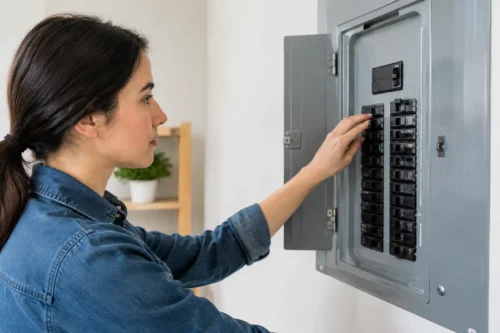
A machine that is completely dead may have a tripped breaker, a loose plug, a failed outlet, or an internal electrical issue. Before assuming the appliance has failed, check that it is plugged in securely and that the appropriate breaker has not tripped. If the breaker trips again, stop resetting it. Repeated tripping can point to a short, a failing component, or an overloaded circuit.
If the appliance turns on but performs poorly, pay attention to the exact behavior. Does the dishwasher fill but leave dishes dirty? Does the dryer tumble but produce no heat? Does the refrigerator run constantly but fail to keep food cold? Those details help narrow the diagnosis and can save time during a service call.
Error codes also matter. Write down the full code before clearing it or unplugging the appliance. A code does not always identify one failed part, but it gives a technician a useful starting point.
Check the Simple Things Safely
A few homeowner checks are worthwhile, as long as there is no burning smell, smoke, sparking, gas odor, or active flooding. Unplug the appliance or turn off its power before inspecting anything beyond normal controls and accessible filters.
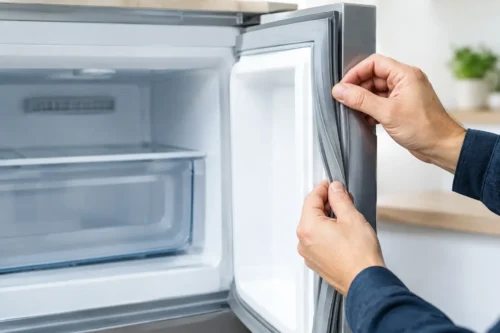
For a refrigerator or freezer, make sure the temperature controls were not bumped, the doors are closing fully, and food packages are not blocking interior vents. Dusty condenser coils can also reduce cooling performance, especially in homes where the appliance has been working hard through Southern Utah heat. If the refrigerator is warm, move perishable food to a cooler or another working refrigerator while you arrange service.
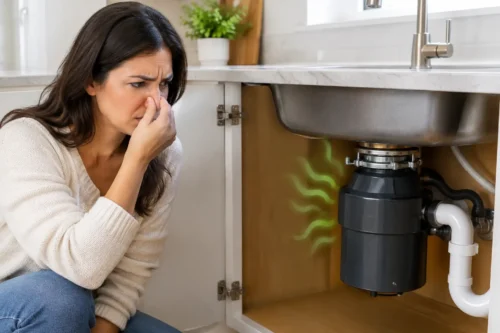
For a dishwasher, clean the filter, check that the spray arms can turn freely, and confirm the water supply valve under the sink is open. A disposal that is clogged or not running correctly can sometimes affect dishwasher draining as well. Never put your hand into a garbage disposal, even if the switch is off.
For a washer, look for a kinked drain hose, an unbalanced load, or a door or lid that is not latching completely. For a dryer, clean the lint screen and check the outside vent flap for lint buildup. A restricted vent can make drying take much longer and creates a real fire risk.
For an oven or range, confirm the controls are set correctly and check whether only one burner or function is affected. If you smell gas, leave the area, avoid operating electrical switches, and contact your gas utility or emergency services as appropriate. Gas appliance diagnosis is not a do-it-yourself job.
Sounds, Smells, and Leaks That Should Not Wait
Some symptoms call for a quicker response because they can affect safety, food storage, or your home. Turn the appliance off and arrange professional help if you notice electrical burning odors, visible smoke, sparks, a damaged power cord, or water reaching outlets.
A small puddle under a refrigerator, dishwasher, washer, or ice maker deserves attention too. Sometimes it is a loose connection or a clogged drain. Other times, it is a cracked hose, failing pump, worn door seal, or water valve problem. Water can travel farther than it appears, damaging flooring, cabinets, and nearby walls.
Unusual noises can be equally informative. Grinding often points to a mechanical part that is struggling. Screeching in a dryer may involve a worn belt, pulley, or roller. Repeated clicking from a refrigerator can be related to its starting components or control system. A loud hum from a disposal that does not spin may mean it is jammed. The sound alone is not a final diagnosis, but it is a reason to stop using the appliance if the noise is severe or worsening.
Common Appliance Problems and What They Can Mean
Refrigerator or freezer not cooling
Poor cooling may be caused by dirty coils, blocked airflow, a failed fan, a defrost issue, a control problem, or a sealed-system concern. The trade-off is clear: cleaning and airflow checks are reasonable for a homeowner, but refrigeration repairs require proper tools and training. Do not keep opening the doors to test whether it is getting colder. That adds heat and makes the problem harder on the appliance.
Dishwasher leaving water or dirty dishes
Standing water may be caused by a filter obstruction, drain hose issue, pump problem, or problem at the disposal connection. Poor cleaning can come from a blocked spray arm, low water temperature, a failing circulation pump, or a dispenser issue. Using more detergent rarely fixes a mechanical problem and can leave residue behind.
Washer will not spin or drain
An uneven load can stop a washer from spinning properly, but repeated spin failures can involve the drain pump, lid lock, belt, motor, suspension, or control board. If the washer is holding water, avoid forcing the door open or repeatedly restarting cycles. Water removal and diagnosis are usually safer when handled correctly.
Dryer runs but clothes stay damp
The most common issue is restricted airflow, beginning with the lint screen and continuing through the vent path. If the vent is clear, the dryer may have a heating-element, thermostat, sensor, fuse, or power-supply issue. Electric dryers can sometimes tumble on partial power while failing to heat, which is why a spinning drum does not prove everything is working.
Oven, stove, or microwave not heating
A burner, bake element, igniter, sensor, relay, or control may be at fault. Microwaves deserve special caution. Even unplugged units can store dangerous electrical energy. Do not remove a microwave cover or attempt internal repairs.
Repair or Replace? Ask Better Questions
A broken appliance does not automatically need replacement. Age matters, but it is only one piece of the decision. A well-maintained appliance with a clear, repairable issue may have many useful years left. On the other hand, repeated breakdowns, major rust or cabinet damage, unavailable parts, or an expensive sealed-system failure can make replacement more sensible.
Consider how the appliance fits your household. A family refrigerator that cannot protect groceries is more urgent than a secondary garage freezer. A dryer with a vent-related safety concern should be addressed quickly even if it still runs. A technician can explain the cause, the expected repair, and the likely value of fixing it so you can make a decision without replacement guesswork.
Help Your Technician Diagnose It Faster
Before service, make a note of the model number, any error code, and the symptoms you have seen. Mention whether the problem is constant or intermittent, whether it began after a power outage or move, and whether any recent changes occurred, such as new detergent, a new water filter, or a clogged disposal.
If it is safe to do so, leave the appliance connected and accessible. Do not run it again if it is leaking badly, smells burned, trips the breaker, or presents a gas concern. A clear description helps an experienced technician focus on the likely cause instead of spending time recreating a problem that only happens under certain conditions.
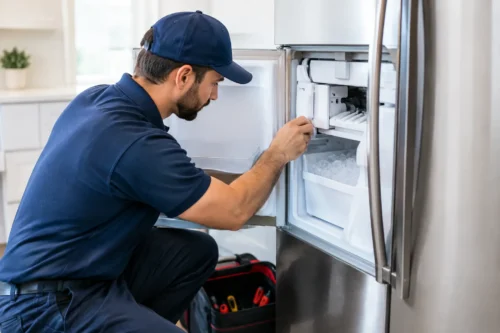
When a household appliance interrupts meals, laundry, cleanup, or food storage, a dependable diagnosis brings more relief than a quick guess. For homeowners in St. George and nearby communities, Master Tech Appliance Repair can help identify the real problem and recommend a practical path forward, so your home can get back to its normal rhythm.