Table of Contents
- Start With the Pattern of the Leak
- Check the Door, Gasket, and Loading Habits
- Dishwasher Leak Diagnosis Below the Appliance
- Do Not Overlook Soap and Suds
- Consider Drainage and Leveling Problems
- When a Leak Needs Professional Repair
- Protect Your Kitchen While You Wait
A puddle under the dishwasher can turn a normal dinner cleanup into a concern about damaged flooring, cabinets, and hidden mold. A careful dishwasher leak diagnosis helps narrow down where the water is coming from before a small problem becomes an expensive kitchen repair. The key is not simply finding water on the floor. It is determining when it appears, where it starts, and whether it is safe to keep using the appliance.
If water is actively spreading, shut off the dishwasher, avoid running another cycle, and dry the area thoroughly. If the leak is near an electrical connection or you cannot safely reach the shutoff, leave the appliance off and arrange for service.
Start With the Pattern of the Leak
The timing of a leak provides useful clues. Water that appears as soon as the dishwasher begins filling usually points to a supply connection, inlet valve, or internal hose. A leak that starts during washing may involve the door seal, spray arms, pump, or tub. Water that shows up near the end of the cycle is more often related to draining, a loose drain hose, or a disposal connection.
Before moving the dishwasher, place dry towels around the front corners and along both sides. Run only a brief cycle if the leak is minor and there is no electrical risk. Watch carefully for the first sign of moisture. Water can travel along the underside of the appliance or cabinetry, so the spot where it reaches the floor is not always the actual source.
A dishwasher that leaks only occasionally deserves attention, too. A warped gasket, partial drain blockage, or worn hose can leak under certain loads or water-pressure conditions. Waiting for the problem to become consistent can mean more damage to flooring and cabinets.
Check the Door, Gasket, and Loading Habits
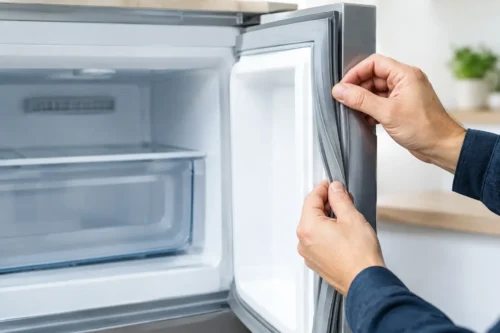
Water at the front of the dishwasher is often blamed on the door gasket, and sometimes that is exactly the issue. Inspect the rubber seal around the opening for food debris, cracks, flattened sections, or areas that have pulled away from the frame. Wipe it clean with a damp cloth and check whether the door closes evenly.
However, not every front leak requires a new gasket. A tall pan, utensil handle, or improperly placed dish can interfere with the door. A lower rack that is off its track may also keep the door from closing tightly. Make sure dishes are fully inside the rack and that the upper and lower racks glide in and out without catching.
The lower spray arm matters more than many homeowners realize. If it is cracked, loose, or clogged, it can spray water directly toward the door with more force than the gasket can contain. With the dishwasher off, spin the arm by hand. It should rotate freely and sit securely in place. Clear visible debris from its spray holes, but do not force parts that appear damaged or stuck.
Dishwasher Leak Diagnosis Below the Appliance
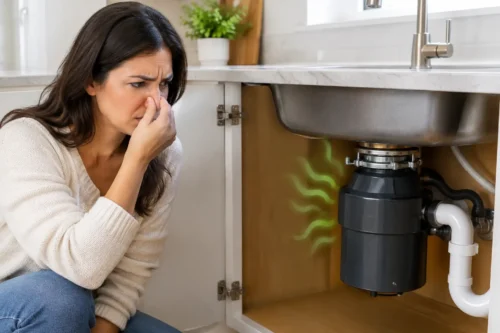
A leak beneath the dishwasher can come from connections that are visible without disassembling the machine. Start under the kitchen sink. Look at the dishwasher drain hose where it connects to the garbage disposal or drain line. If the clamp is loose, the hose is split, or water stains are visible around the connection, that may be the problem.
If a garbage disposal was recently installed or replaced, confirm that the dishwasher drain port knockout plug was removed. When that plug remains in place, the dishwasher cannot drain properly. Water may back up and create symptoms that look like a leak or overflow problem.
Also check the water supply line and shutoff valve under the sink. A slow drip at a fitting can run behind the cabinet or along the water line before it becomes visible near the dishwasher. Dry the area, then place a paper towel beneath fittings and check it again after the dishwasher has filled.
Pulling a dishwasher out from the cabinet is not always a simple homeowner task. The appliance may be hardwired, connected to a tight water line, secured to the countertop, or installed over delicate flooring. If you need to move it to inspect the inlet valve, circulation pump, or internal hoses, professional service is usually the safer choice.
Do Not Overlook Soap and Suds
A surprising number of dishwasher leaks are caused by excess foam. Hand dish soap, even in a small amount, creates far more suds than a dishwasher is designed to handle. Those suds can push water past the door seal and onto the kitchen floor.
Too much dishwasher detergent can cause a similar issue, especially in homes with soft water. Southern Utah water conditions vary by neighborhood and water source, so detergent directions on the package may be more than your dishwasher needs. Use detergent made specifically for automatic dishwashers and follow the dispenser guidance for your water conditions.
If you see excessive foam, stop the cycle. Remove standing suds carefully, then run a rinse cycle without detergent once the interior is reasonably clear. If the dishwasher continues to overflow or leak with no soap present, the cause may be a stuck float switch, faulty inlet valve, or another mechanical issue.
Consider Drainage and Leveling Problems
Water remaining inside the tub after a cycle may not always leak onto the floor, but it can point to a drain issue that needs attention. Check the filter area for food particles, labels, broken glass, or debris. Many filters can be removed for cleaning, though the exact method depends on the model. Reinstall every part securely before running the dishwasher again.
A dishwasher should also sit level from side to side and slightly balanced from front to back according to its installation requirements. If it has shifted, water can collect toward one side of the door and escape during the wash cycle. Leveling is particularly worth checking after new flooring, cabinet work, or an appliance move.
Drain problems can be more involved than a dirty filter. A partially clogged hose, failing drain pump, or issue with the household plumbing can prevent water from leaving the tub as it should. Repeated draining trouble is a reason to stop guessing, especially if dirty water is backing up into the sink or dishwasher.
When a Leak Needs Professional Repair
Some dishwasher leaks can be corrected with cleaning, proper loading, or a tightened external connection. Others require testing and replacement of parts inside the unit. A failed water inlet valve may overfill the dishwasher. A worn circulation-pump seal can leak only while the motor is running. A cracked tub, damaged door latch, or failed float assembly can be difficult to confirm without the right tools and experience.
Call for help when the source is hidden, the dishwasher leaks during every cycle, water has reached cabinets or flooring, or you notice burning smells, tripped breakers, or electrical concerns. It also makes sense to schedule service if the appliance is still under warranty, since disassembly or incorrect repairs may affect coverage.
An experienced technician can identify whether the repair is practical, explain what failed, and help you avoid replacing a dishwasher that still has useful life left. For homeowners in St. George and surrounding Southern Utah communities, Master Tech Appliance Repair provides owner-led diagnosis focused on finding the real cause rather than recommending replacement by default.
Protect Your Kitchen While You Wait
After finding a leak, keep the dishwasher off until the cause is resolved. Remove wet mats, dry the floor and cabinet edges, and leave nearby doors open so moisture does not stay trapped. If water reached wood flooring or cabinet bases, check the area again over the next day for swelling, discoloration, or lingering dampness.
A dishwasher is easy to take for granted until it interrupts meals, cleanup, and family routines. Acting early protects more than the appliance itself. It gives you the best chance to make a focused repair and get your kitchen back to normal without a larger water-damage problem.