Table of Contents
- When a Refrigerator Problem Needs Attention
- Warning Signs You Should Not Ignore
- What to Do Before Refrigerator Repair in Saint George
- Common Refrigerator Failures and Why Diagnosis Matters
- Repair or Replace? The Answer Depends on the Failure
- Simple Habits That Help Your Refrigerator Last
A refrigerator problem rarely waits for a convenient time. You may notice milk that is not quite cold, water gathering under the crisper drawers, an ice maker that suddenly stops, or a steady hum that never seems to end. When you need refrigerator repair Saint George homeowners can count on, acting early can protect your food, prevent a larger failure, and bring normal kitchen routines back quickly.
A refrigerator is one of the few appliances that works every hour of every day. In Southern Utah, especially during hot weather, it has to work even harder to hold a safe temperature. A small performance change can become a costly problem if it is ignored. The good news is that many refrigerator issues can be diagnosed clearly and repaired without rushing into replacement.
When a Refrigerator Problem Needs Attention
Not every unusual sound or temperature change means the refrigerator is finished. Refrigerators cycle on and off, fans run, and ice makers make occasional noise. The concern begins when the appliance is no longer preserving food properly or is showing a change in performance that persists.
Food safety is the first priority. The refrigerator compartment should generally stay at or below 40 degrees Fahrenheit, while the freezer should remain near 0 degrees. If food is warm, frozen items are softening, or dairy and meat are spoiling sooner than expected, do not assume the temperature dial is the only issue. A failed fan, dirty condenser, damaged door gasket, defrost problem, or cooling-system issue may be involved.
Pay attention to changes that develop over several days. A refrigerator that runs almost constantly, forms heavy frost, leaks water, makes clicking sounds, or has an ice maker that no longer produces ice deserves a professional diagnosis. These symptoms may be connected, and replacing a part based on a guess can waste time and money.
Warning Signs You Should Not Ignore
Warm food is the most urgent sign, but it is not the only one. A refrigerator can also be struggling when you see condensation inside the fresh-food compartment, frost building on the freezer wall, puddles on the floor, or a door that no longer closes tightly.
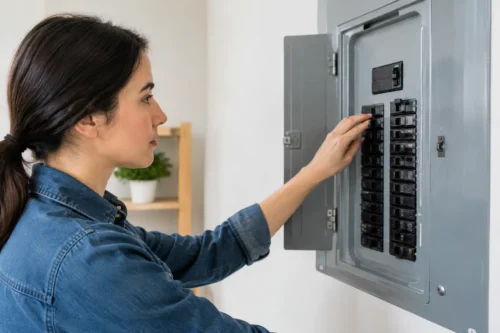
Loud buzzing, repeated clicking, grinding, or squealing can point to a fan motor, compressor-start component, or another mechanical issue. Some sounds are normal, but a new sound that continues or grows louder is worth checking. If you smell burning, see damaged wiring, or notice that the appliance is tripping a breaker, unplug it if it is safe to do so and arrange service promptly.
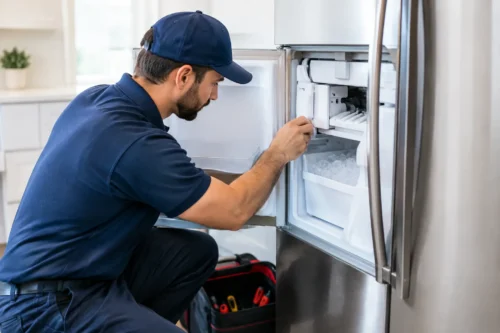
An ice maker failure is frustrating, particularly when you are hosting family or relying on it during warm St. George summers. Sometimes the cause is as simple as a water supply issue or a frozen fill tube. Other times, the issue involves the inlet valve, control board, ice maker assembly, or freezer temperature. The right repair depends on finding the actual cause first.
What to Do Before Refrigerator Repair in Saint George
A few safe checks can help you protect your food and give a technician useful information. Start by checking the temperature setting and confirming that the refrigerator has power. Make sure the doors are fully closed and that food containers are not blocking interior vents. Overpacked shelves can restrict airflow, while a single item pressed against the door can prevent a proper seal.
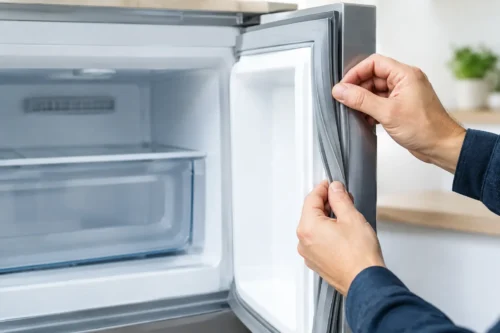
Next, inspect the door gaskets. They should be clean, flexible, and make full contact around the door frame. Wipe away spills and crumbs with mild soap and water. If the gasket is torn, loose, brittle, or visibly warped, cold air may be escaping and causing the unit to run longer than it should.
If the refrigerator is leaking, move food away from the affected area and place towels around the base to protect flooring. Do not use sharp objects to chip ice from freezer panels or force a blocked drain open. That can damage the liner, refrigerant lines, or components behind the panel.
When cooling is failing, save what you can. Keep the doors closed as much as possible, place perishable food in a cooler with ice if needed, and avoid opening the freezer repeatedly to check on it. A full freezer stays cold longer than a nearly empty one, but the timeline depends on how warm the appliance has become and whether it is still operating at all.
Common Refrigerator Failures and Why Diagnosis Matters
A refrigerator is a system, not a single part. The compressor creates the cooling process, but fans move air, sensors monitor temperature, the defrost system manages frost, seals keep cold air inside, and controls coordinate operation. Similar symptoms can come from very different failures.
For example, a refrigerator that is warm while the freezer still cools may have an evaporator fan or airflow problem. A freezer packed with frost may have a defrost-system failure rather than a bad compressor. Water under the refrigerator may come from a clogged defrost drain, a cracked water line, or a leaking filter housing. Each repair has a different cost, level of urgency, and long-term outlook.
That is why experienced service starts with testing rather than assumptions. A qualified technician should evaluate temperatures, airflow, fans, electrical components, defrost operation, seals, water connections, and the condition of key cooling components. This approach helps avoid replacing an inexpensive part when the real issue is elsewhere, or replacing an appliance that could have been repaired.
Master Tech Appliance Repair brings owner-led, factory-trained experience to refrigerator service, with a focus on clear answers and repairs that make sense for the household. You should know what is wrong, what the repair involves, and whether the investment is reasonable before moving forward.
Repair or Replace? The Answer Depends on the Failure
Replacement is not automatically the best answer when a refrigerator has a problem. Many common repairs, including door gaskets, fans, water valves, ice maker components, defrost parts, sensors, and drain issues, can restore dependable operation at a far lower cost than a new appliance.
However, replacement can be the better choice in certain situations. A very old refrigerator with major sealed-system trouble, repeated expensive failures, or poor overall condition may not justify a significant repair. Age matters, but it is not the only factor. Brand, model, part availability, energy use, appliance condition, and the cost of the specific repair all affect the decision.
Built-in and premium refrigerators can often justify repairs that would not make sense for a basic model because replacement is more expensive and installation is more involved. Conversely, a lower-cost unit near the end of its expected life may be better replaced if it needs a major component. Honest advice means considering the whole picture, not pushing one answer for every refrigerator.
Simple Habits That Help Your Refrigerator Last
Regular care cannot prevent every failure, but it can reduce strain on the appliance. Keep the condenser area clean according to the manufacturer’s recommendations, particularly if you have pets or dust buildup. Leave reasonable space around the refrigerator for ventilation, and avoid packing the interior so tightly that air cannot circulate.
Clean spills promptly, check door gaskets from time to time, and replace water filters on schedule when applicable. If the refrigerator is moving, being installed, or has been pulled away from the wall, make sure the water line is not pinched and the unit is level. A refrigerator that rocks or sits unevenly can create door-closing and drainage problems.
Most importantly, do not wait until food is warm to take a concern seriously. A refrigerator that is running harder, icing over, leaking, or making unfamiliar sounds is giving you a chance to address the problem before it disrupts meals, groceries, and family plans. A timely, well-diagnosed repair can be the simplest way to keep your kitchen dependable when you need it most.