Table of Contents
- Washer not spinning repair begins with the basics
- Common causes of a washer that will not spin
- What you can safely check yourself
- Signs the problem is more than a simple reset
- When washer not spinning repair needs a technician
- Repair or replace?
- How to reduce future spin problems
A washer full of wet clothes usually shows up at the worst possible time – right before work, before guests arrive, or halfway through a full day of chores. If you are searching for washer not spinning repair, the good news is that this problem is often traceable to a few common causes. The key is knowing what is safe to check yourself and what points to a deeper mechanical or electrical failure.
When a washer will not spin, the machine is usually trying to protect itself. Modern washers are built with safety systems that stop the spin cycle if the lid is open, the door is not locking correctly, the load is badly unbalanced, or the drain system is not clearing water fast enough. Other times, the issue is worn drive parts, a failed motor component, or a control problem that needs proper testing.
Washer not spinning repair begins with the basics
Before assuming the washer needs a major repair, start with the simple things. A surprising number of spin complaints come down to a cycle setting, a load issue, or a drainage problem.
First, check the selected cycle. Some delicate, hand-wash, or no-spin settings reduce or skip the final spin entirely. If the washer just finished a gentle cycle, the clothing may come out wetter than expected even though the machine is technically working as designed.
Next, look at the load itself. One heavy blanket, a bath mat, or a few soaked towels can throw the basket off balance. When that happens, many washers pause or cancel the spin to prevent damage. Redistributing the load and running a drain-and-spin cycle can sometimes solve the issue right away.
Also pay attention to standing water. If the tub is still full, the washer may not be failing to spin first – it may be failing to drain. Most machines will not go into a full spin when water remains inside.
Common causes of a washer that will not spin
The most common reason a washer stops spinning is a lid switch or door lock issue. Top-load washers need confirmation that the lid is closed. Front-load machines need a working door lock assembly before the control will allow high-speed spin. If that switch or lock fails, the machine may wash and agitate normally but stop short of spinning.
Drain problems are another frequent cause. A clogged drain pump, blocked hose, or jammed filter can prevent water from leaving the tub. The washer senses that water is still present and refuses to spin at full speed. Homeowners often describe this as a spin problem when the root cause is actually poor drainage.
Worn drive components can also be to blame. Depending on the model, that may mean a broken belt, worn splutch, failing motor coupling, damaged clutch, or a worn-out drive hub. In these cases, the washer may make noise, struggle to reach speed, or stop spinning altogether.
Suspension problems matter too. If the tub is bouncing excessively, the washer may constantly detect an out-of-balance condition. That can come from worn suspension rods, weak shocks, or other support components that no longer keep the tub stable during spin.
Then there are control and motor issues. A faulty motor control board, shift actuator, capacitor, or main control can interrupt the spin cycle even when everything else appears normal. These failures are harder to confirm without testing tools and model-specific knowledge.
What you can safely check yourself
A good washer not spinning repair process starts with safe, practical checks that do not require disassembling the machine. Unplug the washer before doing anything beyond visual inspection.
Make sure the load is balanced and not packed too tightly. Overloading and underloading can both create spin issues. If the machine stopped mid-cycle with towels or bedding inside, remove a few items, redistribute the rest, and try a spin cycle again.
Check whether the washer drained fully. If water is still sitting in the tub, inspect the visible drain hose for kinks behind the machine. On some models, a pump filter may also be accessible for cleaning. If you find coins, lint, or small clothing items blocking the filter, clearing that obstruction may restore normal operation.
Inspect the lid or door area. If the lid on a top-loader does not seem to click into place, or the front-load door is not locking securely, that is a strong clue. You may also notice error codes, repeated clicking, or a cycle that stalls before spin.
Finally, listen to what the washer is doing. A humming sound with no spin may suggest a seized pump or motor issue. A burning smell can point to belt slippage or motor strain. Loud banging often suggests suspension trouble or a failed support component. Those details help narrow down the repair quickly.
Signs the problem is more than a simple reset
Some washers recover after a power reset, but repeated spin failure usually means there is a real part problem. If the machine consistently leaves clothes soaked, stops at the same point each cycle, or trips breakers during spin, it needs a closer diagnosis.
Intermittent problems are especially easy to misread. A washer that spins fine with small loads but not with normal family laundry may have a weak motor component, worn suspension, or early clutch failure. It still works sometimes, which makes the issue feel minor, but those are often the problems that get worse quickly.
Age also matters, but not always in the way homeowners expect. A washer that is eight or ten years old is not automatically ready for replacement. Many spin-related issues are repairable if the core machine is still in good condition. What matters more is the exact failed component, the overall wear on the unit, and whether the repair restores dependable performance.
When washer not spinning repair needs a technician
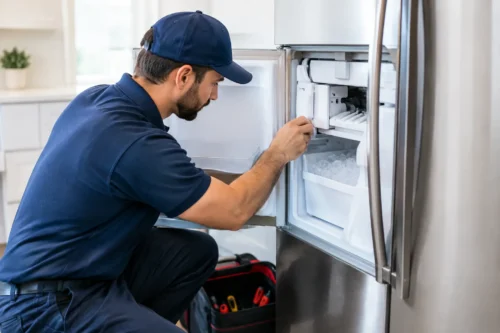
Once the problem moves beyond a blocked hose or unbalanced load, professional diagnosis becomes important. Modern washers use multiple sensors, electronic controls, and safety interlocks. Replacing parts based on guesswork can get expensive fast.
A technician can test whether the issue is the lid switch, door lock, motor, capacitor, control board, actuator, pump, or drive system. That matters because several different failures can create the same symptom. The washer may look like it has a motor problem when the real issue is a control board not sending voltage. Or it may seem like a bad control when a worn drive part is causing the basket not to engage properly.
This is where experience saves time and money. An accurate diagnosis means the repair targets the actual failure instead of chasing possibilities. For homeowners in busy households, that can be the difference between one service visit and a week of repeated laundry frustration.
In areas like St. George, Ivins, Santa Clara, Hurricane, and Washington, quick service matters because laundry piles up fast, especially in larger households, rental properties, and active homes. A washer that will not spin is not just an inconvenience. It disrupts the whole routine.
Repair or replace?
This is one of the most common questions, and the honest answer is that it depends. If the washer has a straightforward issue like a door lock, pump, belt, or suspension component, repair often makes sense. Those are common failures, and a solid repair can give the machine plenty of life.
Replacement becomes more worth considering when the washer has multiple problems, major structural wear, severe rust, or expensive electronic failures on an older unit. Even then, it is best to decide after proper diagnosis. Guessing at replacement too early can cost more than necessary, especially if the actual repair is smaller than expected.
A trustworthy service company should be honest about that trade-off. The goal is not to push a repair at any cost. It is to help you make the most practical decision for your home and budget.
How to reduce future spin problems
Good washer habits make a real difference. Avoid packing the tub too full, and try not to wash single heavy items by themselves unless the machine is designed to handle that type of load well. Check pockets before washing, because coins, screws, and small objects often end up in the pump or drain path.
It also helps to keep the machine level. A washer that rocks on the floor can struggle with balance during spin and put extra stress on suspension parts. If you notice repeated vibration, walking, or banging, addressing it early may prevent a bigger repair later.
And do not ignore small warning signs. A washer that starts leaving clothes slightly wetter than usual, or occasionally needs a second spin cycle, may already be signaling an early failure. Catching that problem sooner often means a simpler repair.
When your washer stops spinning, the most useful next step is not guessing – it is getting a clear diagnosis so you can get back to normal laundry without wasting time, money, or another load of wet clothes.