Table of Contents
- Why frost is more than a cosmetic problem
- Top causes of refrigerator frost buildup
- A door that is not sealing tightly
- Frequent or extended door openings
- Hot or uncovered food inside the refrigerator
- A failed automatic defrost system
- A clogged or frozen defrost drain
- Airflow restrictions inside the refrigerator
- Temperature settings that are too cold
- What homeowners can safely do first
- When frost calls for professional refrigerator repair
A thin layer of frost can seem harmless until freezer drawers stick, food gets buried in ice, and the refrigerator starts struggling to stay cold. The top causes of refrigerator frost buildup usually come down to warm, humid air getting where it should not be or a defrost system that is no longer doing its job. Finding the source early can protect your groceries, reduce strain on the appliance, and help avoid a larger repair.
Why frost is more than a cosmetic problem
Frost forms when moisture in the air enters a cold freezer or refrigerator compartment and freezes on surfaces. Every freezer has some moisture to manage, especially when the door is opened regularly. A properly operating appliance removes that frost during scheduled defrost cycles.
When frost returns quickly, builds up on the back wall, or gathers around the door and food packages, the refrigerator is telling you something has changed. It may run longer than usual, develop uneven temperatures, block air vents, or leave fresh food warmer than it should be. In Southern Utah, dry outdoor conditions do not eliminate the problem. Moisture from cooking, warm leftovers, frequent door openings, and worn seals inside the home can still create enough humidity for frost to accumulate.
Top causes of refrigerator frost buildup
A door that is not sealing tightly
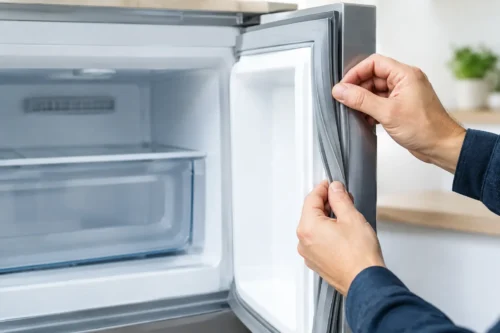
A damaged, dirty, or misaligned door gasket is one of the most common reasons for frost. The gasket is the flexible seal around the edge of the refrigerator or freezer door. Its job is simple: keep warm household air out and cold air in.
Crumbs, spilled food, pet hair, or sticky residue can prevent the gasket from making full contact with the cabinet. Over time, the rubber can also become cracked, warped, loose, or flattened. Even a small gap allows humid air to enter. That moisture freezes, then more warm air enters as the frost builds.
Check the entire seal with the door open. Look for tears, gaps, and areas that feel brittle. Wipe the gasket and the surface it contacts with a soft cloth and mild soap, then dry it thoroughly. Also make sure a drawer, food package, or shelf is not holding the door slightly open. If the seal is visibly damaged or the door no longer sits squarely, a technician should inspect the gasket, hinges, and alignment.
Frequent or extended door openings
Standing with the freezer door open while deciding on dinner can introduce a surprising amount of warm air. The same is true when children are getting snacks, guests are moving in and out of the kitchen, or groceries are being put away slowly.
Short, normal openings should not create heavy frost in a healthy refrigerator. But repeated long openings can make a noticeable difference, particularly in a busy household. Try organizing commonly used items where they are easy to reach, and close the door firmly after loading groceries. If frost appears even when door use is limited, the issue is more likely a seal or defrost-system problem than household habits alone.
Hot or uncovered food inside the refrigerator
Steam from a hot pot of soup, uncovered leftovers, or produce with excess surface moisture can add humidity directly to the appliance. As that moisture circulates into the colder areas, it can freeze on walls, shelves, packages, or vents.
Let cooked food cool briefly before refrigerating it, but do not leave perishable food sitting out for extended periods. Use covered containers, dry washed produce before storage, and avoid placing warm items directly against the back wall. This simple habit will not fix a mechanical failure, but it can reduce ordinary moisture that contributes to frost.
A failed automatic defrost system
Most modern frost-free refrigerators rely on an automatic defrost system. At intervals, the unit temporarily warms the evaporator coils so accumulated frost can melt and drain away. Several parts work together to make that happen, including a defrost heater, defrost thermostat or sensor, control board or timer, and drain system.
If one of these parts fails, frost can cover the evaporator coils behind the freezer’s rear panel. At first, the freezer may still seem cold. As ice thickens, airflow through the coils drops, and the refrigerator section often becomes warmer than normal. You may notice weak airflow from vents, a fan running for long periods, or a thick sheet of frost on the back wall inside the freezer.
Turning the appliance off and manually thawing it may restore cooling for a short time, but it does not repair the failed component. This is a situation where professional diagnosis matters. Several parts can create the same symptoms, and replacing parts based on a guess can cost more than a proper test.
A clogged or frozen defrost drain
During a defrost cycle, melted frost should flow through a small drain opening and tube to a pan beneath the refrigerator. If that drain becomes blocked by ice, food debris, or buildup, water can refreeze inside the freezer. It may form a solid ice layer on the floor, collect beneath the crisper drawers, or leak onto the kitchen floor.
A frozen drain can be confused with a cooling problem because the ice is so visible. If you see recurring ice at the bottom of the freezer, avoid chipping at it with a knife or sharp tool. Refrigerator liners, refrigerant lines, and hidden components can be damaged easily. A technician can safely clear the drain and check whether a defrost issue is causing it to freeze again.
Airflow restrictions inside the refrigerator
Refrigerators depend on air movement. Cold air must travel through vents, around food, and between the freezer and fresh-food sections. When packages are packed tightly against vents or the back wall, airflow can become uneven. Cold spots may cause localized frost, while other areas become too warm.
Leave some space around interior vents and avoid overfilling the freezer. This does not mean the compartments must be nearly empty. A reasonably full freezer holds temperature well, but air still needs a path to circulate. If reorganizing improves the problem, airflow was likely contributing. If it does not, the fan, damper, or defrost system may need attention.
Temperature settings that are too cold
A freezer set much colder than necessary can make frost issues more obvious, especially if humidity is entering through a weak seal. For most households, a freezer temperature around 0 degrees Fahrenheit and a refrigerator temperature around 37 to 40 degrees Fahrenheit provide safe food storage without unnecessary strain.
Use an appliance thermometer if the controls are unclear or the display seems unreliable. Settings marked from 1 to 5 or “cold” to “colder” are not always actual temperatures. If the freezer stays excessively cold despite adjusting the controls, a sensor, thermostat, or electronic control issue may be involved.
What homeowners can safely do first
Before scheduling service, clean the door gaskets, confirm the doors close without obstruction, and move food away from vents. Check for containers or ice bins that are preventing a full seal. If the refrigerator has recently been loaded with warm food or left open during a busy evening, monitor it for a day or two after correcting those conditions.
Do not use sharp tools, heat guns, or open flames to remove ice. These methods can puncture the liner, damage wiring, warp plastic parts, or create a fire hazard. A full manual defrost can be useful as a temporary measure when heavy ice is blocking airflow, but food must be kept at safe temperatures while the appliance is off.
When frost calls for professional refrigerator repair
Schedule service when frost returns shortly after a complete thaw, when the freezer back wall is heavily iced, or when the refrigerator section is warming while the freezer remains cold. Water leaking from the appliance, a fan that sounds unusually loud, or doors that will not seal are also good reasons to have the unit inspected.
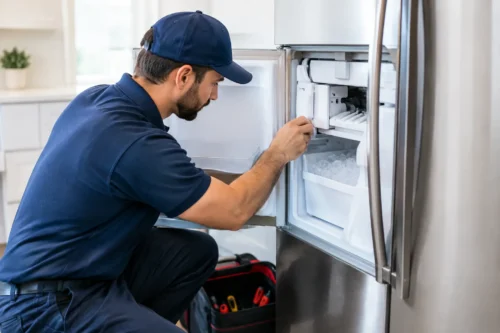
For homeowners in St. George, Ivins, Santa Clara, Hurricane, Washington, and Mesquite, Master Tech Appliance Repair can diagnose the actual cause rather than treating the visible ice alone. An experienced technician can test defrost components, inspect airflow, clear a drain correctly, and determine whether a repair is the practical choice for your refrigerator’s age and condition.
A little frost on a package after a busy week is one thing. Frost that keeps coming back is worth addressing before it turns into spoiled food, a leaking freezer, or a refrigerator that cannot keep up with your family’s routine.