Table of Contents
- Start With Gas Safety
- How to Fix Stove Clicking From Moisture or Spills
- Give the Cooktop Time to Dry When Needed
- Check Burner Caps and Burner Heads
- Clean the Igniter Carefully
- Notice Whether One Burner or All Burners Click
- When the Clicking Needs Professional Repair
A gas stove that keeps clicking after the burner is lit can turn a simple dinner into an irritating distraction. The good news is that learning how to fix stove clicking often starts with a few safe, practical checks. In many cases, the sound comes from moisture, food debris, or a burner cap that is slightly out of position. In other cases, it points to an ignition part that needs professional attention.
Before touching anything, pay attention to what the stove is doing. A brief series of clicks while lighting a burner is normal. Continuous clicking when every burner knob is off is not. The difference matters because it helps narrow down whether you are dealing with a simple cleanup or an electrical ignition problem.
Start With Gas Safety
If you smell gas, hear a hissing sound, or suspect a gas leak, do not try to troubleshoot the stove. Do not light a match, turn electrical switches on or off, or use the appliance. Leave the home, keep others away from the area, and contact your gas utility or emergency services from a safe location.
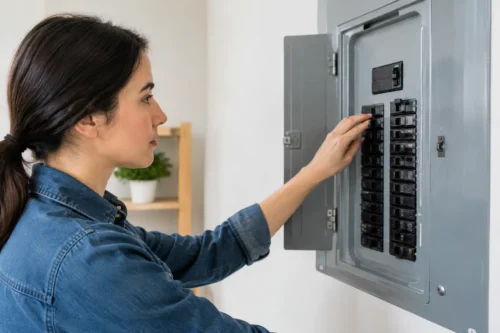
If there is no gas odor and the burners are off, turn off power to the range before cleaning or inspecting it. For a plug-in range, unplug it if you can safely reach the cord. If the plug is not accessible, turn off the appropriate circuit breaker. The igniter system uses electricity, and cutting power prevents unwanted sparking while you work.
How to Fix Stove Clicking From Moisture or Spills
Moisture is one of the most common reasons a gas stove clicks repeatedly. A pot that boiled over, a vigorous wipe-down, or steam from cooking can leave water around the burner head and electrode. The electrode is the small ceramic-tipped piece that creates the spark needed to light the gas.
Remove the grates, burner caps, and burner heads after the cooktop has completely cooled. Blot up visible water with a clean, dry towel. Then let the parts air-dry thoroughly. In Southern Utah, a quick dry-out may be enough after a minor spill, but water can still settle beneath burner components where it is harder to see.
Use a dry cloth or paper towel to gently dry around the igniter electrode. Avoid soaking the area, scraping the ceramic tip, or spraying cleaner directly into openings around the burner. The ceramic can crack, and excess cleaner can create another moisture problem.
Once everything is dry, reinstall the burner pieces and restore power. Test one burner at a time. If the clicking stops, the issue was likely trapped moisture. If it returns after every cleaning or happens without a recent spill, move on to the burner assembly.
Give the Cooktop Time to Dry When Needed
A damp ignition switch can continue clicking long after the top of the stove looks dry. In that situation, leave the power off and allow the cooktop several hours to dry completely. If a large amount of liquid entered the control area or the clicking continues the next day, a technician should inspect it. Continuing to use a wet ignition system can lead to repeated misfires and damage to electrical components.
Check Burner Caps and Burner Heads
Each burner cap must sit level and fully seated on its burner head. If it is crooked, upside down, or placed on the wrong burner, gas may not flow evenly to the igniter. The stove may click longer than usual, fail to light, or produce an uneven flame.
With the power still off, lift the cap and burner head. Check for crumbs, grease, foil, or hardened food around the openings. Clean removable parts with warm water and mild dish soap, then dry them completely. A soft brush can help clear surface debris from burner ports, but do not force a toothpick, pin, or metal tool into the holes. That can enlarge or damage the ports and affect flame performance.
Reassemble the burner based on its proper size and orientation. Many caps look similar but are not interchangeable. When correctly seated, the cap should rest flat without rocking. Restore power and try the burner again. A steady blue flame and a clicking sound that stops promptly are good signs.
Clean the Igniter Carefully
Grease buildup and food residue can block the spark from reaching the burner. Look for the igniter electrode near the burner edge. It should be clean, dry, and positioned close to the burner head without touching it.
Wipe away light residue using a dry cloth or a soft toothbrush. If buildup is stubborn, use only a lightly damp cloth, then dry the area completely before restoring power. Be gentle. The white ceramic portion is an insulator, and a crack in that piece can allow the spark to travel in the wrong direction instead of lighting the burner.
If you see a visible crack, a broken metal tip, or a spark that jumps away from the burner, cleaning will not solve the problem. The electrode may need replacement.
Notice Whether One Burner or All Burners Click
The pattern of the clicking is useful. If only one burner clicks constantly, the issue may be limited to that burner’s electrode, burner assembly, or switch. If all burners click together, even though only one knob was used, moisture or a stuck ignition switch is more likely.
Many gas ranges use a spark module that sends clicks to every burner when any knob is turned to the lighting position. That is normal during ignition. It is not normal for every burner to keep sparking after the knob is off and the flame is already lit.
A clicking sound that begins when you turn one specific knob, then continues after you release it, can indicate a worn or contaminated burner switch. Because switches and wiring are located behind the control panel, this is usually not a do-it-yourself repair. Disassembly can expose electrical connections and gas components, and the correct diagnosis matters before parts are replaced.
When the Clicking Needs Professional Repair
Call for service if the stove keeps clicking after it has been cleaned and dried, if a burner will not ignite, or if the clicking begins randomly while no one is cooking. You should also schedule service when there is a damaged electrode, repeated tripping of the circuit breaker, a burner that lights only with a match, or a flame that is yellow, uneven, or difficult to control.
A trained appliance technician can test the ignition switches, spark module, electrodes, wiring, and burner alignment. This avoids replacement guesswork. The right repair may be as simple as correcting a damaged igniter, but it can also involve an internal switch or spark module that is not safely accessible from the cooktop surface.
For homeowners in St. George, Ivins, Santa Clara, Hurricane, Washington, or Mesquite, fast diagnosis matters when a stove problem interrupts family meals or makes the kitchen feel unsafe. Master Tech Appliance Repair provides owner-led appliance service focused on finding the real cause and making repairs that last.
A clicking stove is often asking for attention before it becomes a larger inconvenience. Keep the cooktop clean and dry, make sure burner parts are seated correctly, and trust a qualified repair professional when the sound does not stop. That approach protects your kitchen, your routine, and the appliance you rely on every day.