Table of Contents
- The Most Common Freezer Frost Causes
- A door that is not sealing completely
- Frequent door opening and humid air
- Food that has not cooled before freezing
- Worn, damaged, or dirty door gaskets
- Frost on the Back Wall Can Signal a Defrost Problem
- A blocked defrost drain
- How to Tell Whether the Frost Is a DIY Job
- When to Call for Freezer Frost Repair
A thin layer of frost after the freezer door has been open for a while is usually no cause for alarm. Thick snow-like buildup on packages, shelves, walls, or the back panel is different. Freezer frost causes often come down to warm, humid air entering the compartment, but the reason that air is getting in matters. Left alone, heavy frost can crowd out food, interfere with airflow, make the freezer work harder, and eventually put groceries at risk.
The Most Common Freezer Frost Causes
A door that is not sealing completely
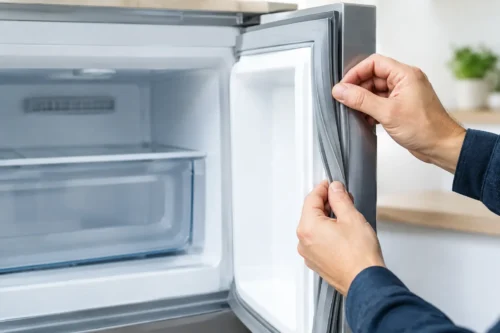
The door gasket, or rubber seal around the freezer door, is the first place to look. It needs to make full contact with the cabinet all the way around. When even a small section is dirty, torn, warped, or pulled loose, warm Southern Utah air can enter the freezer. That moisture freezes quickly and turns into frost.
A container, bag, or ice package can also prevent the door from closing fully. This happens more often than homeowners expect, especially when the freezer is packed tightly. Before assuming a part has failed, rearrange anything pressing against the door and make sure drawers and shelves are seated correctly.
You can inspect the gasket by wiping it with warm water and mild soap, then checking for cracks, hard spots, or gaps. Close the door on a sheet of paper in several places around the seal. If the paper pulls out with almost no resistance, the gasket may not be sealing well. This test is helpful, but it does not identify every seal problem. A door that has sagged or hinges that are out of alignment can create the same issue.
Frequent door opening and humid air
Every time the freezer door opens, humid household air moves in. That is normal. The problem starts when the door is opened repeatedly, left open while unloading groceries, or not closed completely after someone grabs an item.
Humidity is especially relevant in warm climates. Moisture enters the freezer as vapor, then freezes on cold surfaces. A little frost near the door after a busy week may simply be a usage issue. Frost that returns rapidly after a complete defrost, even with careful door use, points more strongly to a sealing or mechanical problem.
Food that has not cooled before freezing
Putting uncovered warm food directly into the freezer adds heat and moisture to the compartment. The freezer has to remove that heat, and the steam released by the food can settle as frost. Let leftovers cool safely in the refrigerator first, then place them in airtight, freezer-safe containers.
This is not usually the sole reason for a freezer packed with ice. Still, reducing unnecessary moisture helps prevent a minor frost issue from becoming a recurring cleanup job. It also protects food quality by limiting freezer burn.
Worn, damaged, or dirty door gaskets
A gasket can look mostly fine and still leak air. Grease, crumbs, pet hair, or residue can keep the seal from lying flat. Older gaskets can become stiff and lose their shape, particularly around corners. A tear is more obvious, but it is not the only sign that replacement is needed.
Avoid applying petroleum jelly, adhesives, or heat to a gasket unless your appliance manufacturer specifically recommends it. Those quick fixes may temporarily change how the seal sits, but they can also damage the material or mask the actual issue. A proper inspection can determine whether cleaning, adjusting the door, or replacing the gasket is the right repair.
Frost on the Back Wall Can Signal a Defrost Problem
The location of the frost provides a useful clue. Frost mainly around the door opening or on food packages usually suggests air leakage. A heavy sheet of frost or ice on the freezer’s rear interior wall often points to a problem in the automatic defrost system.
Most modern frost-free refrigerators use an evaporator coil hidden behind that rear panel. During normal operation, the coil gets very cold and collects some moisture. At scheduled intervals, the refrigerator switches into a defrost cycle to melt that moisture, allowing water to drain away. If the defrost cycle fails, ice builds up over the coil.
As the ice thickens, cold air cannot circulate properly. You may notice that the freezer is still cold but the refrigerator section is getting warmer, or that the freezer runs longer than usual. Ice cream may become soft, produce may spoil sooner, and the fan may make a rubbing or buzzing sound as it contacts ice.
Several parts can be responsible, including the defrost heater, defrost thermostat or sensor, control board, wiring, evaporator fan, or clogged defrost drain. These components need diagnosis rather than guesswork. Replacing one part without testing the system can lead to an unnecessary repair bill and the same frost returning days later.
A blocked defrost drain
During defrost, melted water should flow through a drain opening and tube to a pan below the refrigerator. If that path is blocked by ice or debris, water can refreeze in the freezer floor or form a slab of ice beneath the bottom drawer. Some homeowners first notice a puddle on the kitchen floor when the drain problem worsens.
A blocked drain can sometimes be cleared, but access varies widely by model. Forcing sharp objects into the drain area can puncture a liner, damage a coil, or create a much larger repair. If ice keeps returning at the bottom of the freezer, professional service is the safer choice.
How to Tell Whether the Frost Is a DIY Job
A manual defrost can remove existing frost, but it does not repair the reason it formed. If the issue was a door left ajar or a bag blocking the seal, defrosting and correcting that habit may solve it. If frost returns quickly, the appliance needs a closer look.
Before scheduling service, homeowners can safely check a few basics: confirm the door closes without obstruction, clean the gasket, check that the refrigerator is level enough for the door to close properly, and make sure vents inside the freezer are not covered by food. Keep the temperature set near 0 degrees Fahrenheit. Setting the freezer excessively cold can increase frost and energy use without improving food safety.
Do not chip ice away with a knife, screwdriver, or other sharp tool. Freezer liners and refrigerant lines can be damaged surprisingly easily. Also avoid using a hair dryer near melting water or leaving an appliance running while you try to melt heavy ice. Unplug the appliance before a manual defrost, move perishable food to a cooler, place towels around the base, and allow the ice to melt naturally. Follow the manufacturer’s instructions for your model whenever available.
When to Call for Freezer Frost Repair
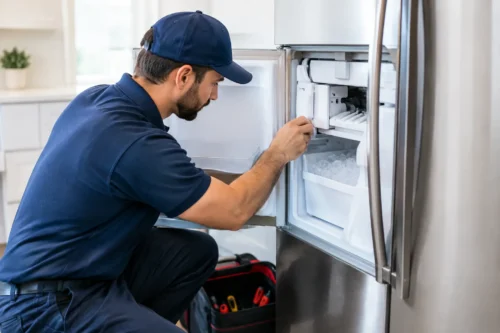
It is time to call a technician when frost returns within a week or two of defrosting, the back wall is solid with ice, the refrigerator compartment is warming up, or the freezer makes unusual fan noises. Service is also worthwhile if the door will not stay closed, the gasket is visibly damaged, or water is pooling beneath drawers.
For homeowners in St. George and surrounding Southern Utah communities, timely diagnosis can prevent a frost issue from turning into food loss or compressor strain. Master Tech Appliance Repair can identify whether the problem is a seal, alignment issue, drain blockage, defrost component, or airflow failure, then recommend the repair that makes sense for the appliance.
A freezer should preserve food quietly in the background, not demand weekly ice removal. Paying attention to where the frost forms and how quickly it returns gives you a clear starting point – and helps protect the meals and groceries your household depends on.