Table of Contents
- How to fix leaking freezer issues starts with the source
- Check the defrost drain first
- Inspect the door gasket and door closing habits
- Make sure the freezer is level
- Look at the drain pan and the area underneath
- If there is an ice maker, check the water line
- When how to fix leaking freezer problems is not a DIY job
A puddle under the freezer usually shows up at the worst time – right before groceries go in, before guests arrive, or after you have already cleaned the kitchen once that day. If you are searching for how to fix leaking freezer trouble, the good news is that some causes are simple and safe to check yourself. The key is figuring out whether the leak is coming from normal condensation, a clogged drain, a door sealing problem, or a part that needs professional repair.
Before you do anything else, protect the floor and nearby cabinets. Put down towels, move food to a cooler if needed, and unplug the appliance if water is getting close to electrical components. A freezer leak is not always a major failure, but it should never be ignored. Water around an appliance can lead to damaged flooring, warped baseboards, and food storage problems if the temperature is also off.
How to fix leaking freezer issues starts with the source
Not every freezer leak comes from the same place. On some units, water forms inside and runs out the door. On others, it collects underneath the appliance and seems to appear from nowhere. A standalone freezer and a refrigerator-freezer combo can leak for different reasons, so it helps to look carefully before guessing.
Start by checking where the water is collecting. If you see ice buildup on the back wall inside the freezer, the defrost drain may be blocked. If the water is near the front corners, a bad door seal or frequent warm air entering the compartment may be the issue. If the leak is behind or underneath the unit, you may be dealing with a drain pan problem, a supply line issue on a model with an ice maker, or a leveling problem that keeps water from draining correctly.
This matters because the right fix depends on the pattern. Homeowners often assume a leak means the appliance is failing completely, when in many cases it is one restricted passage, one loose connection, or one worn gasket.
Check the defrost drain first
A clogged defrost drain is one of the most common reasons a freezer leaks. During the normal defrost cycle, melted frost should flow through a drain hole and down to a pan where it evaporates. If that drain is blocked by ice, food debris, or sludge, the water has nowhere to go. It backs up, freezes, and eventually spills out onto the floor.
Open the freezer and look for a sheet of ice on the bottom or frost concentrated near the rear interior panel. That is a strong clue. On many models, the drain opening sits at the back of the freezer floor or behind the back panel.
To check it safely, unplug the appliance. Remove drawers or shelves as needed. If the drain area is frozen over, let the ice melt with towels in place, or carefully use warm water to loosen it. Do not chip at the ice with a knife or screwdriver. That can puncture a liner or damage a hidden component fast.
Once the ice is gone, flush the drain with warm water using a turkey baster or squeeze bottle. If the water does not move through, the blockage may be deeper in the line. Sometimes gentle flushing clears it. Sometimes it does not, and forcing the issue can crack plastic tubing. If you clear the drain and the freezer leaks again soon after, there may be an underlying defrost system problem causing excess ice to return.
Inspect the door gasket and door closing habits
A freezer door that is not sealing tightly lets humid air enter every time the unit runs. That extra moisture turns to frost, then melts during defrost cycles and can overwhelm the drain system. In a busy household, this can happen more than people realize, especially if the freezer is packed tightly or a drawer is not sliding fully closed.
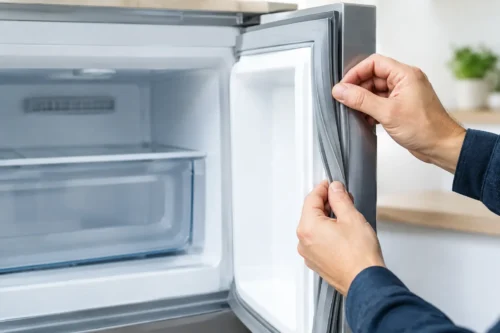
Run your hand around the door gasket and look for splits, hardened areas, or gaps. If crumbs, sticky residue, or pet hair are built up on the seal, clean it with warm water and mild soap. Then dry it fully. Sometimes a gasket is not damaged at all – it is just dirty enough to prevent a proper seal.
Also check whether anything inside is pushing against the door. Pizza boxes, bulk meat packages, and overfilled drawers are frequent culprits. If the freezer door pops open slightly after closing, the leak may be a symptom of warm air infiltration rather than a drain failure.
If the gasket is torn or badly warped, cleaning will not fix it. That part usually needs replacement. It is not the most complex repair, but it does need to be fitted correctly. A poor gasket installation can create the same problem all over again.
Make sure the freezer is level
This is a simple check that gets overlooked. A freezer needs to sit level, and on some models, slightly tilted toward the back, so doors close properly and water drains where it should. If the floor has settled or the appliance was moved recently for cleaning, the cabinet may no longer be positioned correctly.
Place a level on top of the appliance and check side to side and front to back. If it is off, adjust the leveling feet according to the manufacturer design. Even a small correction can change how the door seals and how defrost water travels.
This is especially worth checking in garages, older homes, and utility areas where the floor is less even than the main kitchen. In Southern Utah homes, we sometimes see appliances shifted slightly after cleaning or seasonal reorganizing, and that small change creates a frustrating leak that looks more serious than it is.
Look at the drain pan and the area underneath
Most freezers collect defrost water in a pan beneath the unit. The heat from the compressor helps evaporate that water over time. If the pan is cracked, misaligned, or overflowing, water may spread onto the floor.
Unplug the freezer and carefully inspect underneath if you can do so safely. If you find a damaged pan, it should be replaced. If the pan is simply full, ask why. A little water is normal. Too much may point back to excess frost, a poor door seal, or a drain issue upstream.
Dust and debris under the appliance can also affect airflow and evaporation. While that alone does not always cause a puddle, it can contribute to poor performance. Cleaning the area around the condenser section is good maintenance, but be gentle around coils and wiring.
If there is an ice maker, check the water line
On freezer models with an ice maker, a leak may have nothing to do with defrosting. A loose water connection, cracked fill tube, or seeping inlet valve can send water behind or below the appliance. This type of leak often appears at the back of the unit rather than inside the compartment.
Pull the appliance out carefully and inspect the water supply line for kinks, drips, or obvious wear. Look for signs of mineral buildup around fittings, which can indicate a slow leak. If a connection is loose, tightening it may help. If the line or valve is damaged, replacement is the better path.
This is one area where caution matters. Water supply parts can fail gradually or suddenly. If the line looks brittle, the valve is corroded, or you are unsure what you are seeing, it is smart to stop there and schedule service rather than risk a larger water problem.
When how to fix leaking freezer problems is not a DIY job
Some leaks are straightforward. Others are symptoms of a deeper failure in the defrost system, temperature control, or ice maker assembly. If the drain keeps freezing, the freezer is not holding temperature, the fan sounds abnormal, or the leak returns right after you clear it, there is probably more going on than surface water.
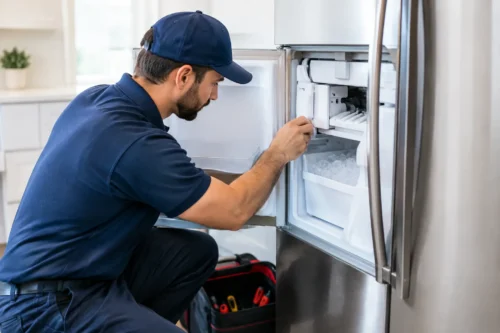
That is where experience matters. A trained technician can tell whether the real issue is a failed defrost heater, bad thermostat, blocked drain tube, damaged gasket, or a water valve that is only leaking during certain cycles. Guessing gets expensive when food is at risk and repeat leaks damage the home.
For homeowners in St. George, Ivins, Santa Clara, Washington, Hurricane, and Mesquite, quick appliance attention matters more than ever when indoor temperatures and garages run hot. A leaking freezer in those conditions can turn into spoiled food and a bigger cleanup fast.
If you want to prevent future leaks, keep the door seal clean, avoid overpacking the compartment, check that the appliance is level, and respond early when you notice frost patterns changing. Small warning signs usually show up before a major puddle does.
A leaking freezer is frustrating, but it is often fixable. Start with the safe basics, pay attention to where the water is coming from, and if the problem points to a part failure, get it handled before a simple leak turns into a much bigger repair.