Table of Contents
- When repair or replace refrigerator decisions get tricky
- Start with the age of the refrigerator
- The repair cost matters, but so does the type of repair
- Signs your refrigerator is a good candidate for repair
- Signs replacement may be the smarter move
- Don’t ignore the real-life cost of waiting
- Why professional diagnosis makes the decision easier
- A simple way to think about repair or replace refrigerator choices
A refrigerator problem gets expensive fast. One bad night of cooling can leave you throwing out groceries, scrambling for ice, and wondering whether to repair or replace refrigerator issues before they turn into a bigger headache.
For most homeowners, the answer is not as simple as “old means replace” or “cheap means repair.” A refrigerator is one of the hardest-working appliances in the house. It runs day and night, and when something goes wrong, the right decision depends on the age of the unit, the failed part, the repair cost, and how well it has been performing overall.
When repair or replace refrigerator decisions get tricky
The biggest mistake homeowners make is deciding too quickly. If the refrigerator stops cooling, starts leaking, or makes a loud new noise, it is easy to assume the worst. But many refrigerator problems come from parts that can be diagnosed and repaired without replacing the entire unit.
A faulty thermostat, evaporator fan motor, defrost component, door gasket, or condenser issue can cause major symptoms without meaning the appliance is at the end of its life. On the other hand, a sealed system problem, compressor failure, or repeated breakdowns on an aging refrigerator can push the decision toward replacement.
That is why diagnosis matters. The symptom you see is not always the actual failure. A freezer full of frost might look severe but still be repairable. A refrigerator that seems to be “running fine” except for warm food could have a more costly issue behind the scenes.
Start with the age of the refrigerator
Age is one of the first things to consider, but it should not be the only factor. Most refrigerators last around 10 to 15 years, depending on the brand, the design, how heavily they are used, and how well they have been maintained.
If your refrigerator is under 8 years old, repair is often worth serious consideration, especially if the issue is limited to a common replaceable part. At that stage, many units still have plenty of useful life left.
If it is between 8 and 12 years old, the decision becomes more case by case. A solid refrigerator with a single repair need may still be worth fixing. But if performance has been slipping, energy use has gone up, or you have already paid for other repairs, replacement may start to make more sense.
If the unit is over 12 to 15 years old, replacement becomes more likely, especially when the repair is expensive. That does not mean every older refrigerator should be replaced immediately. Some older units are built well and can keep going with the right repair. But the odds of another failure rise as more components wear out.
The repair cost matters, but so does the type of repair
A common rule people hear is to replace the refrigerator if the repair cost is more than half the price of a new one. That rule can be useful, but it is not perfect.
A better question is this: what are you paying for, and what condition is the rest of the refrigerator in?
If the repair involves a relatively straightforward part and the refrigerator is otherwise in good condition, a moderate repair bill can still be worthwhile. If the issue is a compressor, sealed system leak, or multiple failing components, the value changes. Those repairs tend to be more expensive, and even after the repair, you may still be left with an older unit that could need additional work soon.
There is also the practical side. New refrigerators can be expensive, and not every homeowner wants to replace one unexpectedly. If a repair gives you several more reliable years, that can be the smarter financial move.
Signs your refrigerator is a good candidate for repair
A refrigerator is usually worth repairing when the problem is isolated and the appliance has been dependable overall. If it has cooled consistently, has no history of frequent service calls, and is still within a reasonable age range, repair is often the better path.
That is especially true when the symptoms point to serviceable components. A bad ice maker, worn door seal, clogged drain line, failed defrost heater, broken fan motor, or control issue can often be resolved without replacing the appliance.
Another good sign is when the refrigerator still fits your needs. If it matches your kitchen, has the storage layout your household likes, and has not been giving you trouble beyond the current issue, there is real value in keeping it going.
For many families, avoiding the rush of shopping, delivery delays, installation concerns, and food disruption is worth a lot. A proper repair can get daily life back on track with far less hassle.
Signs replacement may be the smarter move
There are times when replacement is the more practical and honest recommendation. If your refrigerator has needed repeated repairs in a short period, that usually points to broader wear rather than a one-time failure.
Replacement also makes more sense when cooling problems are tied to major sealed system issues, when the compressor has failed on an older unit, or when repair costs are high enough that they do not buy much confidence going forward. If your food is regularly spoiling, temperatures are inconsistent, and you no longer trust the refrigerator to do its job, reliability becomes the deciding factor.
Visible condition matters too. Cracked shelves, broken bins, damaged door seals, rust, or failing controls may not each seem major on their own, but together they can signal that the appliance is simply wearing out.
Energy efficiency can be part of the equation as well. Older refrigerators often use more electricity than newer models. The energy savings alone will not always justify replacement, but when combined with costly repairs and declining performance, they can tip the balance.
Don’t ignore the real-life cost of waiting
One thing homeowners often underestimate is the cost of delay. If your refrigerator is not cooling correctly, every extra day increases the risk of food loss. That can mean hundreds of dollars in groceries, not to mention the inconvenience of emergency meals, coolers on the kitchen floor, and trips to buy ice.
A leaking refrigerator can damage flooring or surrounding cabinets. A freezer that ices over can strain other components. A noisy motor or fan may be warning you before a larger failure happens.
When you are trying to decide whether to repair or replace refrigerator trouble, timing matters. Getting the unit professionally diagnosed early gives you better options. Waiting until the refrigerator fails completely often turns a manageable repair into an urgent replacement.
Why professional diagnosis makes the decision easier
The most helpful step is not guessing. It is getting a clear diagnosis from someone who works on refrigerators every day.
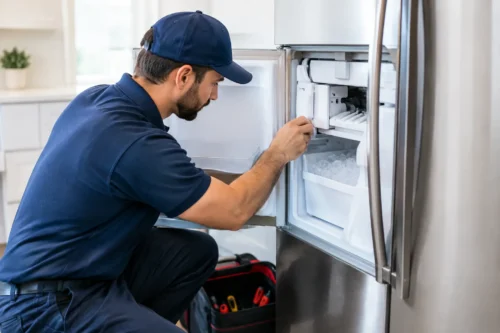
A trained technician can tell you whether the problem is minor or major, whether the repair is likely to hold up, and whether the refrigerator’s age and condition support investing in it. That kind of straight answer matters, especially when you are trying to protect your food, your time, and your budget.
Homeowners in St. George and nearby Southern Utah communities often want the same thing: an honest recommendation. Not a sales pitch for replacement when a repair makes sense, and not a temporary fix when the smarter choice is to move on. That is where experience pays off.
Master Tech Appliance Repair approaches these calls the way homeowners want them handled – with a real diagnosis, clear communication, and practical advice based on what is best for the household.
A simple way to think about repair or replace refrigerator choices
If your refrigerator is newer, has been reliable, and needs a reasonable repair, fixing it is often the best value. If it is older, breaking down repeatedly, or facing a major high-cost repair, replacement is usually the more sensible move.
The gray area is where most people get stuck. That is normal. Refrigerators are too important to replace casually and too expensive to repair blindly.
A good decision comes down to three things: how old the unit is, what failed, and whether the repair gives you confidence or just buys a little time. Once you know those answers, the path usually gets much clearer.
If your refrigerator is acting up, do not let guesswork decide for you. A careful diagnosis now can save your food, your money, and a lot of frustration later.