Table of Contents
- What a factory trained appliance technician really means
- Why experience and training work better together
- Where a factory trained appliance technician can make the biggest difference
- The real cost of guesswork
- What homeowners should expect during the service call
- Factory training does not mean every repair is perfect
- How to tell if the technician is the right fit
- Why this choice matters more than ever
When your refrigerator stops cooling or your dryer takes three cycles to finish a load, the problem is rarely just the machine itself. It is the food in the fridge, the family schedule, the extra trips to the store, and the growing worry that a simple repair could turn into an expensive replacement. That is why choosing a factory trained appliance technician matters more than most homeowners realize.
A lot of repair companies can promise fast service. Fewer can explain what is actually wrong, why it happened, and whether the repair makes financial sense. Training makes a difference there. Not because it sounds impressive, but because modern appliances are more complicated than they used to be. Electronic control boards, sensor systems, sealed refrigeration components, high-efficiency washer systems, and brand-specific error codes all require more than general mechanical experience.
What a factory trained appliance technician really means
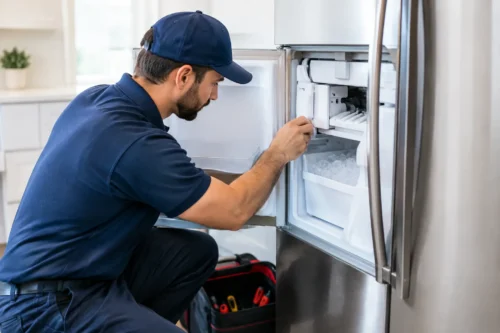
A factory trained appliance technician has received brand-specific instruction on how particular appliances are built, how they are supposed to operate, and how to diagnose common and uncommon failures. That training typically covers service procedures, electrical systems, component testing, updated repair methods, and manufacturer standards.
For a homeowner, the value is practical. It means the technician is not starting from scratch on your appliance. He has likely seen similar failures before, understands how that brand tends to behave, and knows where problems can hide. That shortens the guesswork.
This does not mean every issue is simple or every repair is worth doing. Some machines have multiple failing parts. Some older units are near the end of their useful life. But factory training helps produce better judgment, and good judgment is what homeowners are really paying for.
Why experience and training work better together
Training alone is helpful. Experience alone is helpful. Together, they are much more valuable.
A technician can know the service manual and still struggle in a real home where symptoms are inconsistent, installation conditions are poor, or previous repairs have changed the machine. On the other hand, a technician with years of field experience but no brand-specific training may diagnose by pattern recognition alone and miss newer design issues.
That combination of factory instruction and long-term repair experience matters most on the appliances people depend on every day. Refrigerators need accurate diagnosis because delays can lead to spoiled food. Washers and dryers affect the weekly routine immediately. Ovens, dishwashers, and ice makers may seem less urgent until family plans are interrupted or the kitchen stops functioning the way it should.
For homeowners, that means fewer wasted appointments, fewer unnecessary parts, and a better chance of fixing the problem correctly the first time.
Where a factory trained appliance technician can make the biggest difference
Some repairs are straightforward. A worn door latch, a broken belt, or a clogged drain line may be resolved quickly by a capable technician. But brand-specific training becomes especially important when the failure involves electronic controls, intermittent performance, or systems that can be damaged by incorrect service.
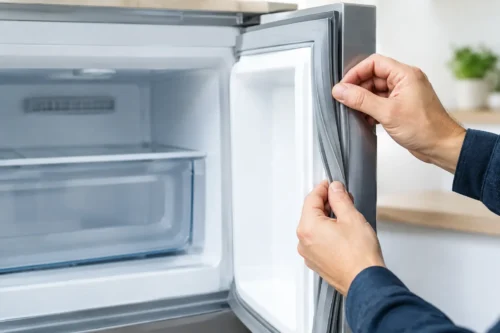
Refrigeration is a good example. A refrigerator that is warm can be dealing with airflow issues, defrost failures, sensor problems, fan motor problems, sealed system trouble, or control board faults. Several of those problems can look similar to the homeowner. Sometimes they even look similar during the first few minutes of diagnosis. Knowing how a specific brand sequences defrost, interprets sensor readings, or controls compressor operation helps narrow the issue faster.
The same is true for front-load washers, high-efficiency dryers, and modern cooking appliances. Many now rely on communication between multiple components. If one board, sensor, or switch gives bad information, the machine can behave unpredictably. Replacing parts based on a hunch gets expensive fast.
The real cost of guesswork
Most homeowners are not looking for the cheapest possible visit. They are looking for a repair that solves the problem and lets them move on with their life.
Guesswork has a cost. Sometimes it shows up as a second service call because the first repair did not address the real issue. Sometimes it shows up as money spent on parts that were never needed. In the worst cases, it leads a homeowner to replace an appliance that could have been repaired properly.
That is where honest service matters just as much as technical skill. A good technician should be able to tell you when a repair is worthwhile, when it is becoming marginal, and when replacement is the smarter move. Not every appliance should be fixed at any price. Age, condition, part availability, and the nature of the failure all matter.
A trustworthy technician does not treat every call the same. He looks at the actual machine, the real failure, and the practical value of the repair for your household.
What homeowners should expect during the service call
When you invite someone into your home to work on a major appliance, technical knowledge is only part of the job. Homeowners also need clarity, respect, and professionalism.
A strong service visit usually includes a clear diagnosis, a straightforward explanation, and realistic expectations about cost and timing. If parts are needed, you should understand why. If there are options, those should be explained without pressure. If the appliance is not worth repairing, that should be said plainly.
This is one reason owner-led service often stands out. Accountability tends to be higher when the person doing the work is directly responsible for the company reputation. In a market like St. George and the surrounding Southern Utah communities, that local trust matters. People remember whether the technician was honest, careful in the home, and respectful of their time.
Factory training does not mean every repair is perfect
This is worth saying clearly. Factory training is a strong advantage, but it is not magic.
Some parts are discontinued. Some failures are hidden until disassembly begins. Some appliances have been poorly installed or repeatedly patched over the years. And some systems fail in ways that make repair technically possible but financially questionable.
That is why the best repair professionals do more than diagnose. They help homeowners make a sound decision. Sometimes that means repairing the appliance because the fix is solid and cost-effective. Sometimes it means advising against repair because the machine is too far gone or likely to keep breaking.
The goal should never be to sell a repair at all costs. The goal is to restore reliability where it makes sense.
How to tell if the technician is the right fit
Homeowners do not need to become appliance experts overnight, but a few things are worth paying attention to.
Look for a technician who can explain the issue in plain language without talking down to you. Notice whether the diagnosis sounds specific or vague. Pay attention to whether the recommendation feels balanced. If everything is urgent, every part is failing, and replacement is always just around the corner, that is usually a sign to be cautious.
It also helps to work with someone who handles a broad range of household appliances regularly. Kitchens and laundry rooms create different types of problems, and a technician with deep residential experience is usually better prepared for the realities of everyday use, maintenance neglect, and the wear patterns common in family homes.
At Master Tech Appliance Repair, that practical approach is part of the job. Homeowners want the problem solved, but they also want to know they are making the right call for their home and budget.
Why this choice matters more than ever
Appliances are more expensive to replace, and many homeowners would rather repair a quality unit than gamble on a new one too soon. At the same time, newer machines are less forgiving of bad diagnosis. A wrong part replacement or incomplete repair can waste money quickly.
Choosing a factory trained appliance technician gives you a better chance at an accurate diagnosis, a more efficient repair, and honest guidance about what comes next. That does not guarantee every machine can be saved. It does mean you are far less likely to lose time and money to trial-and-error service.
When an appliance breaks, homeowners do not just need a person with tools. They need someone who understands the equipment, respects the home, and knows how to make a repair decision that holds up after the service truck leaves. That kind of help is not flashy, but when your kitchen or laundry routine is on the line, it is exactly what matters.