Table of Contents
- Why a stove burner stops working
- Stove burner not working on an electric range
- Stove burner not working on a gas cooktop
- What you can safely check yourself
- When one burner works and another does not
- Signs the problem is more than a simple burner issue
- Why professional stove repair often saves time
- The smartest next step when your stove burner is not working
Dinner plans tend to fall apart fast when a stove burner not working leaves you with one cold pan and a kitchen full of frustration. Sometimes the fix is simple. Sometimes the problem points to a worn switch, bad element, wiring issue, or a deeper electrical fault. The key is knowing what you can safely check at home and what should be handled by an experienced appliance technician.
Why a stove burner stops working
A burner can fail for a few different reasons, and the symptoms usually tell part of the story. If the burner never heats at all, the issue may be a failed surface element, a faulty infinite switch, a damaged receptacle, or a power problem. If it heats unevenly, cuts in and out, or only works on certain settings, the switch or connection point is often the better suspect.
On electric ranges, the burner itself is a common failure point because it takes constant heat cycling. Over time, the element can crack, weaken internally, or stop making good contact where it plugs into the socket. On smooth-top models, the radiant element under the glass can fail as well, though diagnosis is a little less visible.
Gas cooktops create a different set of problems. If a gas burner clicks but will not light, the cause could be a clogged burner port, moisture around the igniter, a dirty electrode, or an issue with the spark module. If there is no clicking at all, then the ignition switch or power supply may be involved.
Stove burner not working on an electric range
If you have an electric stove, start with the simplest possibility. Make sure the appliance has full power. A range can sometimes appear partly functional when only one side of the breaker has tripped. The clock might still work while one or more burners do not.
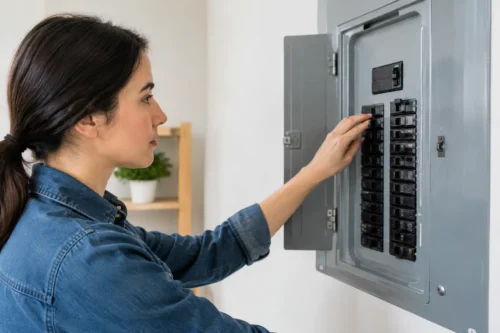
Go to your electrical panel and check the breaker for the range. If it has tripped, reset it once. If it trips again, stop there. Repeated breaker trips can point to a short or wiring problem that needs professional attention.
If the breaker looks fine, unplug the range or shut off power before touching anything else. For coil-style burners, remove the non-working element and inspect it. Look for blistering, cracks, burn spots, or bent terminals. If you have another burner of the same size that works, swap them. If the problem follows the burner, the element is bad. If the good burner also fails in that same spot, the issue is likely the socket or the switch.
The burner receptacle is another common weak point. If the socket looks charred, melted, or loose, it can no longer make a safe, solid connection. In that case, replacing only the burner may not solve the problem for long.
On smooth-top electric ranges, testing gets more technical. You cannot simply swap a radiant element the way you can with a plug-in coil. The fault may still be the burner assembly, but it could also be the switch, limiter, wiring harness, or control board. This is where an accurate diagnosis matters. Replacing parts by guesswork gets expensive quickly.
Stove burner not working on a gas cooktop
When a gas burner stops lighting, many homeowners assume the whole cooktop is failing. Often, it is more localized than that.
Start by checking whether the burner cap is seated correctly. If it is off-center, the flame may not ignite properly. Next, clean the burner ports carefully. Grease, food residue, and boil-over debris can block gas flow and interfere with ignition. A soft brush or gentle cleaning tool is usually enough. Avoid using anything that could enlarge the ports.
If the burner is clicking but not lighting, moisture is another possibility. After cleaning, burners sometimes need time to dry fully before they ignite normally again. If the burner lights with a match but not with the igniter, that points more strongly to an ignition problem rather than a gas supply problem.
If none of the burners click, check whether the unit has electrical power. Many gas cooktops still require electricity for spark ignition. A tripped breaker or unplugged cord can shut down the igniters while gas flow remains available.
A steady gas smell without ignition is a different situation. Turn the burner off, ventilate the area, and do not keep trying to light it. That is a safety issue, not a trial-and-error repair.
What you can safely check yourself
Homeowners can rule out a few common issues without taking unnecessary risks. Power supply, burner alignment, obvious damage, and surface-level cleaning are all reasonable places to start. If you have a coil burner, swapping it with a matching working burner can also be helpful.
What you should not do is open panels while the appliance is energized, bypass safety parts, or keep resetting breakers and retrying a failing burner. If wires are burnt, insulation is damaged, the receptacle is melted, or the smell of gas is present, it is time to stop troubleshooting and have the appliance inspected properly.
A lot of service calls happen after someone replaces the wrong part first. That is understandable. Stove symptoms overlap. A bad burner can look like a bad switch. A wiring failure can look like a bad control. Getting the diagnosis right at the beginning usually saves money and gets the kitchen back to normal faster.
When one burner works and another does not
This is one of the most useful clues. If the oven works and some burners work, the appliance is still getting at least some power. That narrows the issue to the failed burner circuit rather than the entire range.
For electric models, that often means the surface element, receptacle, or infinite switch for that position. For gas models, it may mean a blocked burner head, failed igniter, or switch issue tied to that one burner. In other words, one dead burner does not automatically mean you need a new stove.
That said, age matters. If the range is older and several burners have become unreliable over time, the repair may involve more than one worn component. In those cases, a technician can tell you whether a targeted repair still makes sense or whether replacement deserves a serious look.
Signs the problem is more than a simple burner issue
Some symptoms suggest the repair goes beyond a quick part swap. If a burner gets stuck on high, will not turn off, or heats regardless of setting, the switch may have failed in a way that creates a safety concern. If you see sparking, smell burning insulation, or notice discoloration around the control area, wiring damage may be involved.
For gas units, delayed ignition, flames that look uneven or unusually large, and repeated clicking after ignition can point to component wear or burner contamination that needs more than surface cleaning. These problems are not always dangerous, but they should not be ignored.
A professional diagnosis is especially worthwhile when the stove is built in, the model uses electronic controls, or the issue is intermittent. Intermittent failures are frustrating because the burner may work fine during one test and fail during the next. That usually means a connection, switch, or control component is breaking down under heat.
Why professional stove repair often saves time
A stove is one of those appliances people rely on every day without thinking much about it until it stops cooperating. Once a burner goes out, meal prep slows down, routines get awkward, and using the appliance starts to feel uncertain.
An experienced technician can test the burner circuit, inspect switches, check continuity, examine receptacles and wiring, and determine whether the repair will hold up long term. That matters because a quick fix that leaves a damaged socket or failing switch in place usually turns into another breakdown.
For homeowners in Southern Utah, dependable appliance service is not just about fixing one part. It is about getting the kitchen working again without guesswork, repeat problems, or safety concerns. That is the kind of practical, honest approach Master Tech Appliance Repair is built around.
The smartest next step when your stove burner is not working
If the problem is clearly a loose cap, a dirty gas port, or a failed coil element you have already confirmed by swapping, you may have a straightforward fix. If not, it is usually better to stop before replacing parts at random.
A stove burner not working can be a minor inconvenience or the first sign of a larger electrical or ignition issue. Either way, a careful diagnosis protects your appliance, your time, and your peace of mind. When your kitchen is part of keeping the household on track, getting it repaired the right way is always easier than working around a burner you cannot trust.