Table of Contents
- What refrigerator not cooling repair usually involves
- Start with the simplest checks first
- Dirty condenser coils can cause major cooling problems
- When the freezer works but the refrigerator does not
- Frost buildup is a warning sign
- Fan problems are easy to miss
- Compressor and start device issues
- When to stop troubleshooting and call a professional
- Why accurate diagnosis saves money
A refrigerator that suddenly stops keeping food cold can turn into a stressful problem fast. If you are searching for refrigerator not cooling repair, you are probably trying to save groceries, avoid a bigger breakdown, and get your kitchen back to normal as quickly as possible.
The good news is that not every cooling problem means the refrigerator is done for. Some issues are simple, like blocked airflow or dirty coils. Others point to a part failure that needs professional diagnosis. The key is knowing what you can safely check yourself and when it makes more sense to stop guessing and get an experienced technician involved.
What refrigerator not cooling repair usually involves
When a refrigerator is not cooling properly, the actual cause can vary quite a bit. In some homes, the fresh food section warms up while the freezer still seems normal. In others, both compartments lose temperature. That difference matters because it helps narrow down where the problem may be starting.
Most refrigerator not cooling repair calls come back to airflow problems, frost buildup, dirty condenser coils, failed fans, bad door seals, a faulty thermostat, a defrost system issue, or a problem with the compressor and start components. A trained technician does not just replace parts and hope for the best. The real job is diagnosing which system is failing and why.
That matters because refrigerators are interconnected machines. A weak evaporator fan can feel a lot like a control issue. A defrost problem can look like a sealed system problem to the untrained eye. Good repair starts with accurate testing, not trial and error.
Start with the simplest checks first
Before assuming the worst, take a minute to look at the basics. Make sure the temperature control has not been adjusted by accident. It happens more often than people think, especially in busy kitchens or households with kids.
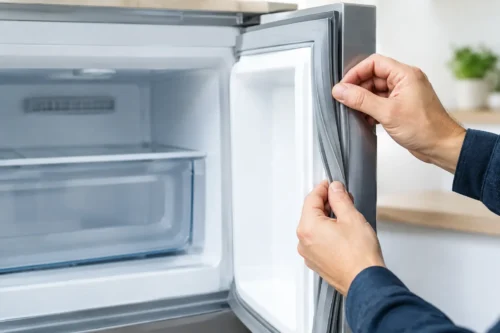
Next, check whether the refrigerator doors are fully closing. If a carton, shelf, or crisper drawer is stopping the door from sealing, cold air escapes and warm air keeps getting in. Over time, that can make the refrigerator struggle constantly without ever reaching the right temperature.
You should also look at how full the refrigerator is and how items are arranged. Packed shelves can block interior vents and reduce airflow. At the same time, an almost empty refrigerator may cycle differently than expected. The goal is steady air movement, not overcrowding.
If the unit has power but does not seem to be cooling, listen closely. You may hear fans running, a clicking sound near the compressor, or complete silence. Those clues can help point toward the next step.
Dirty condenser coils can cause major cooling problems
One of the most common causes of poor cooling is also one of the most overlooked. Condenser coils release heat from the refrigerator system. When they are covered in dust, pet hair, or kitchen debris, the appliance cannot get rid of heat efficiently.
That forces the refrigerator to work harder, run longer, and cool less effectively. In Southern Utah, where dust can build up quickly, this is especially common. Homeowners may notice the refrigerator feels warm on the outside, food is not staying cold enough, or the compressor seems to run all the time.
Cleaning the coils can sometimes improve performance right away. If the coils are easy to access and you can clean them safely, it is worth doing. If cooling does not return after that, there is likely another issue in the system.
When the freezer works but the refrigerator does not
This is one of the most common service calls because it is confusing. Homeowners open the freezer and find frozen food, then open the refrigerator side and realize the milk is warm.
In many cases, the issue is airflow. Cold air is often produced in the freezer and then circulated into the fresh food section. If the evaporator fan stops working, if vents are blocked, or if frost buildup is choking off air movement, the refrigerator compartment warms up first.
A failed damper control can also be the problem. That part helps regulate how much cold air moves from the freezer into the refrigerator section. If it sticks closed or stops responding, the freezer may stay cold while the refrigerator side struggles.
This is where proper diagnosis really matters. Replacing the wrong part wastes time and money, and meanwhile your food is still at risk.
Frost buildup is a warning sign
If you see heavy frost on the back wall of the freezer or inside the compartment, that usually points to a defrost problem. Refrigerators are designed to defrost themselves at regular intervals. When that system fails, frost accumulates around the evaporator coil and eventually blocks airflow.
Once airflow is restricted, cooling performance drops. The freezer may start losing efficiency, and the refrigerator compartment often gets warm first. People sometimes unplug the unit, let the frost melt, and think the issue is fixed when it starts cooling again. Usually, that only resets the symptom for a short time.
The actual cause may be a bad defrost heater, defrost thermostat, sensor, or control board. This is the kind of problem that needs testing. Otherwise, the frost comes back and the cycle repeats.
Fan problems are easy to miss
Refrigerators typically rely on more than one fan. The evaporator fan circulates cold air inside the appliance, while the condenser fan helps move air across the condenser area near the compressor.
If either fan stops working, temperatures can rise quickly. Sometimes the signs are subtle. You may hear unusual noises, notice inconsistent cooling, or find that the freezer and refrigerator temperatures are both off.
A bad fan motor, damaged blade, wiring problem, or control issue can all lead to the same complaint. That is why a technician checks the fan system as part of the full diagnosis instead of assuming the first visible issue is the only one.
Compressor and start device issues
When people think of a serious refrigerator failure, they usually think about the compressor. Sometimes they are right, but not always. The compressor is the heart of the cooling system, but it depends on other components to start and run correctly.
A failed start relay or start device can prevent the compressor from turning on even if the compressor itself is still good. In other cases, the compressor may be overheating, short cycling, or drawing improper amperage. Those are not guesswork issues. They need electrical testing and experience.
This is one area where do-it-yourself repair can go sideways quickly. Misdiagnosing a compressor-related issue can lead to unnecessary expense or a delayed repair while the refrigerator continues to sit warm.
When to stop troubleshooting and call a professional
There is nothing wrong with checking settings, cleaning accessible coils, or making sure vents are not blocked. Those are practical first steps. But if the refrigerator is still not cooling after basic checks, time matters.
Food safety becomes a concern much sooner than many homeowners expect. Repeated warming and cooling can spoil groceries, affect medication storage, and create a bigger mess if leaking or excess condensation starts. Waiting too long can also put added strain on other components that are trying to compensate.
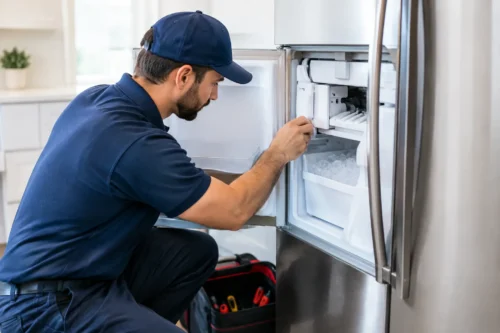
Professional service makes the most sense when the refrigerator is running but not cooling, clicking but not starting, building frost, tripping breakers, leaking, or showing uneven temperatures between compartments. Those symptoms usually point to a part or system failure that needs more than a visual inspection.
For homeowners in St. George and surrounding Southern Utah communities, fast response matters because a refrigerator problem is not just inconvenient. It interrupts meals, routines, and the basic function of the kitchen. That is why many families prefer calling an experienced local technician instead of spending hours replacing parts they may not need. Master Tech Appliance Repair is built around that kind of practical, honest service.
Why accurate diagnosis saves money
A lot of refrigerator problems sound similar on the surface. Warm food, soft ice cream, water under drawers, or a unit that never seems to stop running can all come from different causes. The trade-off with DIY troubleshooting is that you may save money if the issue is simple, but you can also lose money quickly if you replace parts based on internet guesses.
Accurate diagnosis helps you make a better repair decision. Sometimes the fix is straightforward and well worth doing. Sometimes the age of the appliance, the cost of the part, and the condition of the sealed system make replacement the smarter path. An honest technician should tell you that.
That kind of clarity matters to homeowners who want a durable repair, not a temporary patch. It is not just about getting the refrigerator cold again. It is about knowing the problem was identified correctly and handled in a way that makes sense for your home and budget.
If your refrigerator is not cooling, the smartest next step is usually the simplest one: address the easy checks right away, then get expert help before a small problem turns into spoiled food and a much larger repair.